Best Water Heater Timers
A box on the wall that keeps an electric tank off during peak rates. Three units, three very different ratings, and one model number that misleads.
Heat & Tap earns a commission on qualifying purchases made through the Amazon links on this page, at no extra cost to you. Commission does not decide what we recommend or how we rank it. Full disclosure.
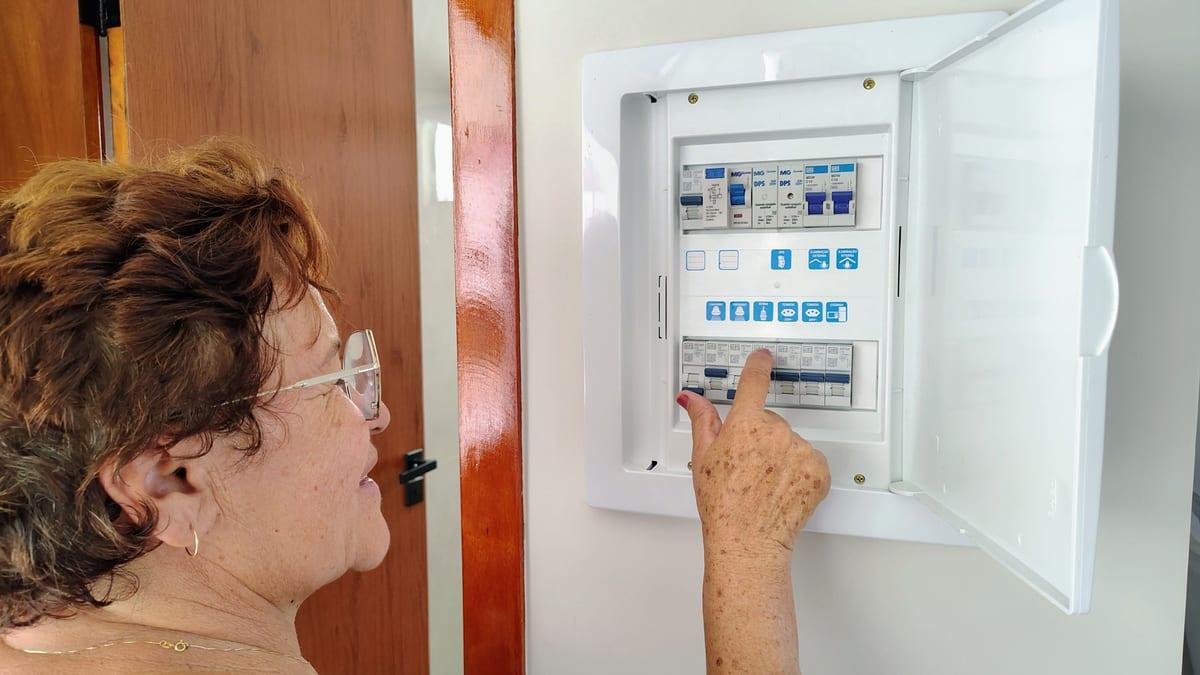
A water heater timer switches an electric tank off during expensive hours. Size it by amperage, not by the model number: the mechanical Intermatic WH40 is 40 A DPST, the electronic EH40 is only 30 A despite the 40 in its name, and the budget WH21 is 25 A SPST and breaks just one leg of the 240 V supply. A 4,500 W element at 240 V draws about 18.75 A, which at the usual 125 percent sizing wants 23.5 A of switch — so the WH21 has almost no margin and the WH40 has plenty.
A timer only saves money in one situation: your utility charges different rates at different hours, and you can keep the heater off through the expensive ones. If you pay a flat rate per kilowatt-hour, a timer saves you almost nothing — a tank that is off is a tank that will reheat later, and the standby loss you avoided in those hours is a fraction of a dollar a month.
That is the honest framing, and it rules out most readers before we get to the hardware. If your bill does have a peak window, read on, because the saving can be substantial and the part costs less than a service call.
Quick picks
Tap any row to read the full assessment below, or go straight to Amazon from the right-hand column. We earn a commission on qualifying purchases at no extra cost to you.
| # | Product | Best for | Price |
|---|---|---|---|
| 1 |  Intermatic WH40 water heater timerThe mechanical 40 A water heater timer: 240 V DPST, 1 to 23 hour settings, up to twelve on and twelve off events a day — the simplest way to keep a resistance tank off during peak rates. | Time-of-use electric rates | Check price on Amazon No live price feed on this site, so we show none. #ad |
| 2 | Intermatic EH40 electronic water heater timerThe electronic 7-day timer: 42 ON/OFF events a week, to-the-minute programming and a replaceable battery that holds the schedule for three years - but read the rating, because the 40 in the name is not 40 amps. | A real 7-day schedule | Check price on Amazon No live price feed on this site, so we show none. #ad |
| 3 | Intermatic WH21 water heater timerThe budget mechanical timer: 25 A on a single pole, 30-minute switching steps and an external override push button - fine for a modest element, and the amperage is the one spec to check before you buy it. | The cheapest off-peak switch | Check price on Amazon No live price feed on this site, so we show none. #ad |
The picks in full
Pick 1 — Time-of-use electric rates
Intermatic WH40 water heater timer
The mechanical 40 A water heater timer: 240 V DPST, 1 to 23 hour settings, up to twelve on and twelve off events a day — the simplest way to keep a resistance tank off during peak rates.
| Rating | 40 A, DPST, 2 poles |
|---|---|
| Voltage | 208 - 277 V AC |
| Load | 10,000 W; 2 hp and 5 hp motor ratings |
| Setting range | 1 - 23 hours; minimum 1 hour on or off |
| Events | Up to 12 on and 12 off per day |
| Enclosure | NEMA 1 |
| Operating temperature | -40 to 130°F |
What is good
- No firmware, no app, no cloud account — a dial and a set of trippers
- Saves real money where electricity is billed by time of use
- NEMA 1 enclosure suits an indoor utility wall
- 40 A covers any residential resistance tank
What is not
- Only useful if your utility actually charges different rates by hour
- A tank held off for hours can run out mid-evening
- NEMA 1 is indoor-only: it needs a different enclosure in a garage exposed to weather
Skip it if: Skip it on a heat pump water heater. Those already run on a schedule you control from the unit, and interrupting the compressor's power on a timer gains nothing while risking short cycling.
No live price feed on this site, so we show none. #ad
Specifications above from Pace Supply listing, Intermatic WH40; Platt listing, Intermatic WH40 24-hour DPST. We have not tested this unit ourselves.
Pick 2 — A real 7-day schedule
Intermatic EH40 electronic water heater timer
The electronic 7-day timer: 42 ON/OFF events a week, to-the-minute programming and a replaceable battery that holds the schedule for three years - but read the rating, because the 40 in the name is not 40 amps.
| Switch rating | 30 A inductive, 30 A resistive, 5 A tungsten, 1-1/2 HP |
|---|---|
| Voltage | 240 VAC, 60 Hz |
| Switch type | DPST |
| Load | 7,200 W |
| Scheduling | 7-day; 42 ON/OFF operations per week |
| Backup | Replaceable battery, 3-year backup protection |
| Enclosure | Indoor Type 1 metal |
| Wire size | #14 to #8 AWG |
| Certification | cCSAus |
| Warranty | 1-year limited |
What is good
- Weekday and weekend schedules can differ, which a mechanical dial cannot do
- To-the-minute programming instead of 30-minute tripper steps
- LED load indicator shows whether the contacts are actually closed
- DPST breaks both legs of the 240 V supply
- Battery backup keeps the program through an outage
What is not
- Despite the model number it is rated 30 A, not 40 - a 5,500 W element at 240 V is outside it
- The battery is a consumable, and a dead one means a lost schedule
- Indoor Type 1 enclosure, so an exposed exterior wall needs a different box
- 1-year warranty, the same as the mechanical units that have far less to go wrong
Skip it if: Skip it if the tank's elements exceed 7,200 W total or its nameplate draws more than 30 A. Use the 40 A mechanical WH40 instead - a timer run at its limit is a failure waiting for a cold morning.
No live price feed on this site, so we show none. #ad
Specifications above from Intermatic EH40 technical data sheet (12/22/2022); Platt listing, Intermatic EH40 water heater timer 7-day 7200 W. We have not tested this unit ourselves.
Pick 3 — The cheapest off-peak switch
Intermatic WH21 water heater timer
The budget mechanical timer: 25 A on a single pole, 30-minute switching steps and an external override push button - fine for a modest element, and the amperage is the one spec to check before you buy it.
| Switch rating | 25 A resistive |
|---|---|
| Voltage | 208 - 250 VAC, 60 Hz |
| Switch type | SPST (single-pole single-throw) |
| Load | 6,250 W |
| Operation | 24 hour, analog/mechanical |
| Switching step | 30 minutes minimum |
| Override | External override push button |
| Enclosure | Indoor Type 1 metal, gray |
| Dimensions | 6.75 x 5.25 x 3.25 in |
| Wire size | #14 to #10 AWG |
| Warranty | 1-year limited |
What is good
- The cheapest way to shift an electric tank out of a peak rate window
- Nothing to program and nothing to lose in an outage - a dial and a set of trippers
- External override button gives a one-off reheat without touching the trippers
- Smallest enclosure of the three at 6.75 x 5.25 x 3.25 in
What is not
- SPST breaks only ONE leg of a 240 V circuit, so one element terminal stays energized
- 25 A and 6,250 W is the tightest headroom here: a 5,500 W element is outside it once you size at 125 percent
- One 24-hour schedule, seven days a week - no weekend setting
- Intermatic's own sheet is inconsistent about the trippers: the technical table says 1 ON/1 OFF while the feature list on the same page claims two sets and up to 12 ON/12 OFF events
Skip it if: Skip it on anything you will ever work on without killing the breaker first. A single-pole timer leaves half the 240 V supply live at the heater, and on a 4,500 W element the 25 A rating leaves almost no margin.
No live price feed on this site, so we show none. #ad
Specifications above from Intermatic WH21 technical data sheet (12/22/2022); Intermatic catalog page, WH21 electric water heater timer. We have not tested this unit ourselves.
What we looked at, and in what order
These are not interesting appliances. They are switches, and they are chosen on four published numbers:
- Amperage and wattage rating against your element. This is the whole safety question. A timer run near its rating is a contact that welds shut or burns open, and either failure mode happens at the worst time.
- Pole count. DPST breaks both legs of a 240 V circuit; SPST breaks one and leaves the other energized at the heater. That is a working-on-it safety difference, not a feature-list nicety.
- Scheduling granularity. A mechanical 24-hour dial repeats the same program seven days a week in 30-minute steps. An electronic 7-day unit can hold a different weekend schedule to the minute.
- Enclosure. All three of these are indoor Type 1 metal boxes. A garage wall exposed to weather, or anything outdoors, needs a different enclosure.
We have not bench-tested these. Every figure here comes from Intermatic's own technical data sheets and catalog pages, listed under each pick and again at the foot of the page. How we pick.
Size the timer to the element, with the arithmetic
This is the part most buying advice skips, and it is the part that decides whether the timer is safe. Element wattage divided by voltage gives the current; code practice sizes the switch at 125 percent of that continuous load.
| Element | Current at 240 V | At 125 percent | WH21 (25 A) | EH40 (30 A) | WH40 (40 A) |
|---|---|---|---|---|---|
| 3,000 W | 12.5 A | 15.6 A | Yes | Yes | Yes |
| 3,800 W | 15.8 A | 19.8 A | Yes | Yes | Yes |
| 4,500 W | 18.75 A | 23.4 A | Marginal | Yes | Yes |
| 5,500 W | 22.9 A | 28.6 A | No | Marginal | Yes |
| 2 x 4,500 W, non-simultaneous | 18.75 A | 23.4 A | Marginal | Yes | Yes |
Two readings of that table matter. First, the 4,500 W element that sits in the great majority of residential electric tanks lands at 23.4 A once sized — inside the WH21's 25 A rating on paper, with 1.6 A of margin. We call that marginal rather than fine, because a timer is a mechanical contact that degrades, and 6 percent of headroom is not headroom.
Second, almost every residential electric tank is non-simultaneous: the upper and lower elements are interlocked so only one runs at a time. That is why a 2 x 4,500 W tank draws 18.75 A rather than 37.5 A. Check the data plate — it states the maximum draw, and that number, not the sum of the elements, is what you size the timer against. Water heater breaker and wire size covers the same arithmetic for the circuit itself.
Mechanical or electronic?
The three picks split into two mechanical dials and one electronic controller, and the trade is real in both directions.
| Mechanical (WH40, WH21) | Electronic (EH40) | |
|---|---|---|
| Scheduling | One 24-hour program, repeated daily | 7-day, different each day |
| Granularity | 30-minute tripper steps | To the minute |
| Events | WH40 up to 12 on / 12 off per day | 42 on/off per week |
| Outage behavior | Clock stops; schedule drifts by the outage length | Battery holds the program; 3-year backup |
| Consumables | None | A replaceable battery |
| Highest rating available | 40 A, 10,000 W (WH40) | 30 A, 7,200 W |
| Feedback | You can see the dial position | LED load indicator |
The mechanical failure mode is drift: a two-hour outage leaves the dial two hours behind until somebody resets it, and nothing warns you. The electronic failure mode is a dead battery and a lost program. Pick the one whose failure you would notice.
If your peak window is the same every day — which is how most residential time-of-use tariffs are written — the mechanical WH40 does everything you need at a higher rating and with nothing to go flat. If your utility prices weekends differently, that is the case for the EH40 and the only case where its lower rating is worth accepting.
Single pole or double pole, and why it matters more than it sounds
A residential electric water heater runs on 240 V across two hot legs. There is no neutral at the element.
- DPST (WH40, EH40) opens both legs. With the timer off, the element terminals are dead.
- SPST (WH21) opens one leg. With the timer off, the element is not heating — but one terminal is still sitting at line voltage relative to ground.
For a timer whose only job is to stop the tank heating, SPST is functionally sufficient and that is why the part exists and is cheap. The problem is human: a homeowner who has flipped the timer to off and sees the heater is cold can reasonably believe the heater is isolated. It is not. Kill the breaker before you touch an element or a thermostat, every time, regardless of which timer is on the wall.
That is also the reason the WH21 is third here rather than second despite being the cheapest. How to replace a water heater yourself has the rest of the electrical safety ground rules.
Where a timer is the wrong tool
Four situations where the honest recommendation is to buy nothing:
- A flat electricity rate. With no peak window there is nothing to shift. You are saving a small amount of standby loss and accepting a cold-shower risk for it.
- A heat pump water heater. These already schedule themselves from the unit's own controls, and cutting power to a compressor on a mechanical dial gains nothing while risking short cycling. Best heat pump water heaters.
- A gas tank. There is essentially nothing to switch. The standby loss of a gas tank is a pilot or an intermittent ignition sequence, not a 4,500 W element.
- A tankless unit of any fuel. It only consumes energy while water flows, so a timer has nothing to do except prevent hot water. Tankless vs tank.
There is also a cheaper first move if your goal is simply a smaller bill: turn the thermostat down to 120°F, insulate the first six feet of hot pipe, and fix the leaky fixture. Water heater temperature setting covers how low is safe and why 140°F with a mixing valve is sometimes the better answer than 120°F without one.
Installing one, briefly and honestly
A water heater timer is wired in series with the heater's supply: the circuit comes into the timer, and the timer's load terminals feed the heater. It is a straightforward job for a licensed electrician and a genuinely bad first electrical project, because everything inside the box is at 240 V and the enclosure is usually mounted within arm's reach of a grounded steel tank. One sizing note before you start: the smaller the tank, the less a timer suits it, because there is no stored volume to coast on. On a 30 gallon water heater a timer is usually the wrong purchase.
- The breaker goes off first and gets tested dead at the timer, not assumed dead.
- All three units here are indoor Type 1 enclosures. An unconditioned garage is usually acceptable; a wall exposed to rain or snow is not.
- Wire sizes are published: #14 to #10 AWG on the WH21, #14 to #8 AWG on the EH40. Do not force a conductor the terminal is not rated for.
- Many jurisdictions require a permit for new work on a water heater circuit. Ask before, not after.
While you have the panel open, the other two parts worth checking on an electric tank are the anode rod and the expansion tank — the two that actually decide how long the heater lasts. Water heater anode rods and best water heater expansion tanks.
What goes in with it
A water heater is a system, not a box. These are the parts that go in with it, and the ones people discover they need halfway through the job.
- Expansion tank
Required by code on a closed system, which is most homes with a pressure-reducing valve.
- Drain pan
Cheap insurance anywhere the tank sits above something you care about.
- Anode rod
The part that decides when the tank leaks. Replacing it is the highest-value hour of maintenance there is.
How we chose
Published amperage and wattage rating first, then pole count, then scheduling, then enclosure and wire range. We have not bench-tested these units, and where Intermatic's own sheet contradicts itself — the WH21's tripper count is given two different ways on the same page — we print both rather than picking one.
If the reason you are here is that the tank runs out before everyone has showered, a timer will make that worse rather than better. Water heater running out of hot water is the right page, and a bigger tank or a mixing valve is the right fix: best water heater mixing valves.