Are Heat Pump Water Heaters Worth It?
Yes, for most all-electric households with somewhere to put one. Here are the four cases where the answer is no.
Heat & Tap earns a commission on qualifying purchases made through the Amazon links on this page, at no extra cost to you. Commission does not decide what we recommend or how we rank it. Full disclosure.

Yes, if you are on electric resistance and have a garage, unfinished basement or utility space. A 3.88 UEF against 0.93 is roughly a quarter of the electricity for the same hot water, with a better first-hour rating. No if the only location is a sealed closet, there is no condensate drain, the noise would be heard from a bedroom, or you already have gas.
This is a decision page, so here is the decision up front rather than at the bottom. If your water heater is electric and it lives somewhere you do not sit, a heat pump water heater is almost certainly the right purchase. Everything below is the reasoning and the exceptions.
The case for
- The running cost difference is not marginal. A UEF of 3.88 against 0.93 means roughly a quarter of the energy. On a household using 60 or 70 gallons of hot water a day, that is the largest single utility saving available from one appliance swap.
- The delivery is better, not worse. A 50-gallon ProTerra is rated at 67 gallons in the first hour against 63 for a resistance tank of the same volume. You are not trading capacity for efficiency.
- Rebates are frequently substantial. State HEAR programs and utility incentives can cover a meaningful share of the purchase. They vary entirely by zip code. How to check yours.
- The dehumidification is a genuine side benefit in a damp basement or a humid garage. People who did not buy it for that often mention it afterwards.
- The technology is mature. These are not early-adopter appliances any more; the published ambient operating ranges and cold-climate certifications are evidence of several product generations of refinement.
The four cases where the answer is no
1. A sealed closet with no air
The unit needs air to take heat from — typically around 700 cubic feet, or louvered doors with a specified free area. Starved of air, it runs on the backup resistance element. You then own a resistance tank that cost heat pump money and has a compressor to go wrong. This is the single most common way the purchase goes wrong.
2. No route for condensate
It makes condensate continuously, like an air conditioner. A gravity drain nearby is ideal; a condensate pump works but is one more powered component in the install. If there is genuinely no route, a resistance tank or a gas unit is the honest choice.
3. Noise where it will be heard
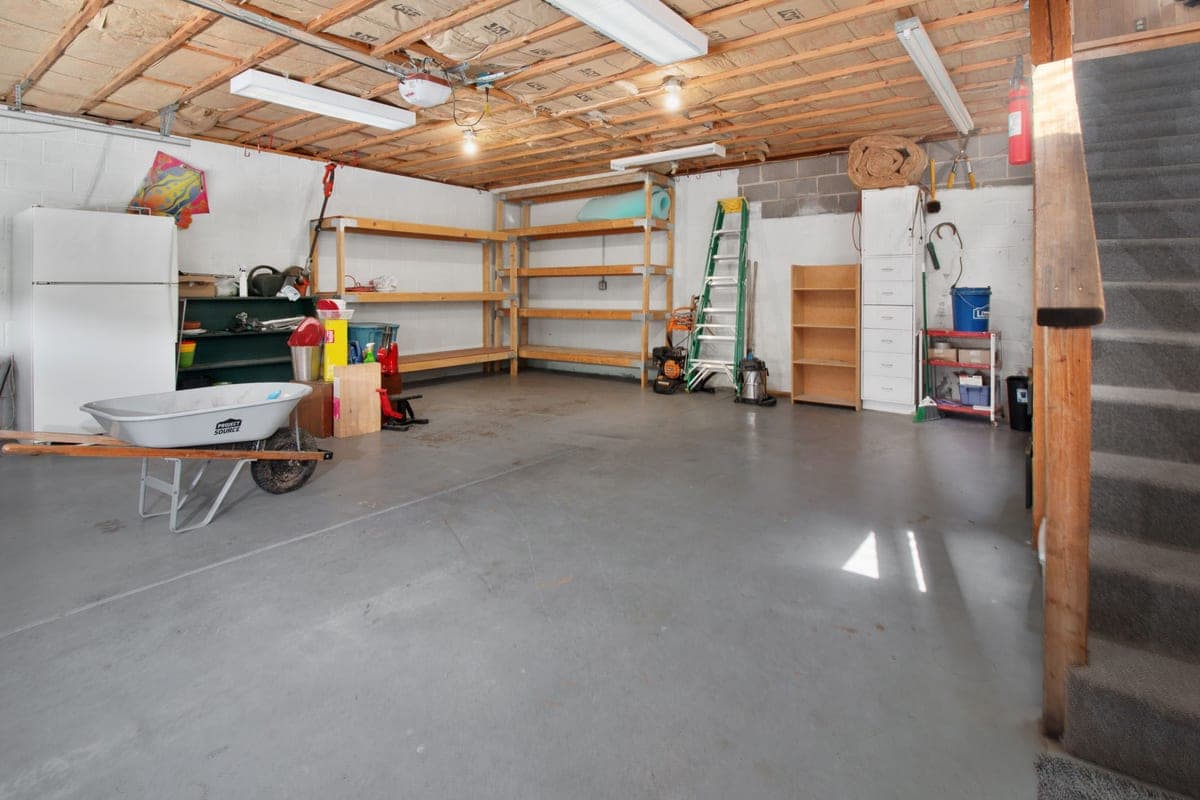
Roughly a dehumidifier. Fine in a garage. Noticeable in a finished basement. A real problem directly below a bedroom, and the complaint that repeats most in owner reviews. If the only location is adjacent to living space, think hard. Garage and basement installs.
4. You already have working natural gas
A 50-gallon gas tank delivers 91 gallons in the first hour, costs less to buy, and in most US markets costs less per gallon of hot water than even a heat pump on electricity. If you have gas and a sound flue, the heat pump argument is mostly an emissions argument rather than a bill argument — a legitimate reason to choose one, but a different reason.
The honest version of the cooling trade
| Location | Hot climate | Cold climate |
|---|---|---|
| Attached garage | A benefit — free cooling of a hot space | Fine if the unit's ambient limit is low enough |
| Unfinished basement | A benefit, plus dehumidification | Mild negative; basements are thermally buffered |
| Heated utility room | Neutral to positive | Negative — your furnace pays for your hot water |
| Below a bedroom | Noise problem regardless | Noise problem regardless |
| Sealed closet | Does not work | Does not work |
The row that matters is the third one. In a heated space in a cold climate, the heat pump extracts heat your heating system just supplied. You still save money if your heating is cheaper per BTU than resistance water heating, but the saving is materially smaller than the UEF suggests. Nobody selling these units mentions it.
If the answer is yes, these are the units
Pick 1 — Most heat pump installs
Rheem ProTerra 50 gal hybrid
The heat pump water heater to start with: a 3.88 UEF, a 67-gallon first-hour rating, and a 37°F lower operating limit that is the widest ambient range in its class — which is the specification that decides whether it works in a cold garage.
| Capacity | 50 gallons |
|---|---|
| Efficiency | 3.88 UEF; up to 4.07 UEF advertised on 30 A models |
| First-hour rating | 67 gallons |
| Recovery | 27 gallons per hour |
| Heat pump capacity | 4,200 BTU/h |
| Backup element | 5,000 W |
| Voltage | 208 - 240 V |
| Ambient operating range | 37 - 145°F |
| Cold-climate rating | Meets Northern Climate Specification Tier 4 |
| Leak protection | Integrated detection with factory-fitted auto shutoff; leaks limited to no more than 20 oz |
| Warranty | 10-year limited |
What is good
- A 37°F lower limit means the compressor keeps running in an unheated garage through most of a northern winter
- 3.88 UEF is roughly four times a resistance tank, so the running cost difference is not marginal
- 67-gallon first-hour rating is better than most 50-gallon resistance tanks
- EcoNet control lets you force high-demand mode before guests arrive instead of discovering the limit
What is not
- It is a refrigeration appliance in your house: there is a compressor, a fan and a condensate drain
- Needs roughly 700 cubic feet of air, or louvered doors, in a closet
- It cools and dehumidifies the space it stands in, which is a gift in a Houston garage and a problem in a Minnesota basement
Skip it if: Skip it if the only place it can go is a finished, heated room you occupy. It will steal heat from that room in winter — your furnace then pays for the hot water, and the efficiency you bought disappears.
No live price feed on this site, so we show none. #ad
Specifications above from Rheem ProTerra PROPH50 T2 RH375-30 product page; ABR Wholesalers listing, PROPH50 T2 RH375-30. We have not tested this unit ourselves.
Pick 2 — No 240 V circuit available
Rheem ProTerra 120 V plug-in, 50 gal
The one heat pump water heater that does not need an electrician: it runs on a dedicated 120 V 15 A circuit, which makes it the only realistic efficiency upgrade in a condo or a house with a full panel.
| Capacity | 50 gallons |
|---|---|
| Voltage | 120 V |
| Power | 1.8 kW |
| Circuit | Dedicated 120 V 15 A |
| Efficiency | 3.0 UEF on a dedicated circuit; up to 3.5 UEF on the shared-circuit model |
| Ambient operating range | 37 - 145°F |
| Cold-climate rating | Designed to meet NEEA Northern Climate Specification Tier 2 |
| Utility programs | Built-in EcoPort CTA-2045 port |
What is good
- A standard 120 V circuit removes the panel upgrade that kills most heat pump retrofits
- Still roughly three times as efficient as a resistance tank
- CTA-2045 port makes it eligible for utility demand-response payments where those exist
- Same 37°F lower operating limit as the 240 V models
What is not
- 1.8 kW means slow recovery — this is a tank you let work overnight, not one you push
- No big resistance element to bail you out during a surge in demand
- A dedicated circuit is still a circuit: a shared-outlet install is a different model number
Skip it if: Skip it if your household regularly empties the tank — a big family, or two showers plus a dishwasher back to back. With 1.8 kW of input and no large backup element, recovery is the whole constraint.
No live price feed on this site, so we show none. #ad
Specifications above from Rheem plug-in heat pump specification sheet (PDF); Ferguson listing, ProTerra 50 gal 120 V plug-in. We have not tested this unit ourselves.
The 2026 incentive position, stated correctly
What does still exist: state HEAR programs funded under the Inflation Reduction Act, administered state by state with their own eligibility rules, and utility rebates, which are often the larger and more accessible of the two. Both vary completely by zip code, which is why we will not print a figure here. Rebates explains how to check yours properly.
The decision, as a short checklist
- Is your water heater electric? If no, and you have gas, the answer is probably a gas tank.
- Is there a garage, unfinished basement or utility space with real air volume? If no, stop here.
- Is there a condensate drain, or a place for a condensate pump? If no, stop here.
- Would the compressor be audible from a bedroom? If yes, reconsider the location.
- In a cold climate, is the space unheated? If it is heated, discount the saving.
- All five clear? Buy the heat pump. Check your utility's rebate list first.
What goes in with it
A water heater is a system, not a box. These are the parts that go in with it, and the ones people discover they need halfway through the job.
- Drain pan
A heat pump water heater makes condensate continuously, so this one is not optional.
- Leak detector
A condensate line that blocks will overflow long before you notice it.
- Expansion tank
Same closed-system rule as any other storage tank.