Heat Pump Water Heater Pros and Cons
The advantages are arithmetic. The disadvantages are all about the room you put it in.
Heat & Tap earns a commission on qualifying purchases made through the Amazon links on this page, at no extra cost to you. Commission does not decide what we recommend or how we rank it. Full disclosure.
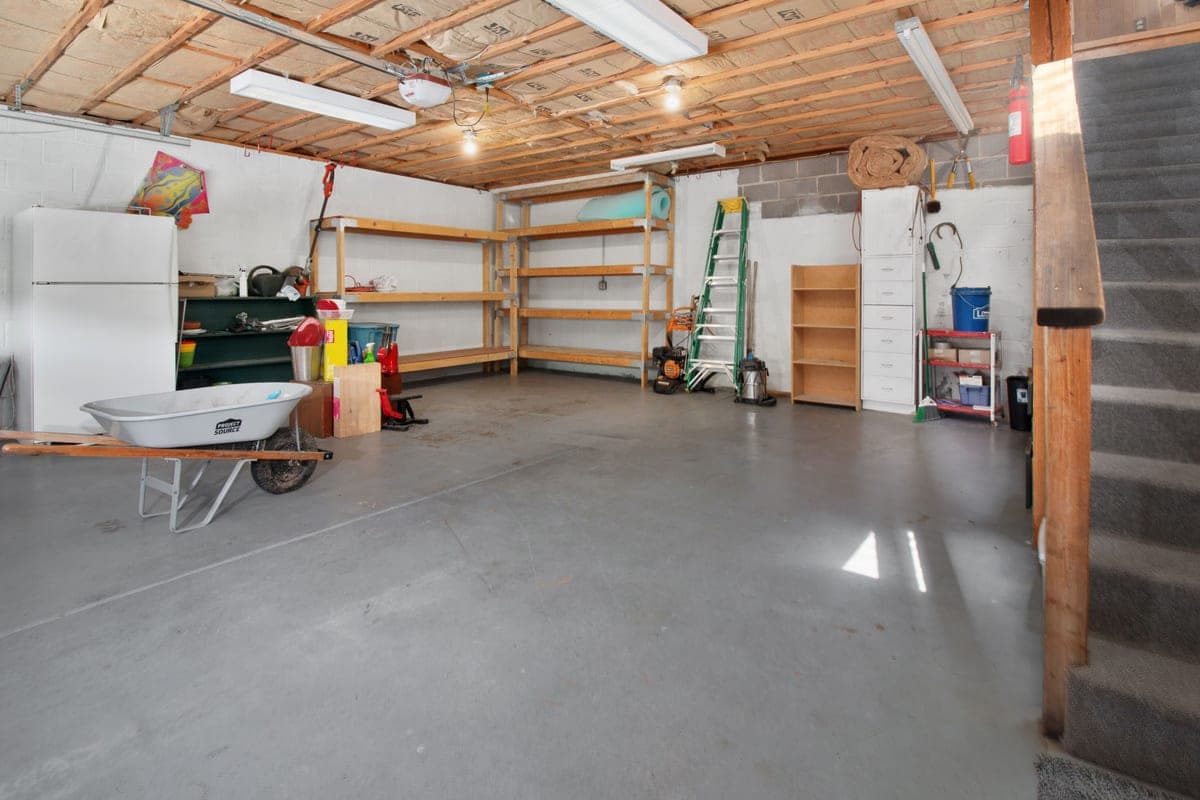
The main advantage is one number: a heat pump water heater runs at around 3.88 to 4.02 UEF against 0.92 to 0.93 UEF for an electric resistance tank, which is roughly a quarter of the electricity for the same hot water. The main disadvantage is also one thing: it is a refrigeration appliance, so it needs about 700 cubic feet of air or louvered doors, a condensate drain, roughly 7 feet of headroom, and it cools and dehumidifies the room it stands in.
A heat pump water heater does not make heat. It moves heat, from the air around it into the tank, the same way a refrigerator moves heat out of its box and into your kitchen. That single fact generates every advantage and every disadvantage on this page, and it is why the answer to whether you should buy one is almost entirely a question about the room rather than the appliance.
The pros, with the figures
- Running cost. Around 3.88 UEF on the Rheem ProTerra and 4.02 UEF on the A. O. Smith Voltex AL, against 0.92 to 0.93 for a resistance tank. That is not a better number, it is a different order of magnitude.
- Delivery is not the compromise people expect. The 50-gallon ProTerra publishes a 67-gallon first-hour rating, which beats most 50-gallon resistance tanks, and the 66-gallon Voltex MAX publishes 83 gallons — better than an 80-gallon resistance tank.
- Rebate eligibility. These units are ENERGY STAR certified, which keeps them inside most utility rebate programmes. Water heater rebates in 2026 covers what is actually left.
- It dehumidifies. In a damp basement or a humid garage, the condensate it pulls out of the air is a genuine side benefit rather than a nuisance.
- A 120 V model exists. The plug-in ProTerra runs on a dedicated 120 V 15 A circuit at 1.8 kW, which removes the panel upgrade that kills most heat pump retrofits.
- Resistance backup is built in. A 5,000 W element on the ProTerra means a surge in demand is covered, just expensively.
- Leak protection on some models. The ProTerra carries integrated detection with a factory-fitted auto shutoff, rated to limit a leak to no more than 20 ounces.
The cons, stated plainly
- It needs air. Roughly 700 cubic feet, or louvered doors. Starve a heat pump water heater of air and it runs on the resistance element, which means you paid premium money to get resistance running costs.
- It needs a condensate drain. Continuously, not occasionally. A blocked condensate line overflows long before anyone notices, which is why a leak detector belongs in the install.
- It cools the room. A gift in a Houston garage, a real problem in a Minnesota basement you heat — in that case your furnace ends up paying for the hot water and the efficiency you bought disappears.
- It is noisy in a way a tank is not. There is a compressor and a fan. Neither is loud in absolute terms, but a tank makes no noise at all and the comparison is to that. Heat pump water heater noise.
- Recovery is slower. 27 gallons per hour on the ProTerra against 36 for a 36,000 BTU gas burner, and only 1.8 kW of input on the 120 V model.
- It is taller. Around 7 feet of headroom, and the 66-gallon models are wider as well. A lot of replacement alcoves simply will not take one.
- Ambient limits are real. The ProTerra publishes a 37 to 145°F operating range; below that lower limit the compressor stops being the thing heating your water.
- More to go wrong. A compressor, a fan, a control board and a condensate path, against a resistance tank's two elements and a thermostat.
The ledger, side by side
| Heat pump (ProTerra 50) | Electric resistance (Performance Platinum 50) | |
|---|---|---|
| Efficiency | 3.88 UEF (up to 4.07 on 30 A models) | 0.93 UEF |
| First-hour rating | 67 gallons | 63 gallons per hour |
| Recovery | 27 gallons per hour | 21 gallons per hour at a 90°F rise |
| Headroom needed | About 7 feet | Standard tank height |
| Air volume needed | About 700 cu ft or louvered doors | None |
| Condensate drain | Required, continuous | None |
| Noise | Compressor and fan | Silent |
| Effect on the room | Cools and dehumidifies it | None |
| Ambient operating range | 37 – 145°F | Any |
| Moving parts | Compressor, fan, control board | Two elements and a thermostat |
What to look for if the pros win
- A published ambient operating range. This is the specification that decides whether it works where you are putting it. Rheem publishes 37 to 145°F and a Northern Climate Specification Tier 4 rating; not every manufacturer publishes anything.
- First-hour rating against your household. 67 gallons suits four people with staggered showers; five or six people want the 66-gallon capacity and its 83-gallon first-hour rating.
- The anode rating. Ten years on the Voltex AL against six on the ProLine XE. In hard or softened water the anode is what decides when the tank leaks.
- The circuit you actually have. If there is no spare 240 V capacity, the 120 V plug-in model on a dedicated 15 A circuit is the version of this appliance you can install.
- Where the condensate goes, drawn out before you buy rather than improvised on the day.
Quick picks
Tap any row to read the full assessment below, or go straight to Amazon from the right-hand column. We earn a commission on qualifying purchases at no extra cost to you.
| # | Product | Best for | Price |
|---|---|---|---|
| 1 | Rheem ProTerra 50 gal hybridThe heat pump water heater to start with: a 3.88 UEF, a 67-gallon first-hour rating, and a 37°F lower operating limit that is the widest ambient range in its class — which is the specification that decides whether it works in a cold garage. | Most heat pump installs | Check price on Amazon No live price feed on this site, so we show none. #ad |
| 2 |  A. O. Smith Voltex AL, 66 galThe efficiency leader on this page at 4.02 UEF, in the capacity that suits a five- or six-person household, with a heavy-duty anode rated to protect the tank for 10 years. | Highest published heat pump efficiency | Check price on Amazon No live price feed on this site, so we show none. #ad |
| 3 |  Rheem ProTerra 120 V plug-in, 50 galThe one heat pump water heater that does not need an electrician: it runs on a dedicated 120 V 15 A circuit, which makes it the only realistic efficiency upgrade in a condo or a house with a full panel. | No 240 V circuit available | Check price on Amazon No live price feed on this site, so we show none. #ad |
The units these pros and cons apply to
Pick 1 — Most heat pump installs
Rheem ProTerra 50 gal hybrid
The heat pump water heater to start with: a 3.88 UEF, a 67-gallon first-hour rating, and a 37°F lower operating limit that is the widest ambient range in its class — which is the specification that decides whether it works in a cold garage.
| Capacity | 50 gallons |
|---|---|
| Efficiency | 3.88 UEF; up to 4.07 UEF advertised on 30 A models |
| First-hour rating | 67 gallons |
| Recovery | 27 gallons per hour |
| Heat pump capacity | 4,200 BTU/h |
| Backup element | 5,000 W |
| Voltage | 208 - 240 V |
| Ambient operating range | 37 - 145°F |
| Cold-climate rating | Meets Northern Climate Specification Tier 4 |
| Leak protection | Integrated detection with factory-fitted auto shutoff; leaks limited to no more than 20 oz |
| Warranty | 10-year limited |
What is good
- A 37°F lower limit means the compressor keeps running in an unheated garage through most of a northern winter
- 3.88 UEF is roughly four times a resistance tank, so the running cost difference is not marginal
- 67-gallon first-hour rating is better than most 50-gallon resistance tanks
- EcoNet control lets you force high-demand mode before guests arrive instead of discovering the limit
What is not
- It is a refrigeration appliance in your house: there is a compressor, a fan and a condensate drain
- Needs roughly 700 cubic feet of air, or louvered doors, in a closet
- It cools and dehumidifies the space it stands in, which is a gift in a Houston garage and a problem in a Minnesota basement
Skip it if: Skip it if the only place it can go is a finished, heated room you occupy. It will steal heat from that room in winter — your furnace then pays for the hot water, and the efficiency you bought disappears.
No live price feed on this site, so we show none. #ad
Specifications above from Rheem ProTerra PROPH50 T2 RH375-30 product page; ABR Wholesalers listing, PROPH50 T2 RH375-30. We have not tested this unit ourselves.
Pick 2 — Highest published heat pump efficiency
A. O. Smith Voltex AL, 66 gal
The efficiency leader on this page at 4.02 UEF, in the capacity that suits a five- or six-person household, with a heavy-duty anode rated to protect the tank for 10 years.
| Capacity | 66 gallons |
|---|---|
| Efficiency | 4.02 UEF |
| Anode | Heavy-duty, rated to protect the tank for 10 years |
| Warranty | 10-year limited |
| Certification | ENERGY STAR certified |
What is good
- 4.02 UEF is the highest figure of any unit in this registry
- 66 gallons removes the recovery anxiety that a 50-gallon heat pump creates in a big household
- The 10-year anode is a real durability claim, not a marketing one
- ENERGY STAR certification keeps it inside most utility rebate lists
What is not
- 66 gallons is a tall, wide cabinet — measure the space before you order
- Sold mainly through wholesale, so availability is slower than big-box
- Published first-hour rating is not listed for the AL model; the Voltex MAX at the same capacity is rated at 83 gallons
Skip it if: Skip it if your install space is a closet. A 66-gallon heat pump needs air volume to work, and starving a heat pump water heater of air is how you end up running on the backup element and paying resistance rates for a premium appliance.
No live price feed on this site, so we show none. #ad
Specifications above from Auer Steel listing, A. O. Smith HPTS-66 Voltex AL; A. O. Smith Voltex AL introduction. We have not tested this unit ourselves.
Pick 3 — No 240 V circuit available
Rheem ProTerra 120 V plug-in, 50 gal
The one heat pump water heater that does not need an electrician: it runs on a dedicated 120 V 15 A circuit, which makes it the only realistic efficiency upgrade in a condo or a house with a full panel.
| Capacity | 50 gallons |
|---|---|
| Voltage | 120 V |
| Power | 1.8 kW |
| Circuit | Dedicated 120 V 15 A |
| Efficiency | 3.0 UEF on a dedicated circuit; up to 3.5 UEF on the shared-circuit model |
| Ambient operating range | 37 - 145°F |
| Cold-climate rating | Designed to meet NEEA Northern Climate Specification Tier 2 |
| Utility programs | Built-in EcoPort CTA-2045 port |
What is good
- A standard 120 V circuit removes the panel upgrade that kills most heat pump retrofits
- Still roughly three times as efficient as a resistance tank
- CTA-2045 port makes it eligible for utility demand-response payments where those exist
- Same 37°F lower operating limit as the 240 V models
What is not
- 1.8 kW means slow recovery — this is a tank you let work overnight, not one you push
- No big resistance element to bail you out during a surge in demand
- A dedicated circuit is still a circuit: a shared-outlet install is a different model number
Skip it if: Skip it if your household regularly empties the tank — a big family, or two showers plus a dishwasher back to back. With 1.8 kW of input and no large backup element, recovery is the whole constraint.
No live price feed on this site, so we show none. #ad
Specifications above from Rheem plug-in heat pump specification sheet (PDF); Ferguson listing, ProTerra 50 gal 120 V plug-in. We have not tested this unit ourselves.
Who should buy one
- Anyone currently running an electric resistance tank in a garage, a basement or an unconditioned utility space.
- Households in warm or mixed climates, where the air the unit is stealing heat from is free all year.
- Anyone whose utility still runs a heat pump water heater rebate.
- Households with a damp basement, where the dehumidifying is a second benefit.
- Anyone replacing an electric tank with 7 feet of headroom and somewhere for condensate to go.
Who should not
- Anyone whose heater lives in a heated room they occupy.
- Anyone with a natural gas line already feeding a working flue — the comparison then is against gas, not resistance, and it is much closer.
- Closet installs with no louvered doors and no way to add them.
- Spaces under about 7 feet of ceiling.
- Households that regularly empty the tank, if the only option is the 1.8 kW 120 V model.
If the gas line exists, read heat pump vs tankless and gas vs electric water heaters before deciding; the heat pump's advantage over resistance is enormous and its advantage over gas is a much narrower argument about local fuel prices.
What goes in with it
A water heater is a system, not a box. These are the parts that go in with it, and the ones people discover they need halfway through the job.
- Drain pan
A heat pump water heater makes condensate continuously, so this one is not optional.
- Leak detector
A condensate line that blocks will overflow long before you notice it.
- Expansion tank
Same closed-system rule as any other storage tank.