Best Water Heater Expansion Tanks
Sized from your static pressure, not just your tank size. That is the part everyone gets wrong.
Heat & Tap earns a commission on qualifying purchases made through the Amazon links on this page, at no extra cost to you. Commission does not decide what we recommend or how we rank it. Full disclosure.
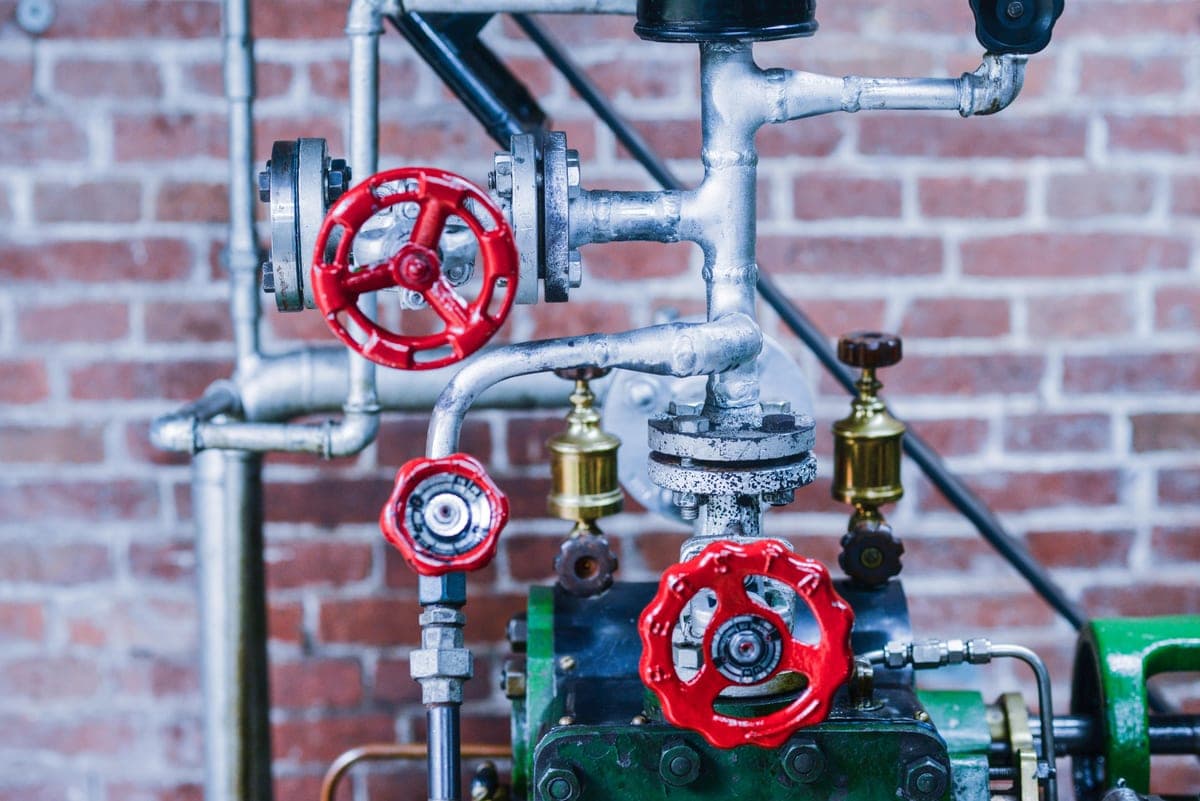
For a 50-gallon water heater, the Amtrol Therm-X-Trol ST-12 (4.4 gallon volume, 3.2 gallon acceptance) is the safe choice at normal supply pressures. Amtrol's own chart puts a 50-gallon heater at 40 psi static on the ST-5 and at 60 psi on the ST-12 — so static pressure, not tank size, decides it.
An expansion tank is a small pressure vessel with a rubber diaphragm and an air charge on one side. When the water heater heats its contents and the water expands, the expansion goes into the tank, compressing the air charge instead of raising the system pressure. That is all it does, and on a closed system it is the difference between stable pressure and pressure spikes that shorten the life of every fixture in the house.
Quick picks
Tap any row to read the full assessment below, or go straight to Amazon from the right-hand column. We earn a commission on qualifying purchases at no extra cost to you.
| # | Product | Best for | Price |
|---|---|---|---|
| 1 | Amtrol Therm-X-Trol ST-12The size most 50-gallon installs actually need: 4.4 gallons of volume and 3.2 gallons of acceptance, which is what Amtrol's chart calls for at 60 psi static pressure. | 50 gallon tanks at normal pressure | Check price on Amazon No live price feed on this site, so we show none. #ad |
| 2 | Amtrol Therm-X-Trol ST-5The default small expansion tank: 2.0 gallons of volume, 0.9 gallons of acceptance, and the size Amtrol's own chart puts on a 50-gallon heater at 40 psi static pressure and a 160°F setting. | 40 to 50 gallon tanks, low pressure | Check price on Amazon No live price feed on this site, so we show none. #ad |
| 3 |  Watts DETA-5An ASME Section VIII tank with a fixed FDA-approved butyl diaphragm: 3.5 gallons of volume, 2.3 gallons of acceptance, for jobs where an inspector wants a stamp. | ASME-stamped installs | Check price on Amazon No live price feed on this site, so we show none. #ad |
| 4 | Watts DETA-12Five gallons of volume and 3.3 gallons of acceptance, ASME stamped — the Watts answer for an 80-gallon tank or a high static pressure supply. | Larger ASME installs | Check price on Amazon No live price feed on this site, so we show none. #ad |
The picks in full
Pick 1 — 50 gallon tanks at normal pressure
Amtrol Therm-X-Trol ST-12
The size most 50-gallon installs actually need: 4.4 gallons of volume and 3.2 gallons of acceptance, which is what Amtrol's chart calls for at 60 psi static pressure.
| Tank volume | 4.4 gallons |
|---|---|
| Maximum acceptance volume | 3.2 gallons |
| Diameter | 11 in |
| Height | 15 in |
| System connection | 3/4 in NPTM |
| Maximum working pressure | 150 psig |
| Maximum operating temperature | 200°F |
| Factory pre-charge | 50 psig |
What is good
- 3.2 gallons of acceptance covers 50-gallon heaters at the static pressures most municipal supplies actually run
- Same 3/4 in NPTM connection and 150 psig rating as the ST-5
- Headroom means a slightly wrong pre-charge still works
- The size a plumber would fit by default
What is not
- 11 inches across and 15 inches tall needs real clearance above the heater
- Too heavy to hang unsupported from a horizontal tee
- Overkill for a 30- or 40-gallon tank on low pressure
Skip it if: Skip it if there is under 16 inches of clear space above your cold inlet. People buy the ST-12, find it will not fit, and then install it unsupported — which is how a tee cracks a year later.
No live price feed on this site, so we show none. #ad
Specifications above from Amtrol ST-12 sizing chart sheet (PDF); Amtrol Therm-X-Trol brochure, September 2025 (PDF). We have not tested this unit ourselves.
Pick 2 — 40 to 50 gallon tanks, low pressure
Amtrol Therm-X-Trol ST-5
The default small expansion tank: 2.0 gallons of volume, 0.9 gallons of acceptance, and the size Amtrol's own chart puts on a 50-gallon heater at 40 psi static pressure and a 160°F setting.
| Tank volume | 2.0 gallons |
|---|---|
| Maximum acceptance volume | 0.9 gallons |
| Diameter | 8 in |
| Height | 13 in |
| System connection | 3/4 in NPTM |
| Maximum working pressure | 150 psig |
| Maximum operating temperature | 200°F |
| Factory pre-charge | 50 psig |
What is good
- The size Amtrol's own quick-sizing chart specifies for a 50-gallon heater at 40 psi and 160°F
- Small enough to hang off the cold inlet without extra support in most installs
- Pre-charged to 50 psig out of the box
- 3/4 in NPTM connection matches the standard tee
What is not
- 0.9 gallons of acceptance is not enough at higher static pressure — Amtrol's chart moves you to the ST-12 at 60 psi
- The pre-charge has to be matched to your static supply pressure, which means a gauge and a bike pump
- Needs supporting if you plumb it horizontally
Skip it if: Skip it if your static supply pressure is 60 psi or more. Amtrol's own sizing chart puts a 50-gallon heater at 60 psi on the ST-12, and an undersized expansion tank simply does not do its job.
No live price feed on this site, so we show none. #ad
Specifications above from Amtrol ST-5 data specification sheet (PDF); Amtrol Therm-X-Trol quick sizing chart (PDF). We have not tested this unit ourselves.
Pick 3 — ASME-stamped installs
Watts DETA-5
An ASME Section VIII tank with a fixed FDA-approved butyl diaphragm: 3.5 gallons of volume, 2.3 gallons of acceptance, for jobs where an inspector wants a stamp.
| Tank volume | 3.5 gallons |
|---|---|
| Acceptance volume | 2.3 gallons |
| Construction | ASME Section VIII, carbon steel |
| Diaphragm | Fixed, FDA-approved butyl rubber |
| Connection | 3/4 in stainless male NPT |
| Factory pre-charge | 40 psi |
| Maximum pressure | 150 psi (10 bar) |
What is good
- ASME Section VIII construction is what commercial and some residential inspectors require
- Stainless steel connection instead of plated steel
- Fixed butyl diaphragm rather than a free bladder
- 2.3 gallons of acceptance sits between the Amtrol ST-5 and ST-12
What is not
- 40 psi factory pre-charge, so it almost always needs adjusting to your static pressure
- Priced for a commercial specification, not a Saturday repair
- Heavier than the equivalent non-ASME tank
Skip it if: Skip it on an ordinary residential water heater swap. You are paying for an ASME stamp no residential inspector is going to ask for, and the Amtrol equivalent does the identical job for less.
No live price feed on this site, so we show none. #ad
Specifications above from Watts DETA-5 product page; Watts potable expansion tank sizing calculator. We have not tested this unit ourselves.
Pick 4 — Larger ASME installs
Watts DETA-12
Five gallons of volume and 3.3 gallons of acceptance, ASME stamped — the Watts answer for an 80-gallon tank or a high static pressure supply.
| Tank volume | 5 gallons |
|---|---|
| Acceptance volume | 3.3 gallons |
| Construction | ASME Section VIII, carbon steel |
| Diaphragm | Fixed, FDA-approved butyl rubber |
| Connection | 3/4 in stainless male NPT |
| Factory pre-charge | 40 psi |
| Maximum pressure | 150 psi (10 bar) |
What is good
- 3.3 gallons of acceptance handles 80-gallon tanks and high static pressure
- ASME stamp for inspected work
- Same stainless connection and butyl diaphragm as the DETA-5
- Largest acceptance volume in this registry
What is not
- Needs genuine clearance and a support bracket
- 40 psi pre-charge needs adjusting on almost every install
- Most expensive expansion tank here
Skip it if: Skip it on a 40- or 50-gallon residential heater. Oversizing an expansion tank is not harmful, but it is money spent on acceptance volume you will never use.
No live price feed on this site, so we show none. #ad
Specifications above from Watts DETA-12 product page; Supply House listing, Watts 0212027 DETA-12. We have not tested this unit ourselves.
The sizing rule nobody states clearly
Expansion tank sizing takes three inputs, not one: the water heater's capacity, your static supply pressure, and the temperature setting. Amtrol's quick-sizing chart is based on 40°F incoming water, a 150 psi relief valve setting, and a pre-charge equal to the static supply pressure.
Here is the specific worked case from that chart, because it makes the point better than a general rule: a 50-gallon water heater at 40 psig static with a 160°F maximum setting takes an ST-5. The same heater at 60 psig takes an ST-12. Same tank, same temperature, different answer, because higher static pressure means less room for expansion before the relief setting.
| Tank | Volume | Acceptance | Diameter | Height | Pre-charge | Max pressure |
|---|---|---|---|---|---|---|
| Amtrol ST-5 | 2.0 gal | 0.9 gal | 8 in | 13 in | 50 psig | 150 psig |
| Amtrol ST-12 | 4.4 gal | 3.2 gal | 11 in | 15 in | 50 psig | 150 psig |
| Watts DETA-5 | 3.5 gal | 2.3 gal | Not published on the listings we read | Not published | 40 psi | 150 psi |
| Watts DETA-12 | 5 gal | 3.3 gal | Not published | Not published | 40 psi | 150 psi |
ASME or not
The Watts DETA tanks are ASME Section VIII construction with a fixed FDA-approved butyl diaphragm and a stainless steel connection. That matters on commercial work and occasionally with a particular inspector; on an ordinary residential water heater replacement, no residential inspector is going to ask for an ASME stamp, and the Amtrol equivalent does the same job.
Where the Watts tanks do earn their place is the stainless connection and the slightly larger acceptance volume at each step, which gives more tolerance if your pre-charge is a little off.
Installing one
Measure your static pressure
A hose-bib gauge on an outside tap, with nothing running. Note the figure; you will set the tank's air charge to match it.
Set the tank's pre-charge
With the tank out of the system, use a tire gauge on the Schrader valve and add or release air until it matches your static pressure. Do this BEFORE fitting it.
Fit it on the cold supply, downstream of the PRV
It must be downstream of any pressure-reducing valve, check valve or backflow preventer — that is what IPC 607.3 specifies. A tee in the cold inlet above the heater is the usual location.
Support its weight
An ST-12 is 11 inches across and holds over 4 gallons when working. Do not hang it unsupported from a horizontal tee; that is how a fitting cracks a year later.
Pressurize and check
Restore pressure, check the fitting for weeping, then check your static pressure again after a full heating cycle. It should be stable rather than climbing.
Procedure: Install a water heater expansion tank
What goes in with it
A water heater is a system, not a box. These are the parts that go in with it, and the ones people discover they need halfway through the job.
- Expansion tank
Required by code on a closed system, which is most homes with a pressure-reducing valve.
- Drain pan
Cheap insurance anywhere the tank sits above something you care about.
- Anode rod
The part that decides when the tank leaks. Replacing it is the highest-value hour of maintenance there is.
How we chose
Published acceptance volume against the manufacturer's own sizing chart, then dimensions, because clearance above the heater is frequently the binding constraint; then connection type and pre-charge. We have not tested these parts. How we pick.