What Size Expansion Tank Do I Need?
Three inputs, not one. Static supply pressure is the one everybody forgets.
Heat & Tap earns a commission on qualifying purchases made through the Amazon links on this page, at no extra cost to you. Commission does not decide what we recommend or how we rank it. Full disclosure.

Expansion tank sizing needs three inputs: the heater's capacity, your static supply pressure, and the maximum temperature setting. Amtrol's chart puts a 50-gallon heater at 40 psig static on the ST-5 and at 60 psig on the ST-12. Measure your pressure with a hose-bib gauge before you buy anything.
Almost every answer you will find to "what size expansion tank for a 50-gallon water heater" gives a single part number. That answer is incomplete, and the manufacturer's own sizing chart proves it: the same heater takes a different tank depending on your supply pressure.
Why static pressure changes the answer
The tank's job is to absorb the expansion without letting system pressure reach the relief valve setting, which on a residential water heater is typically 150 psi.
If your static pressure is 40 psi, there is 110 psi of headroom before the relief valve opens, so a small tank can absorb the expansion within that margin. If your static pressure is 80 psi, there is only 70 psi of headroom, so you need a larger acceptance volume to stay under it. Same expansion, less room, bigger tank.
The three inputs, measured
1. Heater capacity
Off the data plate. Nominal capacity is fine for sizing purposes — note that rated storage volume is often slightly less than nominal (the Bradford White 50-gallon unit is 48 gallons rated), but the sizing charts work from nominal.
2. Static supply pressure
A screw-on pressure gauge at an outside hose bib, with nothing running in the house. Take the reading in the evening as well as the morning if you can — municipal pressure varies with demand, and you want the higher figure.
If it reads above 80 psi you have a second problem: that is above the pressure most codes allow at fixtures, and the answer is a pressure-reducing valve — which, incidentally, is what creates the closed system that requires the expansion tank in the first place.
3. Temperature setting
The thermostat setting on the heater. The sizing charts give columns for 140°F, 160°F and 180°F maximum. A higher setting means more expansion and a bigger tank. If you store at 140°F and blend down with a mixing valve, size from 140°F.
Worked cases from the manufacturer chart
| Heater | Static pressure | Max temperature | Tank |
|---|---|---|---|
| 50 gal | 40 psig | 160°F | ST-5 |
| 50 gal | 60 psig | 160°F | ST-12 |
We are deliberately only publishing the two cases the chart data we read states explicitly. For your exact combination of capacity, pressure and temperature, read the chart itself — it is a free PDF and it is linked in the sources below. For the Watts range there is an online sizing calculator, also linked.
That is a deliberate editorial choice. We could print a full matrix by interpolating, and it would look more helpful, but an interpolated expansion tank size is exactly the kind of invented figure this site exists not to publish.
Acceptance volume is the number to compare
When you compare two tanks, compare acceptance volume, not tank volume. Acceptance volume is how much water the tank can actually take in; tank volume includes the air side.
| Tank | Tank volume | Acceptance volume | Ratio |
|---|---|---|---|
| Amtrol ST-5 | 2.0 gal | 0.9 gal | 45% |
| Amtrol ST-12 | 4.4 gal | 3.2 gal | 73% |
| Watts DETA-5 | 3.5 gal | 2.3 gal | 66% |
| Watts DETA-12 | 5 gal | 3.3 gal | 66% |
Note the ST-5's 45% ratio against the ST-12's 73%. The two tanks are not simply different sizes of the same thing, and comparing them on nominal volume alone understates the step up.
The tanks these cases point to
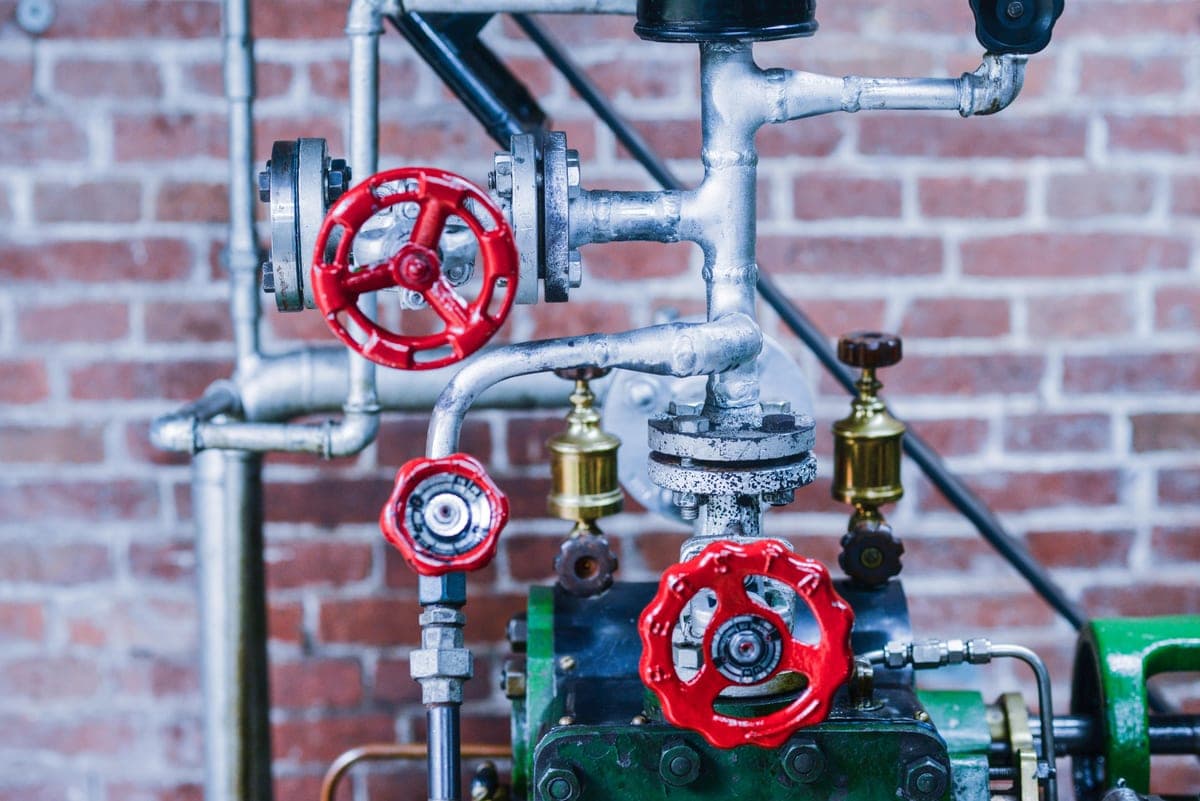
Pick 1 — 40 to 50 gallon tanks, low pressure
Amtrol Therm-X-Trol ST-5
The default small expansion tank: 2.0 gallons of volume, 0.9 gallons of acceptance, and the size Amtrol's own chart puts on a 50-gallon heater at 40 psi static pressure and a 160°F setting.
| Tank volume | 2.0 gallons |
|---|---|
| Maximum acceptance volume | 0.9 gallons |
| Diameter | 8 in |
| Height | 13 in |
| System connection | 3/4 in NPTM |
| Maximum working pressure | 150 psig |
| Maximum operating temperature | 200°F |
| Factory pre-charge | 50 psig |
What is good
- The size Amtrol's own quick-sizing chart specifies for a 50-gallon heater at 40 psi and 160°F
- Small enough to hang off the cold inlet without extra support in most installs
- Pre-charged to 50 psig out of the box
- 3/4 in NPTM connection matches the standard tee
What is not
- 0.9 gallons of acceptance is not enough at higher static pressure — Amtrol's chart moves you to the ST-12 at 60 psi
- The pre-charge has to be matched to your static supply pressure, which means a gauge and a bike pump
- Needs supporting if you plumb it horizontally
Skip it if: Skip it if your static supply pressure is 60 psi or more. Amtrol's own sizing chart puts a 50-gallon heater at 60 psi on the ST-12, and an undersized expansion tank simply does not do its job.
No live price feed on this site, so we show none. #ad
Specifications above from Amtrol ST-5 data specification sheet (PDF); Amtrol Therm-X-Trol quick sizing chart (PDF). We have not tested this unit ourselves.
Pick 2 — 50 gallon tanks at normal pressure
Amtrol Therm-X-Trol ST-12
The size most 50-gallon installs actually need: 4.4 gallons of volume and 3.2 gallons of acceptance, which is what Amtrol's chart calls for at 60 psi static pressure.
| Tank volume | 4.4 gallons |
|---|---|
| Maximum acceptance volume | 3.2 gallons |
| Diameter | 11 in |
| Height | 15 in |
| System connection | 3/4 in NPTM |
| Maximum working pressure | 150 psig |
| Maximum operating temperature | 200°F |
| Factory pre-charge | 50 psig |
What is good
- 3.2 gallons of acceptance covers 50-gallon heaters at the static pressures most municipal supplies actually run
- Same 3/4 in NPTM connection and 150 psig rating as the ST-5
- Headroom means a slightly wrong pre-charge still works
- The size a plumber would fit by default
What is not
- 11 inches across and 15 inches tall needs real clearance above the heater
- Too heavy to hang unsupported from a horizontal tee
- Overkill for a 30- or 40-gallon tank on low pressure
Skip it if: Skip it if there is under 16 inches of clear space above your cold inlet. People buy the ST-12, find it will not fit, and then install it unsupported — which is how a tee cracks a year later.
No live price feed on this site, so we show none. #ad
Specifications above from Amtrol ST-12 sizing chart sheet (PDF); Amtrol Therm-X-Trol brochure, September 2025 (PDF). We have not tested this unit ourselves.
Pick 3 — Larger ASME installs
Watts DETA-12
Five gallons of volume and 3.3 gallons of acceptance, ASME stamped — the Watts answer for an 80-gallon tank or a high static pressure supply.
| Tank volume | 5 gallons |
|---|---|
| Acceptance volume | 3.3 gallons |
| Construction | ASME Section VIII, carbon steel |
| Diaphragm | Fixed, FDA-approved butyl rubber |
| Connection | 3/4 in stainless male NPT |
| Factory pre-charge | 40 psi |
| Maximum pressure | 150 psi (10 bar) |
What is good
- 3.3 gallons of acceptance handles 80-gallon tanks and high static pressure
- ASME stamp for inspected work
- Same stainless connection and butyl diaphragm as the DETA-5
- Largest acceptance volume in this registry
What is not
- Needs genuine clearance and a support bracket
- 40 psi pre-charge needs adjusting on almost every install
- Most expensive expansion tank here
Skip it if: Skip it on a 40- or 50-gallon residential heater. Oversizing an expansion tank is not harmful, but it is money spent on acceptance volume you will never use.
No live price feed on this site, so we show none. #ad
Specifications above from Watts DETA-12 product page; Supply House listing, Watts 0212027 DETA-12. We have not tested this unit ourselves.
The pre-charge step, which decides whether any of this works
Set the tank's air charge to your static supply pressure, with the tank out of the system or the water side depressurized. Amtrol ships at 50 psig; Watts DETA tanks ship at 40 psi.
Get this wrong and the tank does nothing useful. Charged too low, it fills with water and has no air cushion left. Charged too high, the diaphragm never moves off the shell and it accepts nothing. Either way your system pressure climbs on every heating cycle exactly as if no tank were fitted, and that is the commonest reason a correctly-sized expansion tank fails to solve the problem.
How to tell if yours has failed
- System pressure climbs after a heating cycle. Watch a gauge through one cycle; stable is correct, climbing is not.
- The relief valve weeps periodically, usually shortly after the heater has run.
- Tap the tank. It should sound hollow at the top (air) and dull at the bottom (water). Dull all the way up means it is waterlogged.
- Press the Schrader valve. Air should come out. Water means the diaphragm has failed and the tank needs replacing.
What goes in with it
A water heater is a system, not a box. These are the parts that go in with it, and the ones people discover they need halfway through the job.
- Expansion tank
Required by code on a closed system, which is most homes with a pressure-reducing valve.
- Drain pan
Cheap insurance anywhere the tank sits above something you care about.
- Anode rod
The part that decides when the tank leaks. Replacing it is the highest-value hour of maintenance there is.