Heat Pump Water Heaters in Cold Climates
One specification decides this, and it is not the UEF.
Heat & Tap earns a commission on qualifying purchases made through the Amazon links on this page, at no extra cost to you. Commission does not decide what we recommend or how we rank it. Full disclosure.

In a cold climate the specification that matters is the lower ambient operating limit, not the UEF. Rheem publishes 37 to 145°F for the ProTerra and states it meets Northern Climate Specification Tier 4. Below the lower limit the compressor stops and the backup resistance element takes over — you still get hot water, at resistance cost.
A heat pump water heater takes heat out of the air around it. Cold air has less heat in it. So in a cold space the unit works harder for less result, and below a threshold it stops trying and switches to the resistance element.
That is the whole physics of this page. What follows is how manufacturers describe it, what the thresholds actually are, and how to choose an install location so the efficiency you paid for is the efficiency you get.
The number to look for
Lower ambient operating limit. Every manufacturer publishes an ambient operating range; the bottom of that range is the temperature below which the compressor will not run. Rheem states 37 to 145°F for the ProTerra line and describes it as the widest in class.
Thirty-seven degrees is a genuinely useful number. An attached garage in Chicago or Boston spends most of the winter above 37°F, because it is buffered by the house on one side and the ground on another. A detached unheated garage in Minneapolis does not.
What the Northern Climate Specification means
The Northern Climate Specification is a tiered standard developed to identify heat pump water heaters that perform acceptably in cold northern installations. Higher tiers indicate better cold-weather performance.
| Unit | Claim | Ambient range |
|---|---|---|
| Rheem ProTerra 50 (240 V) | Designed to meet Northern Climate Specification Tier 4 | 37 to 145°F |
| Rheem ProTerra 120 V plug-in | Designed to meet NEEA Northern Climate Specification Tier 2 | 37 to 145°F |
What actually happens at the limit
- Above the limit, heat pump mode. The compressor runs, the UEF is what the label says, and recovery is normal for the unit.
- Approaching the limit, reduced capacity. Less heat available in the air, so recovery slows. You may notice longer reheat times rather than anything dramatic.
- Below the limit, resistance mode. The compressor stops and the backup element takes over. You get hot water at the running cost of a resistance tank. Nothing breaks, but the efficiency you bought is not there until the space warms up.
- Well below, with the space below freezing, there is a plumbing risk rather than a unit risk — the water in the pipes and the tank itself. A heat pump water heater in a space that freezes needs the same freeze protection as any other plumbing.
Choosing a location in a cold climate
| Location | Winter temperature | Verdict |
|---|---|---|
| Unfinished basement | Usually 55 to 65°F year round | Best. Thermally buffered by the ground, plenty of air volume, usually a drain |
| Attached garage | Often 40 to 55°F | Good, if the unit's lower limit is 37°F or below |
| Heated utility room | Room temperature | Works, but your furnace pays for the hot water — discount the saving |
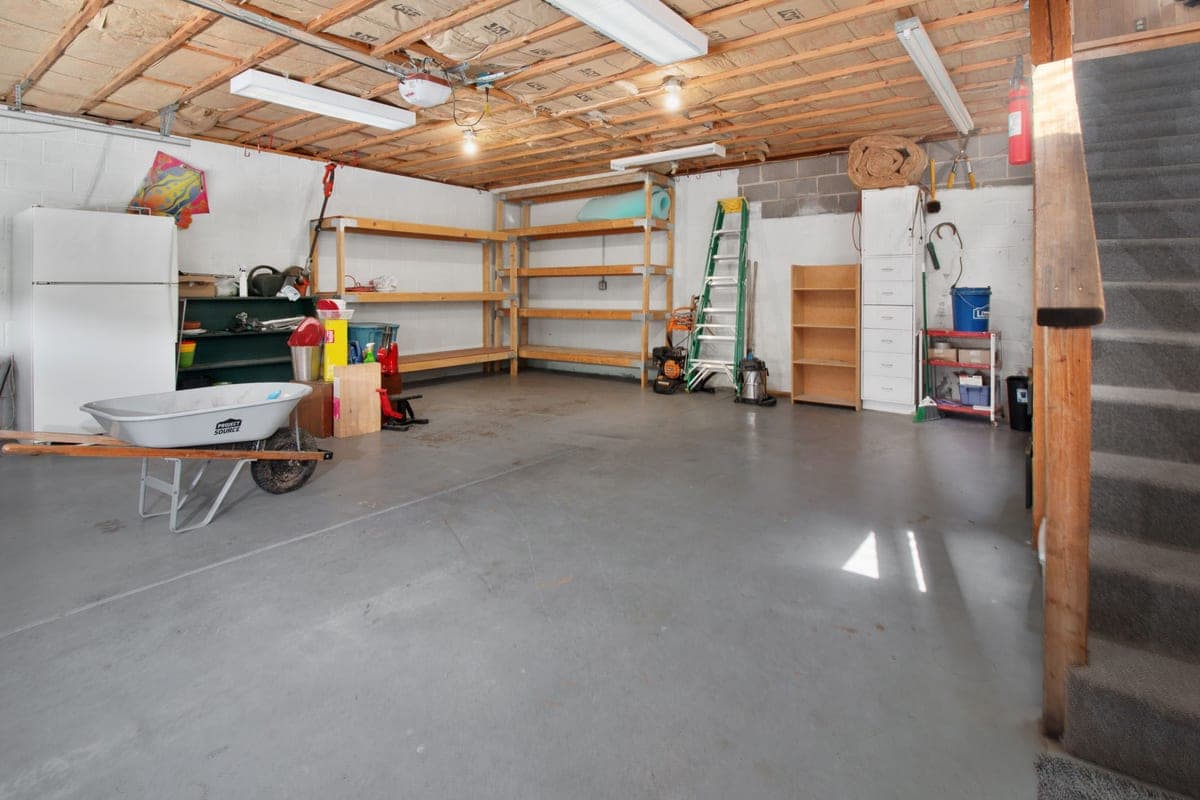
| Detached or unheated garage | Can drop below freezing | Poor. Expect resistance mode for much of the winter, plus freeze risk |
| Sealed closet | Any | Does not work at any temperature — no air volume |
The unfinished basement is the ideal cold-climate location and it is not close. Ground-coupled, so it stays 55 to 65°F year round; plenty of air volume; usually a floor drain for condensate; and the mild cooling in winter is barely noticeable. Garage and basement installs.
Units that publish a cold-climate figure
Pick 1 — Most heat pump installs
Rheem ProTerra 50 gal hybrid
The heat pump water heater to start with: a 3.88 UEF, a 67-gallon first-hour rating, and a 37°F lower operating limit that is the widest ambient range in its class — which is the specification that decides whether it works in a cold garage.
| Capacity | 50 gallons |
|---|---|
| Efficiency | 3.88 UEF; up to 4.07 UEF advertised on 30 A models |
| First-hour rating | 67 gallons |
| Recovery | 27 gallons per hour |
| Heat pump capacity | 4,200 BTU/h |
| Backup element | 5,000 W |
| Voltage | 208 - 240 V |
| Ambient operating range | 37 - 145°F |
| Cold-climate rating | Meets Northern Climate Specification Tier 4 |
| Leak protection | Integrated detection with factory-fitted auto shutoff; leaks limited to no more than 20 oz |
| Warranty | 10-year limited |
What is good
- A 37°F lower limit means the compressor keeps running in an unheated garage through most of a northern winter
- 3.88 UEF is roughly four times a resistance tank, so the running cost difference is not marginal
- 67-gallon first-hour rating is better than most 50-gallon resistance tanks
- EcoNet control lets you force high-demand mode before guests arrive instead of discovering the limit
What is not
- It is a refrigeration appliance in your house: there is a compressor, a fan and a condensate drain
- Needs roughly 700 cubic feet of air, or louvered doors, in a closet
- It cools and dehumidifies the space it stands in, which is a gift in a Houston garage and a problem in a Minnesota basement
Skip it if: Skip it if the only place it can go is a finished, heated room you occupy. It will steal heat from that room in winter — your furnace then pays for the hot water, and the efficiency you bought disappears.
No live price feed on this site, so we show none. #ad
Specifications above from Rheem ProTerra PROPH50 T2 RH375-30 product page; ABR Wholesalers listing, PROPH50 T2 RH375-30. We have not tested this unit ourselves.
Pick 2 — No 240 V circuit available
Rheem ProTerra 120 V plug-in, 50 gal
The one heat pump water heater that does not need an electrician: it runs on a dedicated 120 V 15 A circuit, which makes it the only realistic efficiency upgrade in a condo or a house with a full panel.
| Capacity | 50 gallons |
|---|---|
| Voltage | 120 V |
| Power | 1.8 kW |
| Circuit | Dedicated 120 V 15 A |
| Efficiency | 3.0 UEF on a dedicated circuit; up to 3.5 UEF on the shared-circuit model |
| Ambient operating range | 37 - 145°F |
| Cold-climate rating | Designed to meet NEEA Northern Climate Specification Tier 2 |
| Utility programs | Built-in EcoPort CTA-2045 port |
What is good
- A standard 120 V circuit removes the panel upgrade that kills most heat pump retrofits
- Still roughly three times as efficient as a resistance tank
- CTA-2045 port makes it eligible for utility demand-response payments where those exist
- Same 37°F lower operating limit as the 240 V models
What is not
- 1.8 kW means slow recovery — this is a tank you let work overnight, not one you push
- No big resistance element to bail you out during a surge in demand
- A dedicated circuit is still a circuit: a shared-outlet install is a different model number
Skip it if: Skip it if your household regularly empties the tank — a big family, or two showers plus a dishwasher back to back. With 1.8 kW of input and no large backup element, recovery is the whole constraint.
No live price feed on this site, so we show none. #ad
Specifications above from Rheem plug-in heat pump specification sheet (PDF); Ferguson listing, ProTerra 50 gal 120 V plug-in. We have not tested this unit ourselves.
The honest accounting in a cold climate
If the unit spends, say, two winter months in resistance mode and ten months in heat pump mode, your annual efficiency is a blend rather than the nameplate figure. That is still a very large saving against a resistance tank — but it is not a 3.88 UEF saving, and anyone telling you it is has not thought about it.
Three ways to improve the blend: pick a unit with the lowest published ambient limit; put it in a basement rather than a garage; and insulate the space a little if it is a garage you are keeping anyway.
What goes in with it
A water heater is a system, not a box. These are the parts that go in with it, and the ones people discover they need halfway through the job.
- Drain pan
A heat pump water heater makes condensate continuously, so this one is not optional.
- Leak detector
A condensate line that blocks will overflow long before you notice it.
- Expansion tank
Same closed-system rule as any other storage tank.