Best RV Water Heaters
Six gallons and a short shower, or endless hot water and a pressure requirement. That is the whole decision.
Heat & Tap earns a commission on qualifying purchases made through the Amazon links on this page, at no extra cost to you. Commission does not decide what we recommend or how we rank it. Full disclosure.
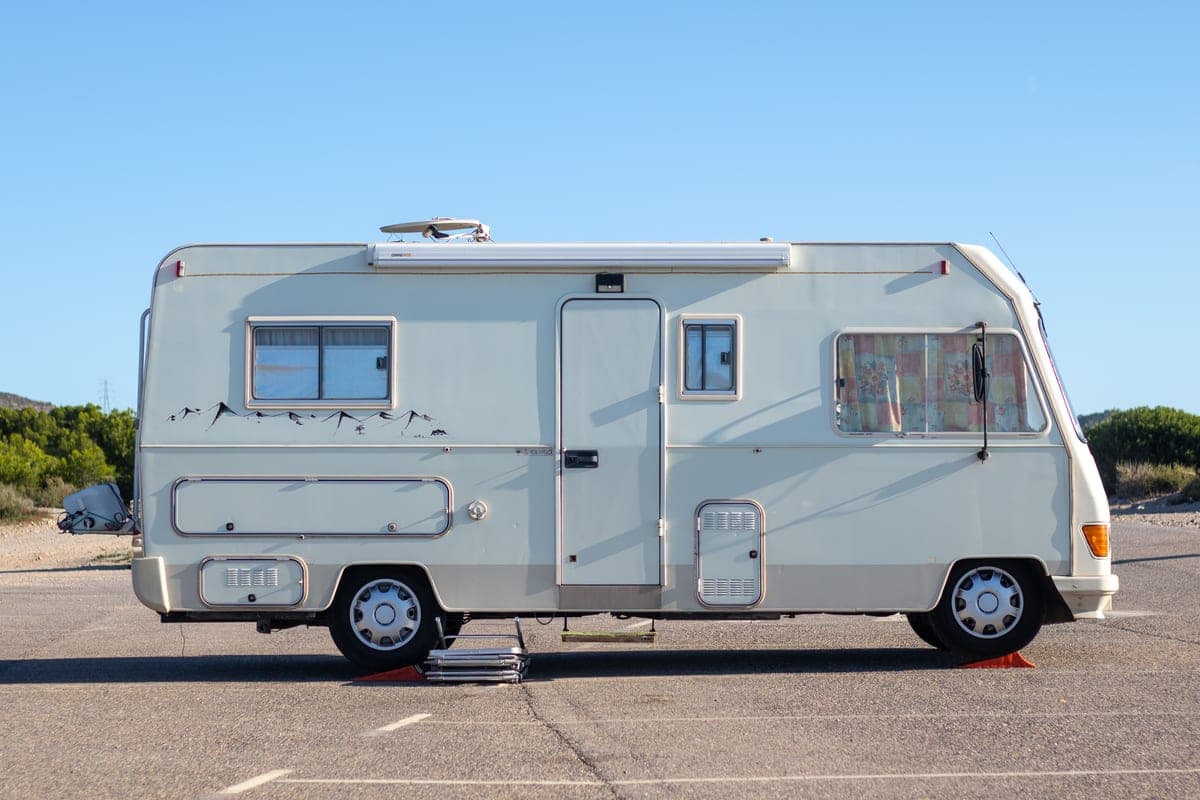
The Suburban SW6DE is the safe choice: a 6-gallon dual-fuel tank, 12,000 BTU/h on propane or 1,440 W on shore power, with a 10.2 gallon-per-hour recovery. Swap to the Girard GSWH-2 tankless (42,000 BTU/h, 0.9 to 1.5 GPM) if you want endless hot water and your pump can hold 45 psi.
An RV water heater has three constraints a house unit does not: it has to work on propane when there is no shore power, it has to survive highway vibration, and it has to be winterized or it splits. Everything in this category is shaped by those three facts.
Quick picks
Tap any row to read the full assessment below, or go straight to Amazon from the right-hand column. We earn a commission on qualifying purchases at no extra cost to you.
| # | Product | Best for | Price |
|---|---|---|---|
| 1 |  Suburban SW6DE (6 gal, dual fuel)The dual-fuel RV tank: 12,000 BTU/h on propane or 1,440 W on shore power, with a 10.2 gallon-per-hour recovery — unexciting, and the reason it is still the default fitment. | RV hookups and propane both | Check price on Amazon No live price feed on this site, so we show none. #ad |
| 2 | Girard GSWH-2 RV tanklessThe standard tankless retrofit for a 6-gallon RV bay: 42,000 BTU/h, 0.9 to 1.5 GPM, and a digital panel that sets the output temperature between 95 and 124°F instead of making you mix at the faucet. | Replacing a 6-gallon RV tank | Check price on Amazon No live price feed on this site, so we show none. #ad |
| 3 |  Camplux Pro 10 (2.64 GPM propane)A 2.64 GPM propane unit that runs off a BBQ cylinder — the right answer for a cabin shower or an outdoor wash station, and the wrong answer for a house. | Outdoor and off-grid propane | Check price on Amazon No live price feed on this site, so we show none. #ad |
The picks in full
Pick 1 — RV hookups and propane both
Suburban SW6DE (6 gal, dual fuel)
The dual-fuel RV tank: 12,000 BTU/h on propane or 1,440 W on shore power, with a 10.2 gallon-per-hour recovery — unexciting, and the reason it is still the default fitment.
| Capacity | 6 gallons |
|---|---|
| Gas input | 12,000 BTU/h |
| Electric input | 1,440 W |
| Recovery | 10.2 gallons per hour |
| Fuel | Propane and electric |
What is good
- Runs on shore power at a campground and propane off-grid
- A six-gallon reservoir means pressure dips do not produce instant cold water
- Simple, serviceable, parts in every RV supply store
- No minimum flow or pressure to satisfy
What is not
- Six gallons is a short shower, full stop
- 10.2 gallons per hour of recovery means a real wait between showers
- The tank needs an anode rod and annual maintenance
Skip it if: Skip it if two people want showers back to back. Six gallons and 10.2 gallons per hour of recovery is the arithmetic that makes RV tankless conversions popular in the first place.
No live price feed on this site, so we show none. #ad
Specifications above from Campervan HQ RV water heater comparison data. We have not tested this unit ourselves.
Pick 2 — Replacing a 6-gallon RV tank
Girard GSWH-2 RV tankless
The standard tankless retrofit for a 6-gallon RV bay: 42,000 BTU/h, 0.9 to 1.5 GPM, and a digital panel that sets the output temperature between 95 and 124°F instead of making you mix at the faucet.
| Fuel | Propane |
|---|---|
| Gas input | 42,000 BTU/h |
| Flow | 0.9 - 1.5 GPM |
| Water pressure | 45 - 125 psi |
| Electrical | 12 V DC, under 3 A |
| Control | Digital wall panel, 95 - 124°F |
What is good
- Endless hot water in a bay that previously held six gallons
- Under 3 A at 12 V, so it runs on house batteries
- Set-point control means a consistent shower instead of chasing the mixer
- Drops into the common 6-gallon opening
What is not
- Needs 45 psi, which an undersized RV pump may not deliver
- Tankless means no reservoir, so a dropped-out pump equals instant cold
- Requires winterizing like any tankless unit
Skip it if: Skip it if you dry camp with a low-output water pump. Below the 45 psi minimum the unit will cycle or refuse to fire, and the fix is a new pump — budget for both or stay with a tank.
No live price feed on this site, so we show none. #ad
Specifications above from Campervan HQ listing, Girard GSWH-2. We have not tested this unit ourselves.
Pick 3 — Outdoor and off-grid propane
Camplux Pro 10 (2.64 GPM propane)
A 2.64 GPM propane unit that runs off a BBQ cylinder — the right answer for a cabin shower or an outdoor wash station, and the wrong answer for a house.
| Fuel | Propane (20 lb cylinder) |
|---|---|
| Output | 2.64 GPM |
| Gas input | 65,000 - 68,000 BTU/h depending on model variant |
| Temperature rise | Rated flow quoted at a 70°F rise |
| Temperature range | 50 - 140°F, adjustable |
| Minimum activation flow | 0.5 GPM |
| Installation | Outdoor / vented enclosure only |
What is good
- 0.5 GPM activation is low enough for an RV pump or a gravity-fed line
- Runs on a standard 20 lb propane cylinder with no gas line or permit
- 2.64 GPM is a genuine shower, not a trickle
- Temperature is set on a dial rather than by mixing at the fixture
What is not
- Outdoor use only — these are not indoor-rated appliances
- Battery or 12 V ignition means it stops working when the batteries die
- No freeze protection: it has to be drained for winter
Skip it if: Skip it for anything inside a house. These units are certified for outdoor use and venting an outdoor-rated propane heater indoors is a carbon monoxide risk, not a code technicality.
No live price feed on this site, so we show none. #ad
Specifications above from Tractor Supply listing, Camplux 2.64 GPM 68,000 BTU; Lowe's listing, Camplux Plus 10, 2.64 GPM 65,000 BTU. We have not tested this unit ourselves.
Tank or tankless, honestly
| 6 gal dual-fuel tank | Propane tankless | |
|---|---|---|
| Hot water available | 6 gallons, then a wait | Continuous while propane and water last |
| Shower length | About 4 to 6 minutes | As long as the tank water lasts |
| Recovery | 10.2 gal/hr (Suburban SW6DE) | Not applicable |
| Runs on shore power? | Yes, 1,440 W | No, propane only (12 V for controls) |
| Minimum water pressure | None | 45 psi on the Girard GSWH-2 |
| Behavior if the pump dips | Unaffected — there is a reservoir | Instant cold, or the unit will not fire |
| Maintenance | Anode rod, annual flush | Descale, winterize |
| Propane consumption | Low, cycling | Higher while running |
Who should buy which
- Mostly campgrounds with hookups, two people → the dual-fuel tank. Shore power heating is free at a site with included electricity, and 6 gallons is enough for two quick showers taken an hour apart.
- Boondocking, want real showers → tankless, with a pump that holds pressure. Endless hot water without carrying the weight of a reservoir.
- Full-timing with a family → tankless, clearly. Six gallons and a 10.2 gallon-per-hour recovery does not serve four people.
- An outdoor shower or a wash station rather than an interior bathroom → a portable propane unit like the Camplux Pro 10 at 2.64 GPM, which needs no install at all.
The anode rod rule, which depends on whose tank you have
This is the single most consequential piece of RV water heater maintenance knowledge, and it is brand-specific:
- Suburban and Mor-Flo tanks are steel-lined and need an anode rod. Running one without a functioning anode shortens the tank's life considerably. Check it annually and replace it when it is substantially consumed.
- Atwood and Dometic tanks are aluminum and do NOT use a sacrificial anode. Fitting one is not a precaution; it is damaging, because it introduces galvanic activity the tank was not designed for.
Get this backwards in either direction and you shorten the life of the tank. RV water heater anode rods covers how to identify which you have.
Winterizing is not optional
- Drain the tank completely — on a Suburban that means removing the anode rod, which doubles as the drain plug.
- Open the relief valve to let the tank vent while draining.
- Bypass the water heater so antifreeze does not fill 6 gallons of tank unnecessarily.
- Blow out or pump antifreeze through the lines per your coach's procedure.
- On a tankless unit, follow the manufacturer's drain-down procedure precisely — there is very little water in the unit and a lot of small passages, and a split heat exchanger is not repairable.
What goes in with it
A water heater is a system, not a box. These are the parts that go in with it, and the ones people discover they need halfway through the job.
- RV anode rod
Suburban and Mor-Flo tanks need one. Atwood aluminum tanks do not, and fitting one does damage.
- Descaler
RV tanks and tankless units scale faster than house units because of the water you fill from.
How we chose
Published fuel and electrical specifications, then the practical constraint each unit imposes — water pressure for tankless, recovery rate for tank — then maintenance burden. We have not tested these units. How we pick.