Best Propane Water Heater for an Off-Grid Cabin
Off grid means two constraints the spec sheets rarely lead with: what ignites it, and what water pressure it needs to fire at all.
Heat & Tap earns a commission on qualifying purchases made through the Amazon links on this page, at no extra cost to you. Commission does not decide what we recommend or how we rank it. Full disclosure.
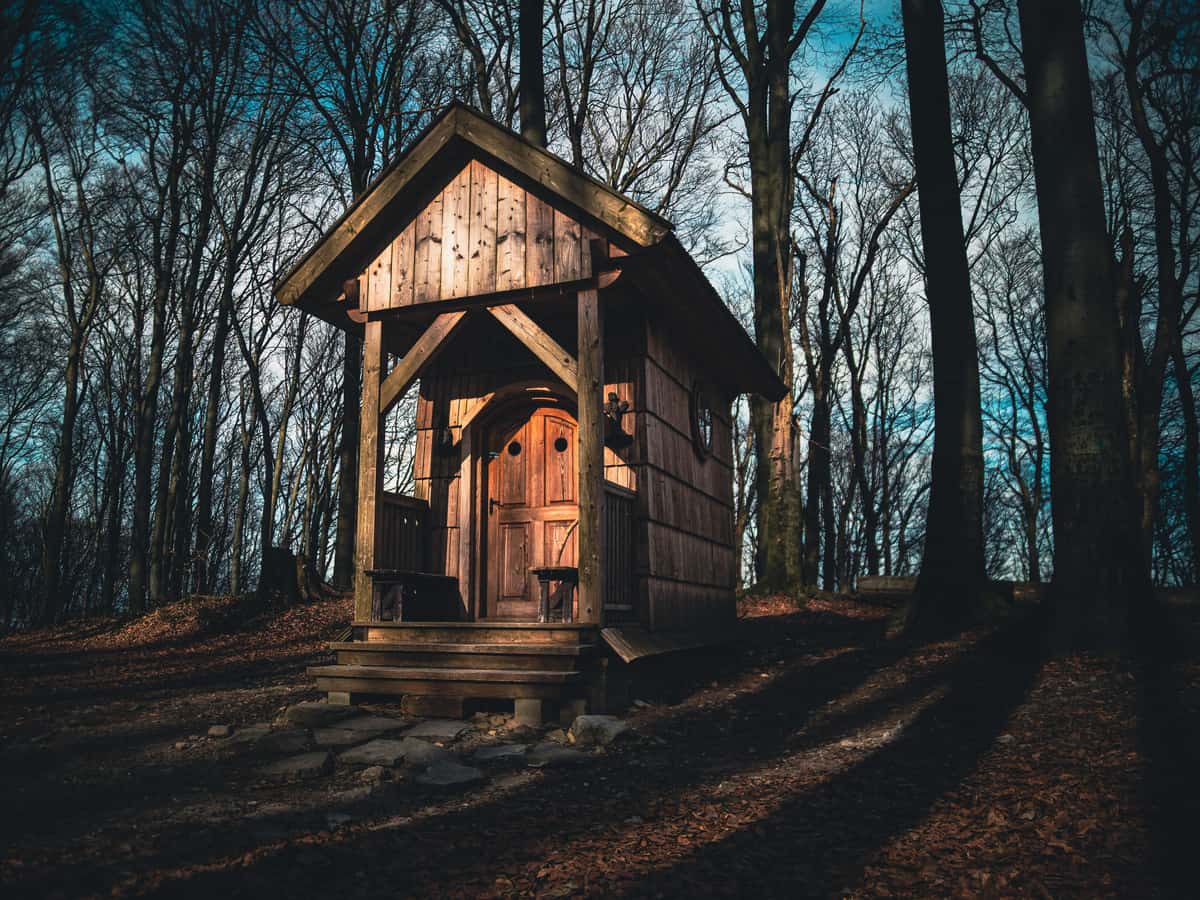
For a cabin shower with no electrical service, the Camplux 10L Pro BD264 is the pick: 2.64 GPM, 68,000 BTU/h, an LED set point and about 16 hours of continuous running on a 20 lb cylinder. If your water comes from a gravity tank rather than a pump, buy the Camplux 5L AY132 instead — it has a 3 psi start-up pressure and D-battery ignition, which is the combination that fires where bigger units will not. All three are outdoor or vented-enclosure only.
Off-grid hot water is a different problem from household hot water, and the specification that decides it is not flow. It is start-up pressure. A propane tankless unit has a flow switch: water has to move hard enough to tell the burner to light. A gravity-fed jug on a shelf produces a few psi, and most units will sit there doing nothing while the tap runs cold.
What to look for in an off-grid unit
- Start-up pressure. The number that decides whether a gravity feed works at all. The 5 L AY132 publishes 3 psi; if your supply is a raised jug or a header tank, that figure is the whole decision.
- Ignition that needs no mains power. Battery ignition — two D cells on the AY132 — means no 12 V wiring, no inverter and no generator just to get hot water.
- Flow against the rise you actually need. 1.32 GPM is a rinse. 2.64 GPM is a shower. Camplux quotes the 2.64 GPM figure at a 70°F rise, which is unusually honest for the category.
- Cylinder runtime. About 16 hours of continuous use on a 20 lb cylinder on the 10 L Pro, which is the figure to plan a week at the cabin around.
- Minimum activation flow. The Pro 10 publishes 0.5 GPM, so a trickle at a low-flow fixture will not fire it.
- Freeze handling. Every unit here has to be drained before a freeze. There is no antifreeze mode on a battery-ignition propane heater.
Quick picks
Tap any row to read the full assessment below, or go straight to Amazon from the right-hand column. We earn a commission on qualifying purchases at no extra cost to you.
| # | Product | Best for | Price |
|---|---|---|---|
| 1 | Camplux 10L Pro BD264 portableThe bigger portable: 2.64 GPM and 68,000 BTU/h with an LED set-point display, which is enough flow for an actual shower rather than a rinse. | A real shower off-grid | Check price on Amazon No live price feed on this site, so we show none. #ad |
| 2 | Camplux Pro 10 (2.64 GPM propane)A 2.64 GPM propane unit that runs off a BBQ cylinder — the right answer for a cabin shower or an outdoor wash station, and the wrong answer for a house. | Outdoor and off-grid propane | Check price on Amazon No live price feed on this site, so we show none. #ad |
| 3 |  Camplux 5L AY132 portableTen pounds, 1.32 GPM, 34,000 BTU/h and a 3 psi start-up pressure — the portable that works off a gravity-fed jug where bigger units will not fire. | Camp showers and rinse stations | Check price on Amazon No live price feed on this site, so we show none. #ad |
The three units in full
Pick 1 — A real shower off-grid
Camplux 10L Pro BD264 portable
The bigger portable: 2.64 GPM and 68,000 BTU/h with an LED set-point display, which is enough flow for an actual shower rather than a rinse.
| Fuel | Propane |
|---|---|
| Output | 2.64 GPM |
| Gas input | 68,000 BTU/h |
| Temperature range | 50 - 140°F, adjustable |
| Display | LED set point |
| Cylinder runtime | About 16 hours of continuous use on a 20 lb cylinder |
| Certification | CSA approved |
What is good
- 2.64 GPM is twice the 5 L unit's flow — the difference between a rinse and a shower
- LED display makes the set point readable in daylight
- Around 16 hours of continuous running on one 20 lb cylinder
- Same six-way protection suite as the smaller Camplux units
What is not
- Needs more water pressure than the 5 L model to reach rated flow
- Heavier and bulkier to carry
- Outdoor use only, and it has to be drained before a freeze
Skip it if: Skip it if your only water source is a gravity jug. The higher flow rating assumes real supply pressure; with a trickle feed you will get the 5 L unit's performance from a bigger, heavier box.
No live price feed on this site, so we show none. #ad
Specifications above from Tractor Supply listing, Camplux Pro 10 L BD264. We have not tested this unit ourselves.
Pick 2 — Outdoor and off-grid propane
Camplux Pro 10 (2.64 GPM propane)
A 2.64 GPM propane unit that runs off a BBQ cylinder — the right answer for a cabin shower or an outdoor wash station, and the wrong answer for a house.
| Fuel | Propane (20 lb cylinder) |
|---|---|
| Output | 2.64 GPM |
| Gas input | 65,000 - 68,000 BTU/h depending on model variant |
| Temperature rise | Rated flow quoted at a 70°F rise |
| Temperature range | 50 - 140°F, adjustable |
| Minimum activation flow | 0.5 GPM |
| Installation | Outdoor / vented enclosure only |
What is good
- 0.5 GPM activation is low enough for an RV pump or a gravity-fed line
- Runs on a standard 20 lb propane cylinder with no gas line or permit
- 2.64 GPM is a genuine shower, not a trickle
- Temperature is set on a dial rather than by mixing at the fixture
What is not
- Outdoor use only — these are not indoor-rated appliances
- Battery or 12 V ignition means it stops working when the batteries die
- No freeze protection: it has to be drained for winter
Skip it if: Skip it for anything inside a house. These units are certified for outdoor use and venting an outdoor-rated propane heater indoors is a carbon monoxide risk, not a code technicality.
No live price feed on this site, so we show none. #ad
Specifications above from Tractor Supply listing, Camplux 2.64 GPM 68,000 BTU; Lowe's listing, Camplux Plus 10, 2.64 GPM 65,000 BTU. We have not tested this unit ourselves.
Pick 3 — Camp showers and rinse stations
Camplux 5L AY132 portable
Ten pounds, 1.32 GPM, 34,000 BTU/h and a 3 psi start-up pressure — the portable that works off a gravity-fed jug where bigger units will not fire.
| Fuel | Propane |
|---|---|
| Output | 1.32 GPM |
| Gas input | 34,000 BTU/h |
| Temperature range | 50 - 140°F |
| Start-up pressure | 3 psi |
| Ignition | 2 x D batteries |
| Weight | 10 lb |
| Dimensions | 11.42 in x 14.8 in x 4.33 in |
| Certification | CSA approved |
What is good
- 3 psi start-up means a low-pressure or gravity-fed supply still lights it
- Battery ignition, so no 12 V wiring at all
- Folding three-position handle and 10 lb weight make it genuinely portable
- CSA approved with six protective shutdowns including flame failure and dry combustion
What is not
- 1.32 GPM is a camp shower, not a household flow
- Outdoor use only
- D batteries are one more thing to forget
Skip it if: Skip it if you want to wash dishes and shower at the same time. At 1.32 GPM it serves one outlet, and splitting the flow drops the temperature at both.
No live price feed on this site, so we show none. #ad
Specifications above from Tractor Supply listing, Camplux 5 L 1.32 GPM AY132. We have not tested this unit ourselves.
Side by side on published figures
| Camplux 10L Pro BD264 | Camplux Pro 10 (2.64 GPM) | Camplux 5L AY132 | |
|---|---|---|---|
| Fuel | Propane | Propane, 20 lb cylinder | Propane |
| Output | 2.64 GPM | 2.64 GPM | 1.32 GPM |
| Gas input | 68,000 BTU/h | 65,000 – 68,000 BTU/h by variant | 34,000 BTU/h |
| Rise quoted with the flow? | Not stated | Yes — rated flow at a 70°F rise | Not stated |
| Temperature range | 50 – 140°F, adjustable | 50 – 140°F, adjustable | 50 – 140°F |
| Start-up pressure | Not published | Not published | 3 psi |
| Minimum activation flow | Not published | 0.5 GPM | Not published |
| Ignition | Not published | Not published | 2 x D batteries |
| Display | LED set point | Not published | None |
| Cylinder runtime | About 16 hours continuous on a 20 lb cylinder | Not published | Not published |
| Weight | Not published | Not published | 10 lb |
| Installation | Outdoor only | Outdoor / vented enclosure only | Outdoor only |
| Certification | CSA approved | Not published | CSA approved |
Why the 10 L Pro leads
Because 2.64 GPM is the point where a camp wash becomes a shower, and the BD264 reaches it with an LED set point you can read in daylight and a stated cylinder runtime of around 16 hours. For a cabin that gets used for weekends and the occasional week, that runtime is the planning number: one cylinder, several days, no generator involved.
The caveat is pressure. The higher flow rating assumes real supply pressure, so with a trickle feed you will get the 5 L unit's performance out of a bigger, heavier box. If the cabin has a pressure pump, the Pro is the right unit. If it has a jug on a shelf, it is not.
Why the 5 L is the pick for a gravity feed
Three psi and two D cells. That is the whole argument, and for a genuinely off-grid install it is a strong one. At 10 pounds the AY132 is also the one you can carry to the water rather than plumbing the water to it, and the folding handle is designed for exactly that.
What you give up is flow. At 1.32 GPM it serves one outlet, and splitting the flow between a shower and a sink drops the temperature at both. Treat it as a single-fixture appliance and it does its job; expect household behaviour from it and it will disappoint.
Which unit for which cabin
| Your situation | Pick | Why |
|---|---|---|
| Cabin with a pressure pump, want a real shower | Camplux 10L Pro BD264 | 2.64 GPM, LED set point, about 16 hours on a 20 lb cylinder |
| Gravity-fed tank or a raised jug | Camplux 5L AY132 | 3 psi start-up pressure and battery ignition |
| Outdoor wash station at the cabin or the barn | Camplux Pro 10 (2.64 GPM) | Publishes rated flow at a 70°F rise and a 0.5 GPM activation flow |
| Carrying it to a different site each time | Camplux 5L AY132 | 10 lb with a folding three-position handle |
| Cabin has mains or generator power and an indoor space | An indoor unit instead | None of these may be installed indoors |
| This is for an RV rather than a cabin | Best RV water heaters | RV installs have their own bay sizes, anode rules and dual-fuel options |
The RV overlap, and where it ends
Off-grid cabins and RVs share the propane and the no-mains-power constraint, which is why the same brand shows up in both categories. They diverge on mounting: an RV unit goes into a fixed bay with a specified cut-out and frequently offers a 120 V element as well as propane, where a cabin unit hangs on an outside wall. If you are shopping for a vehicle rather than a building, start with best RV water heaters and best RV tankless water heaters.
The maintenance overlap is real in both cases: cabin and RV units scale faster than house units because of the water they are filled from, so a descaler belongs in the kit. Best tankless water heater descalers.
What goes in with it
A water heater is a system, not a box. These are the parts that go in with it, and the ones people discover they need halfway through the job.
- RV anode rod
Suburban and Mor-Flo tanks need one. Atwood aluminum tanks do not, and fitting one does damage.
- Descaler
RV tanks and tankless units scale faster than house units because of the water you fill from.
How we chose
We ranked on what works with no electrical service first — ignition and start-up pressure — then on flow at a stated rise, then on cylinder runtime. We have not tested these units. How we pick.