Heat Pump Water Heater in a Garage or Basement
Location decides whether you get the efficiency you paid for. Here is how to choose it.
Heat & Tap earns a commission on qualifying purchases made through the Amazon links on this page, at no extra cost to you. Commission does not decide what we recommend or how we rank it. Full disclosure.
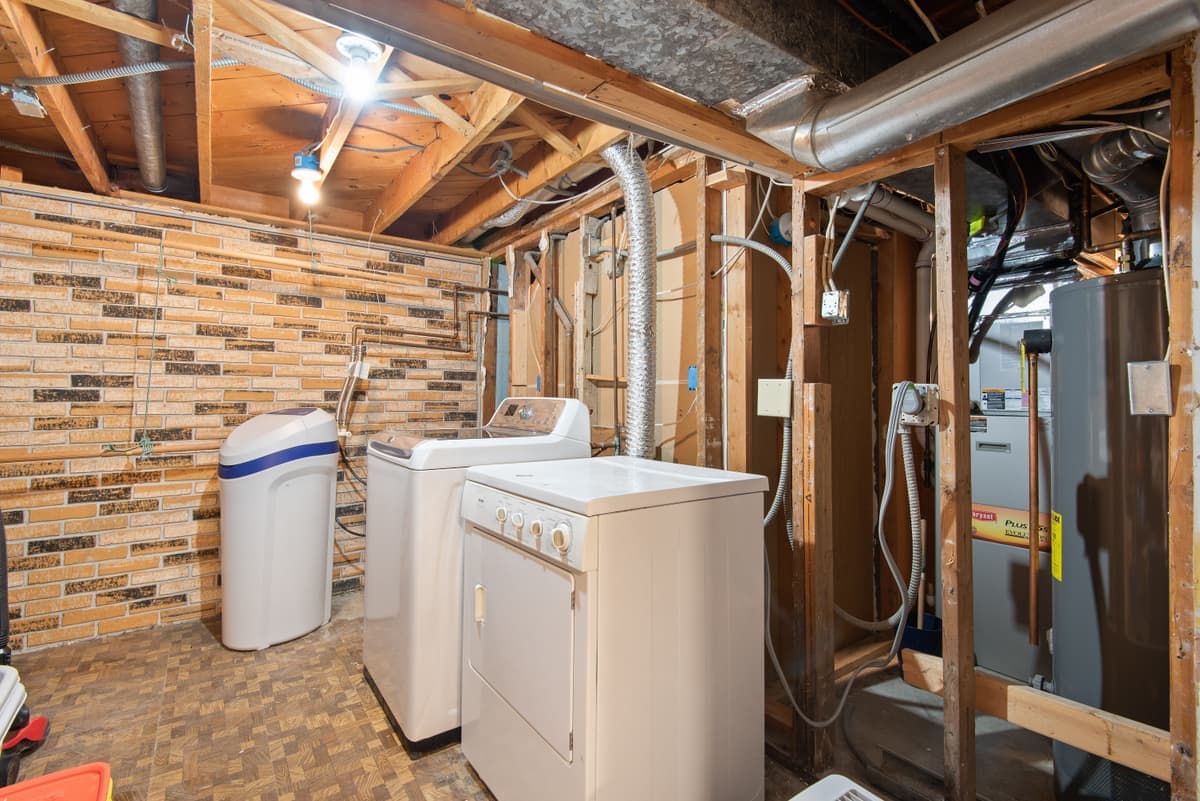
An unfinished basement is the best location for a heat pump water heater: 55 to 65°F year round, plenty of air, and usually a floor drain. An attached garage is a close second if the unit's lower ambient limit is 37°F or below. A sealed closet does not work at all — the unit will run on its backup resistance element.
People choose a heat pump water heater on the UEF and then put it wherever the old tank was. That is backwards: with this appliance the location is a bigger determinant of what you actually get than the model number.
The four location requirements
Air volume
The unit needs air to extract heat from. Manufacturers typically specify around 700 cubic feet of space, or louvered doors with a stated minimum free area if the unit is in a closet. Seven hundred cubic feet is about a 10 by 9 foot room with an 8-foot ceiling.
Put one in a 3 by 3 foot sealed closet and it will cool the closet to its lower ambient limit within an hour and then run on resistance indefinitely. The efficiency is not reduced in that scenario; it is absent.
Condensate
It dehumidifies the air it cools, continuously while running. Options in order of preference: a gravity drain to a floor drain or laundry standpipe; a gravity drain to the outside where code permits; a condensate pump. A pump works but adds a powered component that can fail, and when it fails you get water on the floor.
Which is why a drain pan is not optional on a heat pump install the way it is arguably optional on a resistance tank in a basement. An 80-gallon or 66-gallon heat pump unit wants a 26-inch pan. Drain pan sizing.
Noise
Compressor plus fan, roughly a dehumidifier. Practically:
- Garage or unfinished basement — nobody notices.
- Finished basement with a media room next door — noticeable, probably tolerable.
- Directly below a bedroom — the complaint that repeats most in owner reviews. Avoid.
- Shared wall with a neighbor in a condo — worth thinking about before, not after.
The cooling effect
It makes the space cooler and drier. Whether that is a benefit or a cost depends entirely on the space:
| Space | Summer | Winter |
|---|---|---|
| Attached garage, hot climate | Benefit — a cooler garage | Neutral |
| Unfinished basement | Benefit — drier, less musty | Mild negative, barely noticeable |
| Heated utility room | Neutral | Negative — your furnace supplies the heat it takes |
| Garage, cold climate | Benefit | Check the unit's lower ambient limit |
Location by location
Unfinished basement: the best option
Coupled to the ground, so it stays 55 to 65°F all year — comfortably above any unit's lower ambient limit. Large air volume by definition. Usually a floor drain already there. The dehumidification is a genuine improvement to a damp basement. If you have one, put it here.
Attached garage: good, with one check
Plenty of air, nobody to disturb, and in a hot climate the cooling is welcome. The one check is the unit's lower ambient limit against your winter garage temperature. With a 37°F limit, most attached garages in most US climates are fine. A detached or uninsulated garage in the upper Midwest is not.
Utility closet: only with louvered doors
Possible if the manufacturer permits it and you fit louvered doors meeting the specified free area, or duct the unit's intake and exhaust. Both are real options in the installation manual and both are more work than they sound. If the closet is in conditioned space in a cold climate, you are also in the "furnace pays for the hot water" scenario.
Second-floor laundry closet: the worst case
Small, sealed, inside conditioned space, usually adjacent to a bedroom, and above a finished ceiling. Every one of the four requirements fails at once. If this is your only location, buy a resistance tank with leak protection or a gas unit, and spend the money you save on a leak detector.
The unit, and what the install needs with it
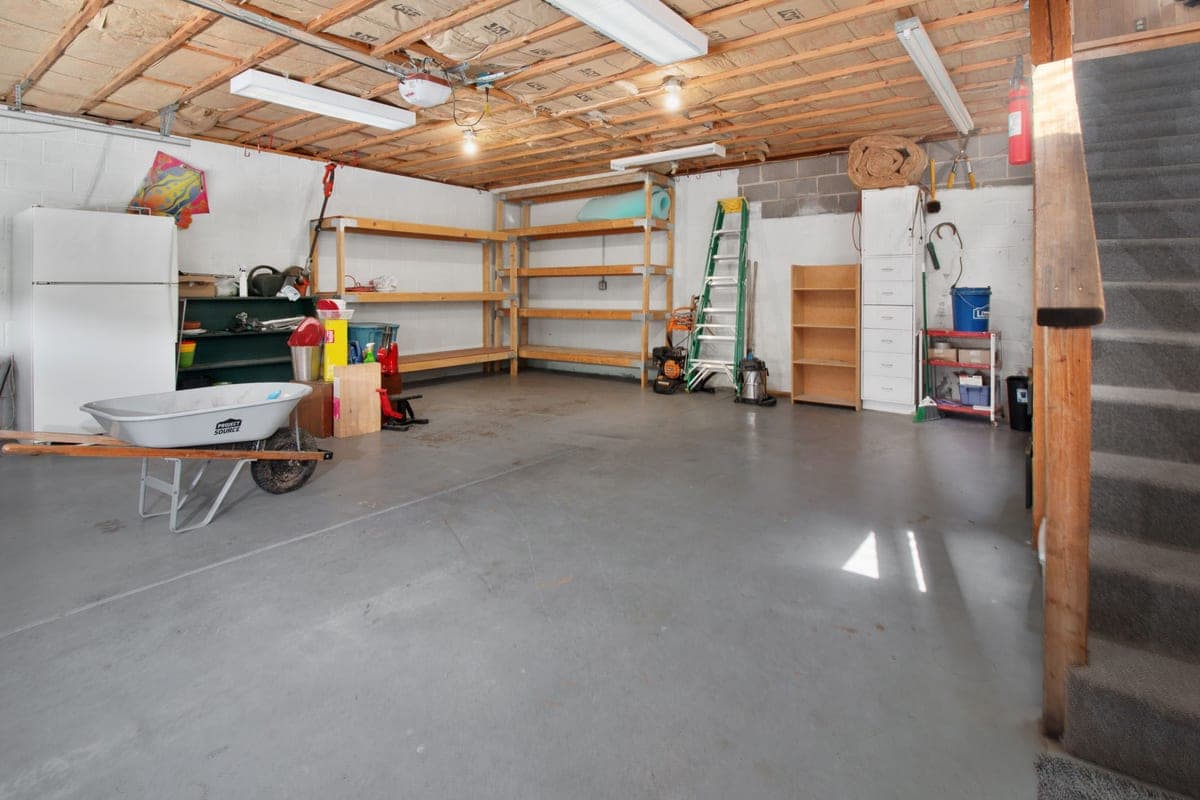
Pick 1 — Most heat pump installs
Rheem ProTerra 50 gal hybrid
The heat pump water heater to start with: a 3.88 UEF, a 67-gallon first-hour rating, and a 37°F lower operating limit that is the widest ambient range in its class — which is the specification that decides whether it works in a cold garage.
| Capacity | 50 gallons |
|---|---|
| Efficiency | 3.88 UEF; up to 4.07 UEF advertised on 30 A models |
| First-hour rating | 67 gallons |
| Recovery | 27 gallons per hour |
| Heat pump capacity | 4,200 BTU/h |
| Backup element | 5,000 W |
| Voltage | 208 - 240 V |
| Ambient operating range | 37 - 145°F |
| Cold-climate rating | Meets Northern Climate Specification Tier 4 |
| Leak protection | Integrated detection with factory-fitted auto shutoff; leaks limited to no more than 20 oz |
| Warranty | 10-year limited |
What is good
- A 37°F lower limit means the compressor keeps running in an unheated garage through most of a northern winter
- 3.88 UEF is roughly four times a resistance tank, so the running cost difference is not marginal
- 67-gallon first-hour rating is better than most 50-gallon resistance tanks
- EcoNet control lets you force high-demand mode before guests arrive instead of discovering the limit
What is not
- It is a refrigeration appliance in your house: there is a compressor, a fan and a condensate drain
- Needs roughly 700 cubic feet of air, or louvered doors, in a closet
- It cools and dehumidifies the space it stands in, which is a gift in a Houston garage and a problem in a Minnesota basement
Skip it if: Skip it if the only place it can go is a finished, heated room you occupy. It will steal heat from that room in winter — your furnace then pays for the hot water, and the efficiency you bought disappears.
No live price feed on this site, so we show none. #ad
Specifications above from Rheem ProTerra PROPH50 T2 RH375-30 product page; ABR Wholesalers listing, PROPH50 T2 RH375-30. We have not tested this unit ourselves.
Pick 2 — 80 gallon and heat pump tanks
Camco 11400 plastic pan, 26 in
Twenty-six inches across and 2-1/2 inches deep in plastic — the size that actually fits under an 80-gallon tank or a wide heat pump unit.
| Inside diameter | 26 in |
|---|---|
| Depth | 2-1/2 in |
| Material | Plastic |
| Drain fitting | PVC |
What is good
- 26 in clears the larger diameter of 80-gallon and heat pump tanks
- Deepest pan in this registry at 2-1/2 inches
- Plastic will not corrode in standing condensate the way aluminum can
- Takes the same PVC drain connection as the metal pans
What is not
- Plastic can crack in cold weather or under the weight of a dragged tank
- 26 inches may not fit the alcove the old tank came out of
- Still only a pan, not a shutoff
Skip it if: Skip plastic if the installer is going to walk a full tank across the pan. On a replacement day a thin plastic pan takes the weight of a 500 lb full tank being rocked into position — put aluminum under that.
No live price feed on this site, so we show none. #ad
Specifications above from Do It Best listing, Camco 26 in plastic pan. We have not tested this unit ourselves.
Pick 3 — Cheap early warning
Govee WiFi water leak detector
The cheapest useful leak alarm: a 100 dB siren plus a push and email alert, with one gateway covering up to 20 sensors around the house.
| Alarm | 100 dB, three selectable levels, mutable |
|---|---|
| Alerts | App push and email |
| Capacity | Up to 20 sensors per WiFi gateway |
| Current model | GoveeLife 1s rates a 105 dB alarm and 1,804 ft range |
What is good
- A siren loud enough to hear from another floor
- Email alerts mean you find out while you are away, not when you get back
- One gateway covers the heater, the washing machine and the dishwasher
- Cheap enough to put three around the house
What is not
- It alerts, it does not shut the water off
- Needs working WiFi and a live gateway to send anything
- Battery powered, so it needs checking once a year
Skip it if: Skip it as your only protection if the heater sits above a finished ceiling and you travel. An alert you cannot act on for three days is not protection — that case wants an automatic shutoff valve.
No live price feed on this site, so we show none. #ad
Specifications above from GoveeLife water leak detector 1s product page. We have not tested this unit ourselves.
Ducting, briefly
Most manufacturers permit ducting the intake, the exhaust, or both, within stated length and static pressure limits. The usual reasons are to take cool exhaust air out of a space you want to keep warm, or to feed the unit air from a larger adjacent space.
It works, and it is in the manual, and it reduces capacity. Follow the manufacturer's duct limits exactly — the figures are specific to the fan in the unit, which is why we are not quoting a general number here.
What goes in with it
A water heater is a system, not a box. These are the parts that go in with it, and the ones people discover they need halfway through the job.
- Drain pan
A heat pump water heater makes condensate continuously, so this one is not optional.
- Leak detector
A condensate line that blocks will overflow long before you notice it.
- Expansion tank
Same closed-system rule as any other storage tank.