Heat Pump Water Heater Noise
The complaint arrives in week two, not on day one. It is almost always a placement problem rather than a faulty unit.
Heat & Tap earns a commission on qualifying purchases made through the Amazon links on this page, at no extra cost to you. Commission does not decide what we recommend or how we rank it. Full disclosure.
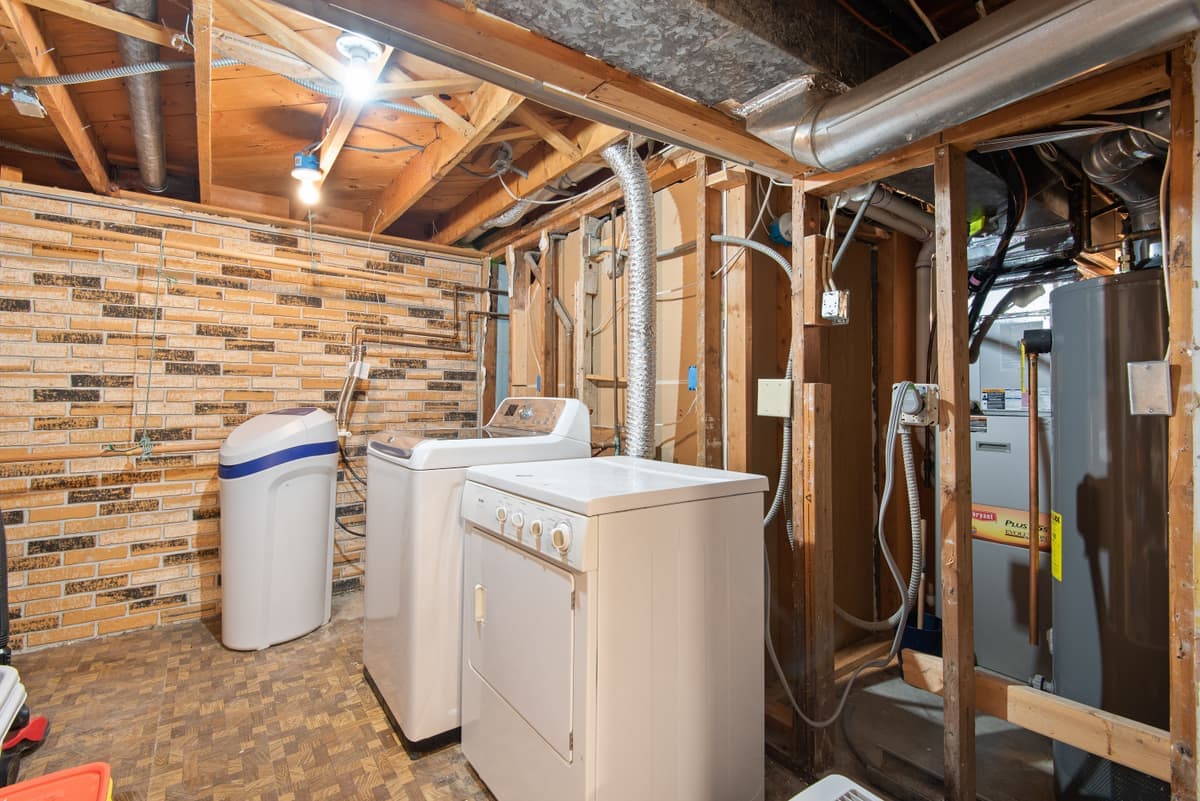
A heat pump water heater makes two sounds a storage tank does not: a fan, which runs the whole time the compressor does, and the compressor itself, which is a low hum with a start-up thump. Neither is loud in absolute terms. The complaint happens because the appliance being replaced was completely silent, and because the unit is frequently installed in a closet or a garage that shares a wall with a bedroom. The fix is almost always placement, isolation or scheduling rather than a different unit.
We do not publish a decibel figure for any unit on this page, because none of the sources we use for the rest of this site publishes one we could cite. Manufacturers that do quote sound levels measure them at a stated distance in a stated room, and that figure does not transfer to your closet. What transfers is the mechanism, and the mechanism is what this page is about. How we pick.
What the noise actually is
| Source | Character | When it happens |
|---|---|---|
| Evaporator fan | Continuous air movement, like a bathroom extractor at low speed | Whenever the heat pump is running |
| Compressor | Low-frequency hum, with a thump at start-up | Whenever the heat pump is running |
| Refrigerant flow | Occasional gurgle or tick | At the start and end of a cycle |
| Condensate drip or pump | Intermittent trickle, or a short buzz if a pump is fitted | Continuously while running |
| Resistance element | Silent | When the unit falls back to backup heating |
| Structure-borne vibration | Hum transmitted through the floor or a shared wall | The real cause of most complaints |
The last row is the one that matters. Airborne noise from the unit is modest. Vibration transmitted into a timber floor or a stud wall that backs onto a bedroom is what makes a heat pump water heater sound loud, and it is entirely an install problem.
Why it is a placement problem
A heat pump water heater needs about 700 cubic feet of air, which pushes installers towards garages, basements and utility rooms. Those are also the spaces most likely to share a lightweight wall with living space, and the unit is standing on a floor rather than hanging on a bracket. Low-frequency hum travels through structure far better than it travels through air, which is why the complaint usually comes from the room next door rather than the room the unit is in.
Enclosing it does not help and makes a different problem worse. Boxing a heat pump water heater in to quieten it starves it of the air it needs, and a starved unit falls back to the resistance element — silent, and running at resistance cost. Heat pump water heater in a garage or basement covers the air requirement properly.
What to look for before you buy
- Where the unit will physically stand, and what is on the other side of each wall and the floor below it. A bedroom or a nursery on the far side of a stud wall is the single best predictor of a complaint.
- Whether a schedule can keep it off at night. Both Rheem units here have connected controls that allow scheduling, and a heat pump that runs at 2 pm instead of 2 am is not a noise problem at all.
- Whether the floor is concrete or timber. Concrete absorbs the vibration; a joisted timber floor broadcasts it.
- The resistance backup behaviour. A unit in hybrid mode spends part of its time on the silent element, so the duty cycle of the noisy part is lower than people assume.
- Condensate handling. A gravity drain is silent; a condensate pump adds a short buzz every few minutes, which in a quiet house is more noticeable than the compressor.
Quick picks
Tap any row to read the full assessment below, or go straight to Amazon from the right-hand column. We earn a commission on qualifying purchases at no extra cost to you.
| # | Product | Best for | Price |
|---|---|---|---|
| 1 | 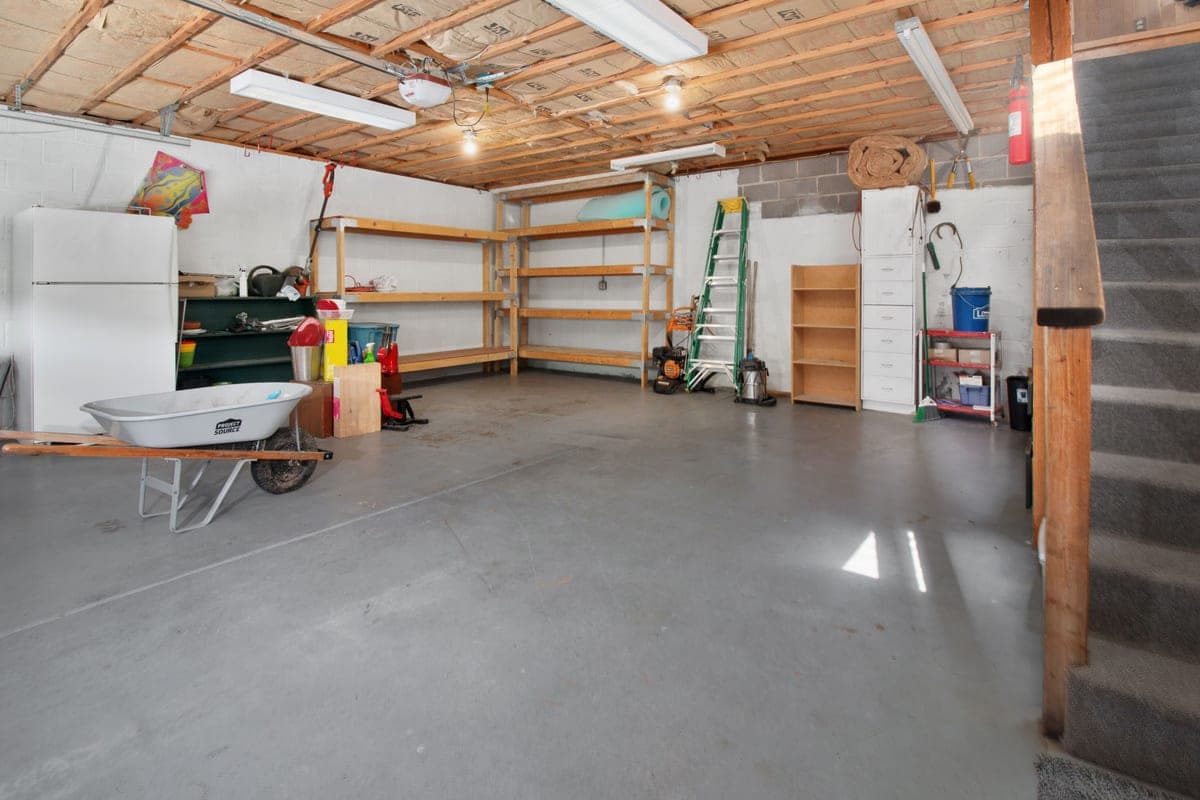 Rheem ProTerra 50 gal hybridThe heat pump water heater to start with: a 3.88 UEF, a 67-gallon first-hour rating, and a 37°F lower operating limit that is the widest ambient range in its class — which is the specification that decides whether it works in a cold garage. | Most heat pump installs | Check price on Amazon No live price feed on this site, so we show none. #ad |
| 2 |  A. O. Smith Voltex MAX, 66 galAn 83-gallon first-hour rating at a 3.84 UEF — the heat pump water heater for a household that runs several showers back to back and still wants the running cost of a heat pump. | Largest first-hour rating | Check price on Amazon No live price feed on this site, so we show none. #ad |
| 3 |  Rheem ProTerra 120 V plug-in, 50 galThe one heat pump water heater that does not need an electrician: it runs on a dedicated 120 V 15 A circuit, which makes it the only realistic efficiency upgrade in a condo or a house with a full panel. | No 240 V circuit available | Check price on Amazon No live price feed on this site, so we show none. #ad |
The units this applies to
Pick 1 — Most heat pump installs
Rheem ProTerra 50 gal hybrid
The heat pump water heater to start with: a 3.88 UEF, a 67-gallon first-hour rating, and a 37°F lower operating limit that is the widest ambient range in its class — which is the specification that decides whether it works in a cold garage.
| Capacity | 50 gallons |
|---|---|
| Efficiency | 3.88 UEF; up to 4.07 UEF advertised on 30 A models |
| First-hour rating | 67 gallons |
| Recovery | 27 gallons per hour |
| Heat pump capacity | 4,200 BTU/h |
| Backup element | 5,000 W |
| Voltage | 208 - 240 V |
| Ambient operating range | 37 - 145°F |
| Cold-climate rating | Meets Northern Climate Specification Tier 4 |
| Leak protection | Integrated detection with factory-fitted auto shutoff; leaks limited to no more than 20 oz |
| Warranty | 10-year limited |
What is good
- A 37°F lower limit means the compressor keeps running in an unheated garage through most of a northern winter
- 3.88 UEF is roughly four times a resistance tank, so the running cost difference is not marginal
- 67-gallon first-hour rating is better than most 50-gallon resistance tanks
- EcoNet control lets you force high-demand mode before guests arrive instead of discovering the limit
What is not
- It is a refrigeration appliance in your house: there is a compressor, a fan and a condensate drain
- Needs roughly 700 cubic feet of air, or louvered doors, in a closet
- It cools and dehumidifies the space it stands in, which is a gift in a Houston garage and a problem in a Minnesota basement
Skip it if: Skip it if the only place it can go is a finished, heated room you occupy. It will steal heat from that room in winter — your furnace then pays for the hot water, and the efficiency you bought disappears.
No live price feed on this site, so we show none. #ad
Specifications above from Rheem ProTerra PROPH50 T2 RH375-30 product page; ABR Wholesalers listing, PROPH50 T2 RH375-30. We have not tested this unit ourselves.
Pick 2 — Largest first-hour rating
A. O. Smith Voltex MAX, 66 gal
An 83-gallon first-hour rating at a 3.84 UEF — the heat pump water heater for a household that runs several showers back to back and still wants the running cost of a heat pump.
| Capacity | 66 gallons |
|---|---|
| First-hour rating | 83 gallons |
| Efficiency | 3.84 UEF |
| Certification | ENERGY STAR certified |
What is good
- 83 gallons in the first hour beats an 80-gallon resistance tank
- 3.84 UEF is still roughly four times a resistance tank
- 66 gallons of storage plus fast recovery is the combination big households actually need
- ENERGY STAR certified for rebate eligibility
What is not
- Lower UEF than the Voltex AL at the same capacity — you are trading some efficiency for delivery
- Large footprint
- Wholesale distribution
Skip it if: Skip it if two people live in the house. You would be buying 66 gallons and an 83-gallon first-hour rating to serve a demand a 50-gallon unit covers, and paying standby losses on the difference every day for a decade.
No live price feed on this site, so we show none. #ad
Specifications above from First Supply listing, A. O. Smith HPTA-66 Voltex MAX. We have not tested this unit ourselves.
Pick 3 — No 240 V circuit available
Rheem ProTerra 120 V plug-in, 50 gal
The one heat pump water heater that does not need an electrician: it runs on a dedicated 120 V 15 A circuit, which makes it the only realistic efficiency upgrade in a condo or a house with a full panel.
| Capacity | 50 gallons |
|---|---|
| Voltage | 120 V |
| Power | 1.8 kW |
| Circuit | Dedicated 120 V 15 A |
| Efficiency | 3.0 UEF on a dedicated circuit; up to 3.5 UEF on the shared-circuit model |
| Ambient operating range | 37 - 145°F |
| Cold-climate rating | Designed to meet NEEA Northern Climate Specification Tier 2 |
| Utility programs | Built-in EcoPort CTA-2045 port |
What is good
- A standard 120 V circuit removes the panel upgrade that kills most heat pump retrofits
- Still roughly three times as efficient as a resistance tank
- CTA-2045 port makes it eligible for utility demand-response payments where those exist
- Same 37°F lower operating limit as the 240 V models
What is not
- 1.8 kW means slow recovery — this is a tank you let work overnight, not one you push
- No big resistance element to bail you out during a surge in demand
- A dedicated circuit is still a circuit: a shared-outlet install is a different model number
Skip it if: Skip it if your household regularly empties the tank — a big family, or two showers plus a dishwasher back to back. With 1.8 kW of input and no large backup element, recovery is the whole constraint.
No live price feed on this site, so we show none. #ad
Specifications above from Rheem plug-in heat pump specification sheet (PDF); Ferguson listing, ProTerra 50 gal 120 V plug-in. We have not tested this unit ourselves.
Four fixes that work
- Isolate it from the floor. Anti-vibration pads under the feet break the structure-borne path, which is the dominant one. This is the cheapest and most effective single change.
- Schedule it away from sleeping hours. Use the unit's own controls to run the compressor during the day. On the Rheem units that is EcoNet; the same scheduling also lets you force high-demand mode before guests arrive.
- Move it, or move what is behind the wall. Six feet further from a shared bedroom wall is worth more than any accessory. If the install is not done yet, this is the decision to get right.
- Add mass to the shared wall, not a box around the unit. A layer of board on the bedroom side reduces transmission without touching the air the unit needs. Never enclose the appliance itself.
The 120 V model is the quiet one by arithmetic
The plug-in ProTerra runs at 1.8 kW on a dedicated 120 V 15 A circuit. A smaller compressor doing less work is less noise, and because it has no large backup element it is designed to work slowly overnight rather than hard on demand. In an apartment or a condo where there is no 240 V circuit anyway, that is a useful coincidence rather than a trade.
The counterpart is recovery: 1.8 kW is a tank you let work rather than one you push, so it suits a household that does not regularly empty it. Best 120V plug-in heat pump water heaters.
When the noise means something is wrong
- A rattle or a buzz that changes when you touch the cabinet is a loose panel or a fixing, not the compressor.
- A grinding or scraping fan is a failed bearing or a fan fouling its housing. That is a service call, not a placement fix.
- A sudden new hum from a unit that was quiet is worth investigating; so is a compressor that starts and stops every few minutes, which is short cycling.
- Water noise — gurgling in the pipework rather than the cabinet — usually points at the condensate path or at air in the system, not at the heat pump.
- If it has gone silent and the water is still hot, it is running on the resistance element. That is not a noise problem; it is an efficiency problem with an air cause. See cold climates if the space is below the 37°F lower ambient limit.
What goes in with it
A water heater is a system, not a box. These are the parts that go in with it, and the ones people discover they need halfway through the job.
- Drain pan
A heat pump water heater makes condensate continuously, so this one is not optional.
- Leak detector
A condensate line that blocks will overflow long before you notice it.
- Expansion tank
Same closed-system rule as any other storage tank.