Gas vs Electric Water Heaters
Gas recovers two to three times faster. That one fact explains most of this comparison.
Heat & Tap earns a commission on qualifying purchases made through the Amazon links on this page, at no extra cost to you. Commission does not decide what we recommend or how we rank it. Full disclosure.
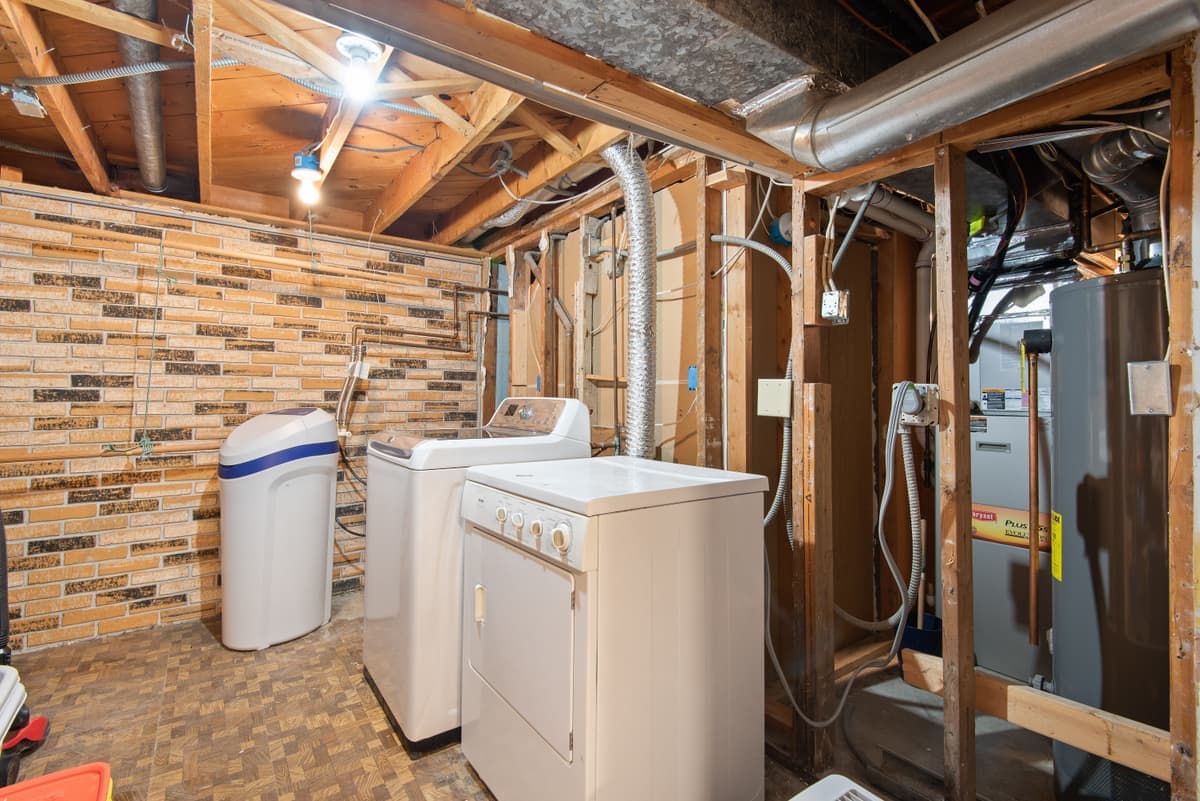
Gas wins on recovery and running cost. A 50-gallon gas tank delivers 91 gallons in the first hour against 63 for the electric equivalent, and costs less per gallon of hot water in most US markets. Electric wins on install cost and siting — no flue, no combustion air, no gas line. And a heat pump makes electric competitive on running cost for the first time.
If you have both utilities and you are choosing freely, gas is usually the better tank. But most people are not choosing freely — they are replacing what is there, and the question is really "is it worth converting". That answer is almost always no for a tank-to-tank swap, and the interesting version of the question has become gas versus a heat pump.
The one number that explains everything
Recovery rate. A 50,000 BTU gas burner adds 40 to 50 gallons of hot water an hour while you are drawing. Two 4,500 W electric elements add about 21 gallons an hour at a 90°F rise.
Everything else in this comparison follows from that. It is why the same 50 gallons has a 91-gallon first-hour rating on gas and a 63-gallon one on electric. It is why electric households need bigger tanks for the same number of showers. And it is why "my 50-gallon electric tank keeps running out" is one of the most common complaints in this whole category — the tank is not faulty, it is the wrong size.
| Gas tank | Electric resistance | Electric heat pump | |
|---|---|---|---|
| 50 gal first-hour rating | 91 gal (50,000 BTU) | 63 gal | 67 gal |
| Recovery | 40 to 50 gal/hr | 21 gal/hr at a 90°F rise | 27 gal/hr |
| Efficiency | About 0.6 to 0.7 UEF | 0.92 to 0.93 UEF | 3.88 UEF |
| Energy cost per gallon | Usually lowest | Highest | Comparable to or below gas |
| Venting | Required | None | None |
| Combustion air | Required | None | Needs air VOLUME for the heat pump |
| Condensate | On condensing units | None | Continuous |
| Install cost | Higher | Lowest | Higher — circuit, space, drain |
| Works in a power cut | Yes, if atmospheric with a pilot | No | No |
Where gas wins
- Recovery, decisively. 40 to 50 gallons an hour against 21.
- First-hour rating at any capacity, which means a smaller, cheaper tank serves the same household.
- Running cost per gallon in most US markets, because gas is cheaper per BTU than electricity.
- Power cut immunity on an atmospheric unit with a standing pilot.
- Large households without a huge tank. A 50-gallon gas unit serves five people; a 50-gallon resistance tank does not.
Where electric wins
- Install cost. No flue, no combustion air, no gas line, no gas permit.
- Siting flexibility. It can go in a closet, an interior room, an apartment — places an atmospheric gas appliance cannot.
- No combustion safety risk. No carbon monoxide, no backdrafting, no flue to deteriorate.
- Longer retail warranties. The Rheem Gladiator's 12-year tank and parts with 3-year labor is the longest in our registry, and it is electric.
- Leak protection features are more common on electric tanks, which tend to live in more damage-prone locations.
- The heat pump option, which is only available on electric and changes the running cost comparison completely.
The heat pump reframes the whole question
The honest conditions still apply: a heat pump needs air volume, a condensate drain, somewhere the compressor noise is tolerable, and ideally an unconditioned space. Are heat pump water heaters worth it works through all four.
The best of each
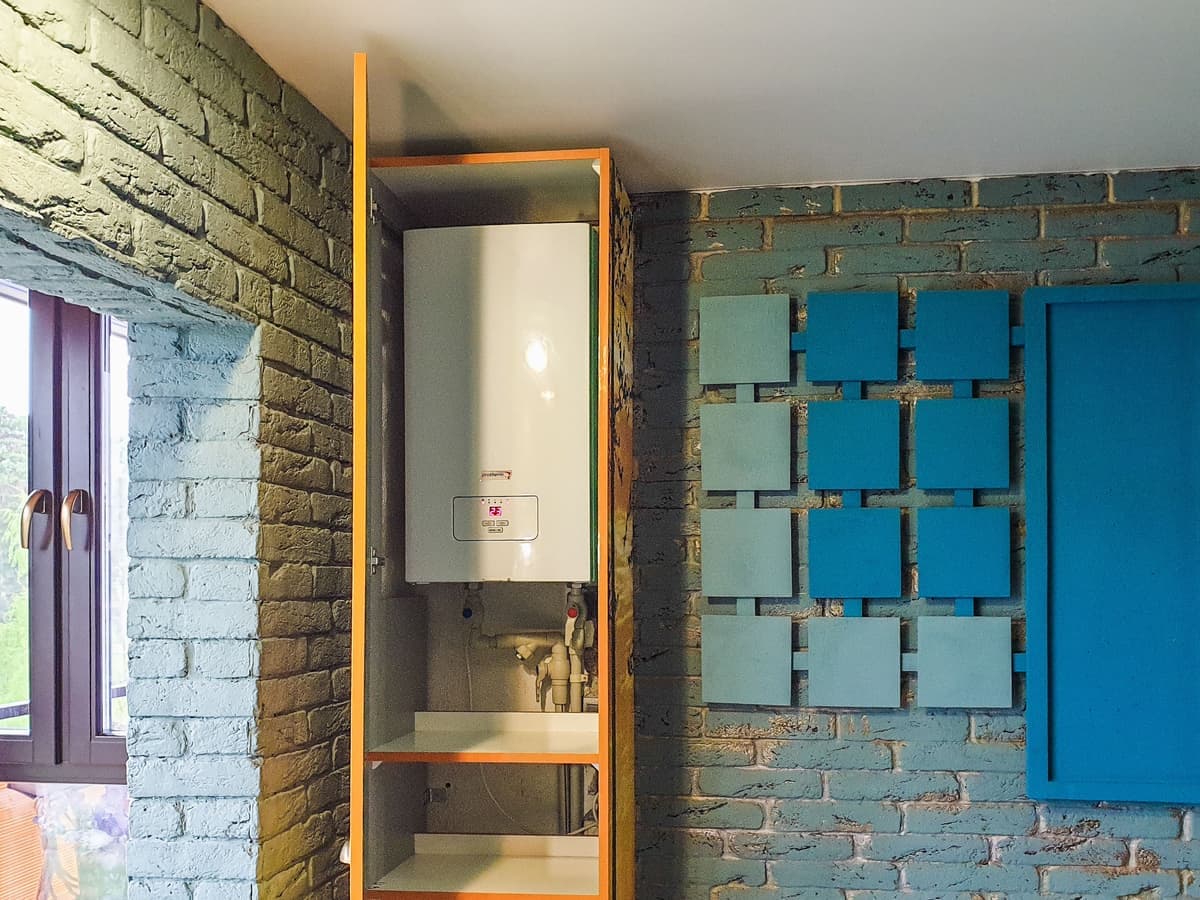
Pick 1 — Most gas tank replacements
A. O. Smith Signature 100, 50 gal gas
The straightforward 50-gallon gas replacement, and the reason to pay attention to the burner size: the 50,000 BTU version is rated at a 91-gallon first-hour rating against 77 gallons for the 40,000 BTU one.
| Capacity | 50 gallons |
|---|---|
| First-hour rating | 91 gallons (50,000 BTU model); 77 gallons (40,000 BTU model) |
| Burner | 50,000 BTU/h ultra-low NOx, or 40,000 BTU/h |
| Dimensions | 61 in H x 22 in dia (50,000 BTU); 60-3/4 in H x 22 in dia (40,000 BTU) |
| Warranty | 6-year tank and parts with 1-year labor (50,000 BTU); 9-year tank and parts with 2-year labor (40,000 BTU) |
What is good
- A 91-gallon first-hour rating from a 50-gallon tank covers back-to-back showers that empty an electric tank of the same size
- Widely stocked at Lowe's, so same-day replacement is realistic when the old one fails
- Ultra-low NOx burner meets the stricter air-district rules in California and Texas
- 22-inch diameter fits most existing alcoves without re-plumbing
What is not
- The longer 9-year warranty is on the smaller burner, so warranty and recovery pull in opposite directions
- Atmospheric venting needs a working chimney or B-vent
- Standing pilot and flue losses mean it idles energy away all day
Skip it if: Skip it if your water heater sits in a sealed closet or a space with combustion air problems. An atmospheric gas tank needs real combustion air and a real flue — the power-vent or direct-vent models exist for exactly that case.
No live price feed on this site, so we show none. #ad
Specifications above from Lowe's listing, Signature 100 50-gal 50,000 BTU; Lowe's listing, Signature 100 50-gal 40,000 BTU 9-year. We have not tested this unit ourselves.
Pick 2 — Most heat pump installs
Rheem ProTerra 50 gal hybrid
The heat pump water heater to start with: a 3.88 UEF, a 67-gallon first-hour rating, and a 37°F lower operating limit that is the widest ambient range in its class — which is the specification that decides whether it works in a cold garage.
| Capacity | 50 gallons |
|---|---|
| Efficiency | 3.88 UEF; up to 4.07 UEF advertised on 30 A models |
| First-hour rating | 67 gallons |
| Recovery | 27 gallons per hour |
| Heat pump capacity | 4,200 BTU/h |
| Backup element | 5,000 W |
| Voltage | 208 - 240 V |
| Ambient operating range | 37 - 145°F |
| Cold-climate rating | Meets Northern Climate Specification Tier 4 |
| Leak protection | Integrated detection with factory-fitted auto shutoff; leaks limited to no more than 20 oz |
| Warranty | 10-year limited |
What is good
- A 37°F lower limit means the compressor keeps running in an unheated garage through most of a northern winter
- 3.88 UEF is roughly four times a resistance tank, so the running cost difference is not marginal
- 67-gallon first-hour rating is better than most 50-gallon resistance tanks
- EcoNet control lets you force high-demand mode before guests arrive instead of discovering the limit
What is not
- It is a refrigeration appliance in your house: there is a compressor, a fan and a condensate drain
- Needs roughly 700 cubic feet of air, or louvered doors, in a closet
- It cools and dehumidifies the space it stands in, which is a gift in a Houston garage and a problem in a Minnesota basement
Skip it if: Skip it if the only place it can go is a finished, heated room you occupy. It will steal heat from that room in winter — your furnace then pays for the hot water, and the efficiency you bought disappears.
No live price feed on this site, so we show none. #ad
Specifications above from Rheem ProTerra PROPH50 T2 RH375-30 product page; ABR Wholesalers listing, PROPH50 T2 RH375-30. We have not tested this unit ourselves.
Pick 3 — Electric tanks in finished spaces
Rheem Gladiator 50 gal electric
The electric tank to put above a finished floor: integrated leak detection with an automatic shutoff valve that limits a leak to around 20 ounces, plus a 12-year tank and parts warranty.
| Capacity | 50 gallons |
|---|---|
| Elements | 5,500 W double element, 240 V |
| First-hour rating | 63 gallons |
| Efficiency | 0.92 UEF |
| Leak protection | 360° LeakSense detection with factory-fitted automatic shutoff; leaks limited to no more than 20 oz |
| Warranty | 12-year tank and parts, 3-year labor |
What is good
- The auto-shutoff valve is the single most valuable feature on any tank installed over drywall
- 12-year tank and parts with 3-year labor is among the longest electric warranties sold at retail
- 5,500 W double element gives faster recovery than the usual 4,500 W pair
- Leak alerts arrive before the ceiling does
What is not
- A 63-gallon first-hour rating from 50 gallons is ordinary — electric recovery is slow, full stop
- Running cost is electric-rate running cost; a heat pump model costs far less to run
- The shutoff valve is one more serviceable part in the cold inlet
Skip it if: Skip it if the heater lives on a concrete slab next to a floor drain and you have the headroom for a heat pump model. You are paying for leak protection you can get from a 20-dollar pan, and giving up the running-cost saving a heat pump would deliver.
No live price feed on this site, so we show none. #ad
Specifications above from Home Depot listing, Rheem Gladiator XE50T12CS55U1. We have not tested this unit ourselves.
Should you convert?
Converting fuel type means new infrastructure, and the honest answer is usually no:
| Conversion | Verdict | Why |
|---|---|---|
| Electric tank to gas tank | Usually no | A new gas line, a flue and combustion air provision rarely pay back against a resistance tank's running cost |
| Electric tank to heat pump | Usually yes | Same fuel, roughly a quarter of the running cost. The constraints are space and condensate, not infrastructure |
| Gas tank to electric resistance | No | Higher running cost and slower recovery for no gain |
| Gas tank to heat pump | Sometimes | An emissions choice more than a bill choice in most US markets. Run your own numbers |
| Gas tank to gas tankless | Depends on the gas line | See tankless vs tank |
What goes in with it
A water heater is a system, not a box. These are the parts that go in with it, and the ones people discover they need halfway through the job.
- Expansion tank
Required by code on a closed system, which is most homes with a pressure-reducing valve.
- Drain pan
Cheap insurance anywhere the tank sits above something you care about.
- Anode rod
The part that decides when the tank leaks. Replacing it is the highest-value hour of maintenance there is.
Pick gas if...
- You already have a gas line and a sound flue.
- The household is four or more people and you do not want a huge tank.
- You live somewhere with frequent power cuts.
- Gas is notably cheap per therm in your market.
Pick electric if...
- There is no gas line, and bringing one in is a real cost.
- The heater has to live in a closet or an interior space.
- You can fit a heat pump unit — in which case this is not a compromise, it is the better appliance.
- You want the longest available tank warranty and leak protection features.