Can I Replace My Own Water Heater?
The plumbing is within reach of a competent homeowner. The permit, the venting and the gas connection are what make this a licensed job in most places.
Heat & Tap earns a commission on qualifying purchases made through the Amazon links on this page, at no extra cost to you. Commission does not decide what we recommend or how we rank it. Full disclosure.
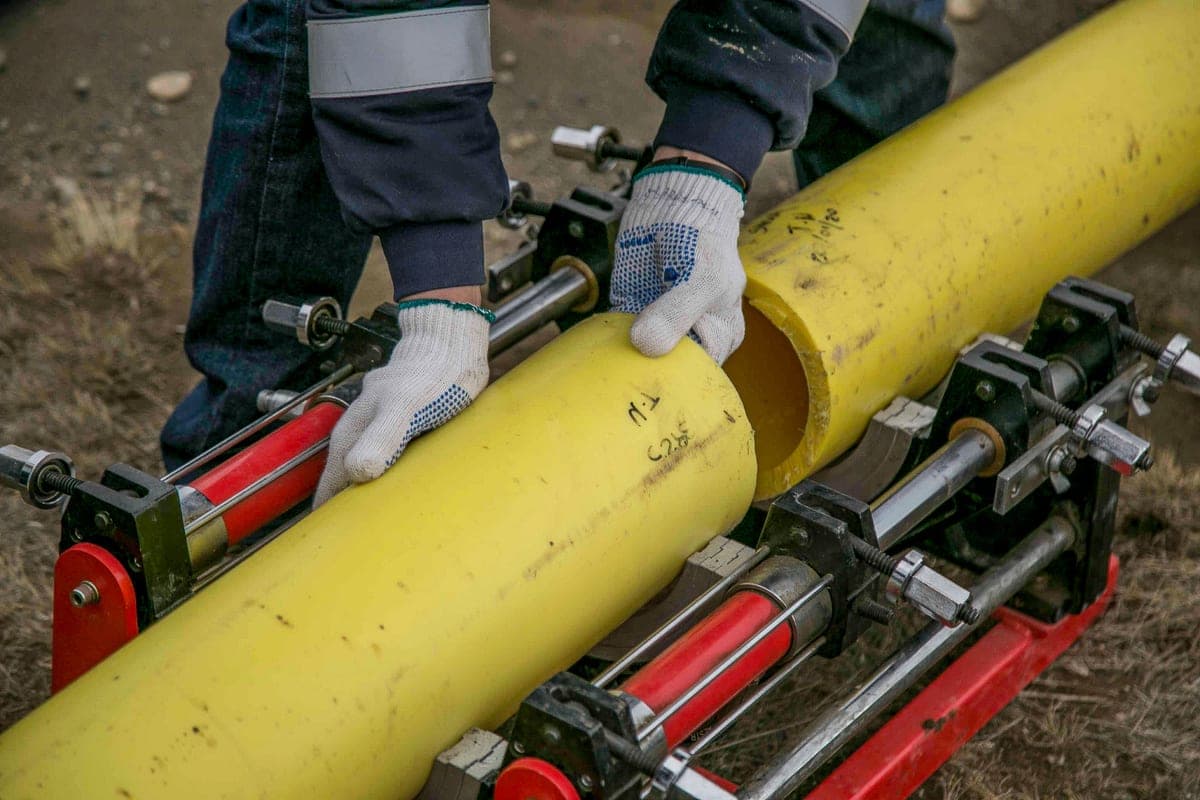
In many jurisdictions a homeowner may replace their own water heater in their own home, with a permit and an inspection. The plumbing on a like-for-like electric swap is ordinary work. Gas connection and venting are licensed trades in most places, and that is the part that makes a gas swap a bad DIY candidate regardless of skill. Check with your building department before you buy anything — the rules are local, and an uninspected install can void both the manufacturer's warranty and a homeowner's insurance claim.
This is the one page on the site where we are not going to give you a step-by-step. Not because the work is mysterious, but because the parts that go wrong — combustion air, flue draft, bonding, T&P discharge termination — are the parts a written sequence cannot assess for your house. What we can do is set out honestly what the job involves, what it needs, and where the line usually falls.
What the job actually involves
- Pull the permit first. In most jurisdictions a water heater replacement is permitted work, and the inspection is what catches an undersized T&P discharge or a missing expansion tank before it matters.
- Isolate and drain. Cold inlet closed, power or gas off, hose from the drain valve, a hot tap open to break the vacuum. A full 50-gallon tank holds over 400 pounds of water.
- Get the old one out. This is the step people underestimate — stair turns, doorways and a corroded tank that is heavier than it looks.
- Set the new one, plumb it, and bring it up to current code. Expansion tank on a closed system, pan with its drain piped somewhere real, seismic straps where required, and a T&P discharge run correctly.
- Fill before you energise. An electric element fired dry is destroyed in seconds.
- Get it inspected. The signature is the point of the permit.
Electric against gas
| Electric swap | Gas swap | |
|---|---|---|
| Plumbing work | Ordinary | Ordinary |
| Energy connection | 240 V circuit — work inside a panel is licensed in most jurisdictions | Gas connection is licensed work nearly everywhere |
| Venting | None | Flue draft and combustion air have to be assessed, not assumed |
| Consequence of a mistake | Dead element, tripped breaker, in the worst case a fire | Carbon monoxide |
| Realistic DIY verdict | Often reasonable with a permit | Usually not — hire it out |
| Bonding and grounding | Required; check local amendments | Still applies to the water piping |
Quick picks
Tap any row to read the full assessment below, or go straight to Amazon from the right-hand column. We earn a commission on qualifying purchases at no extra cost to you.
| # | Product | Best for | Price |
|---|---|---|---|
| 1 | 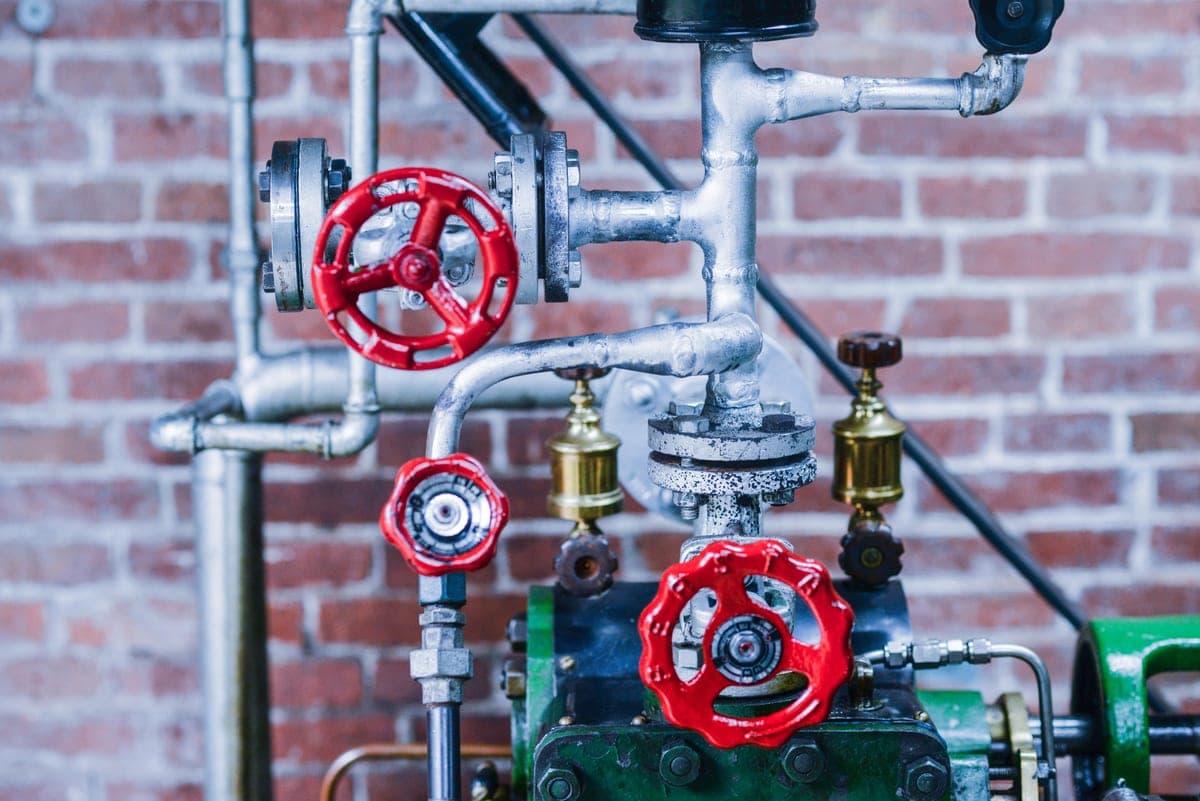 Amtrol Therm-X-Trol ST-12The size most 50-gallon installs actually need: 4.4 gallons of volume and 3.2 gallons of acceptance, which is what Amtrol's chart calls for at 60 psi static pressure. | 50 gallon tanks at normal pressure | Check price on Amazon No live price feed on this site, so we show none. #ad |
| 2 |  Camco 20841 aluminum pan, 22 inThe 22-inch aluminum pan: the right size under a standard 50-gallon tank, which is itself usually 22 inches in diameter. | 50 gallon tanks | Check price on Amazon No live price feed on this site, so we show none. #ad |
| 3 |  HoldRite QS-50 Quick Strap kitThe strap kit inspectors recognize: 24-gauge galvanized steel for tanks up to 80 gallons, with California Division of the State Architect approval number 97-010. | Seismic zones, code compliance | Check price on Amazon No live price feed on this site, so we show none. #ad |
The parts an inspector will look for
Pick 1 — 50 gallon tanks at normal pressure
Amtrol Therm-X-Trol ST-12
The size most 50-gallon installs actually need: 4.4 gallons of volume and 3.2 gallons of acceptance, which is what Amtrol's chart calls for at 60 psi static pressure.
| Tank volume | 4.4 gallons |
|---|---|
| Maximum acceptance volume | 3.2 gallons |
| Diameter | 11 in |
| Height | 15 in |
| System connection | 3/4 in NPTM |
| Maximum working pressure | 150 psig |
| Maximum operating temperature | 200°F |
| Factory pre-charge | 50 psig |
What is good
- 3.2 gallons of acceptance covers 50-gallon heaters at the static pressures most municipal supplies actually run
- Same 3/4 in NPTM connection and 150 psig rating as the ST-5
- Headroom means a slightly wrong pre-charge still works
- The size a plumber would fit by default
What is not
- 11 inches across and 15 inches tall needs real clearance above the heater
- Too heavy to hang unsupported from a horizontal tee
- Overkill for a 30- or 40-gallon tank on low pressure
Skip it if: Skip it if there is under 16 inches of clear space above your cold inlet. People buy the ST-12, find it will not fit, and then install it unsupported — which is how a tee cracks a year later.
No live price feed on this site, so we show none. #ad
Specifications above from Amtrol ST-12 sizing chart sheet (PDF); Amtrol Therm-X-Trol brochure, September 2025 (PDF). We have not tested this unit ourselves.
Pick 2 — 50 gallon tanks
Camco 20841 aluminum pan, 22 in
The 22-inch aluminum pan: the right size under a standard 50-gallon tank, which is itself usually 22 inches in diameter.
| Inside diameter | 22 in |
|---|---|
| Depth | 2.25 in |
| Material | Aluminum |
| Drain fitting | PVC |
What is good
- Matches the 22-inch diameter of the common 50-gallon tank with room for the fitting
- Aluminum construction
- Standard PVC drain connection
- Fits the alcove a 50-gallon tank already occupies
What is not
- A 22 in pan under a 22 in tank is a tight fit — check the drain boss clears
- 2.25 in depth
- Requires a gravity drain path
Skip it if: Skip it for a heat pump water heater. Those are usually wider than a resistance tank of the same capacity and also produce condensate continuously, which means a larger pan and a committed drain, not a shallow pan.
No live price feed on this site, so we show none. #ad
Specifications above from Pacific Plumbing listing, Camco 20841; HD Supply listing, Camco 22 in ID pan. We have not tested this unit ourselves.
Pick 3 — Seismic zones, code compliance
HoldRite QS-50 Quick Strap kit
The strap kit inspectors recognize: 24-gauge galvanized steel for tanks up to 80 gallons, with California Division of the State Architect approval number 97-010.
| Capacity | Water heaters up to 80 US gallons |
|---|---|
| Material | 24 gauge cold-rolled steel, galvanized |
| Strap length | 38 in |
| Kit contents | 4 straps, 4 lag bolts, 4 J-clips, 2 x 3/8 in carriage bolts, 2 x 3/8 in hex nuts |
| Approval | California DSA approval #97-010 |
What is good
- Named approval number is what an inspector in a seismic jurisdiction wants to see
- Complete kit: nothing to source separately at the hardware store
- Covers every residential tank size up to 80 gallons
- Galvanized steel will not rot off the wall in a damp garage
What is not
- Lag bolts need real studs or blocking, not drywall anchors
- Steel straps are harder to route around a tight alcove than a soft belt
- Over-tightening a steel strap can dent a tank jacket
Skip it if: Skip the rigid steel kit if the tank sits in a corner you cannot reach around. The soft-belt version exists for exactly that install, and a strap you cannot tension properly is decoration.
No live price feed on this site, so we show none. #ad
Specifications above from Supply House listing, HoldRite QS-50 galvanized strap; RWC BIM data, QS-50 water heater restraint. We have not tested this unit ourselves.
What the inspection usually turns on
- Thermal expansion control. On a closed system, IPC Section 607.3 requires an expansion tank on the cold supply downstream of the check valve, PRV or backflow preventer, and does not permit the relief valve to do the job. An Amtrol ST-12 is the common size for a 50-gallon tank, with 3.2 gallons of acceptance volume and a 50 psig factory pre-charge that has to be matched to your static pressure.
- Seismic restraint. In California and several other jurisdictions: two straps in the upper and lower third, four inches clear of the controls, fixed to studs. A HoldRite QS-50 kit carries DSA approval #97-010, which is a number the permit application can cite.
- A drain pan with a real drain. A Camco 20841 suits a 50-gallon tank at 22 inches inside diameter. A pan with a capped fitting holds about two gallons and then overflows.
- T&P discharge. Full size, downward, terminating where discharge is visible and safe, with no valve in it.
- Correct venting and combustion air on anything that burns gas.
When to hire it out regardless
| Situation | Why |
|---|---|
| The unit is gas | Gas connection and venting are licensed work in most jurisdictions |
| You are changing fuel or venting type | That is a new installation, not a swap, and the design has to be assessed |
| The heater is in a sealed closet or a tight modern house | Combustion air is a calculation, not a judgement call |
| There is no permit path for homeowner work where you live | An uninspected install can void the warranty and complicate an insurance claim |
| You are fitting a heat pump model | Condensate, air volume and clearance requirements are specific — see heat pump water heaters in a garage or basement |
| You are going tankless | Gas line sizing, condensate and venting usually make this a trade job |
If you are weighing whether to replace at all, replace or repair a water heater is the decision page, and water heater installation kit is the parts list either way.
What goes in with it
A water heater is a system, not a box. These are the parts that go in with it, and the ones people discover they need halfway through the job.
- Expansion tank
Required by code on a closed system, which is most homes with a pressure-reducing valve.
- Drain pan
Cheap insurance anywhere the tank sits above something you care about.
- Anode rod
The part that decides when the tank leaks. Replacing it is the highest-value hour of maintenance there is.