Water Heater Venting Explained
Which venting type your house can take usually matters more than which brand you buy.
Heat & Tap earns a commission on qualifying purchases made through the Amazon links on this page, at no extra cost to you. Commission does not decide what we recommend or how we rank it. Full disclosure.
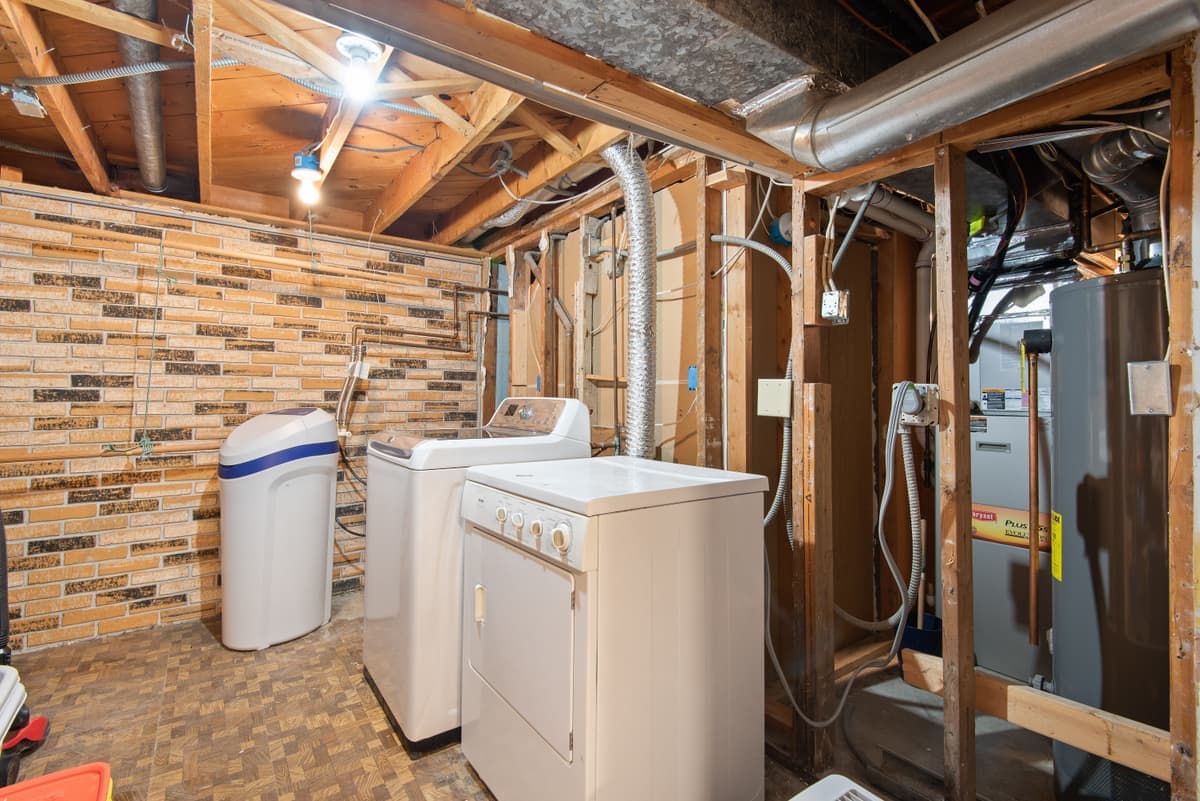
Four types. Atmospheric needs a working chimney or B-vent and real combustion air. Power vent pushes exhaust out through PVC with a blower and needs an outlet. Direct vent takes combustion air from outdoors, which is the answer for a sealed closet. Condensing units vent in PVC because the exhaust is cool, which is why they dominate tankless.
The four types
Atmospheric, also called natural draft
The oldest and cheapest. Hot exhaust rises up a flue by buoyancy alone, and combustion air comes from the room. No fan, no electricity, which is why an atmospheric unit with a standing pilot keeps making hot water in a power cut.
- Needs a working chimney or a B-vent run, and genuine combustion air in the space.
- Fails in a tight house, a sealed closet, or a basement where a powerful exhaust fan can reverse the draft.
- Cheapest to buy and to install when the flue already exists.
Power vent
A blower on the unit pushes exhaust out through PVC, which can run horizontally through a sidewall. That solves awkward flue geometry — no chimney needed.
- Needs an electrical outlet at the heater for the blower, and a sidewall termination with the required clearances.
- Still draws combustion air from the room, so it does not solve a combustion air problem.
- Will not work in a power cut.
Direct vent
Combustion air comes from outdoors through a concentric or twin pipe, and exhaust goes back out the same way. The combustion process is sealed from the room entirely.
- This is the answer for a sealed closet or a very tight house. It removes the combustion air question rather than managing it.
- Needs a sidewall penetration, which turns a swap into an install.
- The Bradford White Defender direct-vent 50-gallon unit in our registry is here for exactly this case, and it gets 83 gallons first hour from 40,000 BTU/h.
Condensing
A second heat exchanger extracts enough heat from the flue gas that water vapor condenses out. The exhaust is then cool enough to vent in PVC, and efficiency rises to 0.93 to 0.98 UEF.
- Vents in PVC, which costs a fraction of stainless category III pipe per foot. The Rheem RTGH vents up to 150 feet in 3-inch PVC.
- Produces acidic condensate that must reach a drain, by gravity or via a condensate pump. Some jurisdictions require a neutralizer.
- Dominates the tankless market for the venting reason as much as the efficiency one.
Side by side
| Atmospheric | Power vent | Direct vent | Condensing | |
|---|---|---|---|---|
| Vent material | B-vent or masonry chimney | PVC | Concentric or twin pipe | PVC |
| Combustion air from | The room | The room | Outdoors | Varies by unit |
| Needs electricity | No | Yes | Usually | Yes |
| Horizontal venting | No | Yes | Yes | Yes |
| Condensate | No | No | No | Yes |
| Works in a power cut | Yes, with a standing pilot | No | No | No |
| Suits a sealed closet | No | No | Yes | Depends on the unit |
| Relative cost | Lowest | Moderate | Moderate to high | Moderate |
| Efficiency | Lowest | Moderate | Moderate | Highest |
Working out what your house can take
Look at what is there now
A metal pipe rising to a chimney is atmospheric. A white plastic pipe going out a wall is power vent or condensing. Two pipes, or one pipe inside another, is direct vent.
Check whether the existing flue is sound and still appropriate
An oversized masonry chimney that previously served a furnace as well can be too large for a water heater alone, which causes poor draft and condensation inside the flue.
Assess the combustion air in the space
Is the heater in an open basement or a closed closet? Are there louvered vents? Is the house tight and modern with exhaust fans? Tight houses and sealed closets point to direct vent.
Find a possible sidewall route
For power vent, direct vent or condensing you need an exterior wall penetration with the manufacturer's required clearances from windows, doors, soffits and the grade.
Find the condensate route, if condensing
A floor drain, a laundry standpipe, or a place for a condensate pump. This is the item most often missed in a quote.
Have it confirmed
Venting is licensed work in most jurisdictions and the consequences of getting it wrong are carbon monoxide rather than inconvenience. Get it specified by someone qualified.
Procedure: Determine your water heater venting options
A unit for two of these cases
Pick 1 — Sealed closets and tight mechanical rooms
Bradford White RG2PDV50S6N
The direct-vent tank to specify when combustion air is the problem: 83-gallon first-hour rating from 40,000 BTU/h, and it draws its air from outside instead of from the room.
| Capacity | 50 gallons nominal, 48 gallons rated storage |
|---|---|
| First-hour rating | 83 gallons |
| Input | 40,000 BTU/h |
| Efficiency | 0.71 UEF, 78% recovery efficiency |
| Venting | Direct vent — combustion air from outdoors |
| Tank lining | Vitraglas enamel |
| Safety system | Defender FVIR with ScreenLok flame arrestor |
| Warranty | 6-year limited |
What is good
- 83 gallons in the first hour from a 40,000 BTU burner is the best ratio on this page
- Direct venting solves the sealed-closet and tight-house combustion air problem outright
- Hydrojet sediment reduction genuinely helps first-hour delivery on hard water
- Defender FVIR is standard, not an upcharge
What is not
- Sold through plumbing wholesalers rather than big-box retail, so weekend DIY sourcing is harder
- 6-year warranty where some competitors sell 9- and 12-year tanks
- 0.71 UEF is ordinary — this is a reliability and venting pick, not an efficiency one
Skip it if: Skip it if your old heater vents into a shared chimney with a furnace and you were not planning to touch the venting. Direct vent means cutting a new sidewall penetration, and that changes the job from a swap into an install.
No live price feed on this site, so we show none. #ad
Specifications above from PEX Universe listing, RG2PDV50S6N; Supply House listing, Bradford White RG2PV50T6N power vent. We have not tested this unit ourselves.
Pick 2 — Most whole-house gas jobs
Rheem Prestige RTGH-95DVLN
The condensing gas tankless most houses should start with: 5.5 GPM at a 70°F rise covers two showers in a cold-inlet climate, and the 12-year residential heat exchanger warranty is the longest on this list.
| Fuel | Natural gas (LP variant sold separately) |
|---|---|
| Gas input | Up to 199,900 BTU/h |
| Flow at a 70°F rise | 5.5 GPM |
| Maximum flow | 9.5 GPM at a 35°F rise |
| Efficiency | Up to 0.93 UEF, stainless condensing heat exchanger |
| Minimum activation flow | 0.4 GPM |
| Venting | Up to 150 ft of 3-inch PVC; 60 ft of 2-inch PVC |
| Dimensions | 18-1/2 in W x 9-3/4 in D x 27-1/2 in H |
| Warranty | 12-year heat exchanger (residential), 5-year parts, 1-year labor |
What is good
- The 70°F-rise figure is published, so you can size it honestly instead of guessing from the headline number
- Condensing design vents in PVC, which is far cheaper to run than stainless category III pipe
- 0.4 GPM activation means a trickle at a bathroom faucet still fires the burner
- Long PVC vent runs let you put it where the gas line already is
What is not
- Needs a gas line sized for nearly 200,000 BTU/h — many existing 1/2-inch runs are not
- Condensate has to go somewhere, which means a drain or a condensate pump
- Annual descaling is not optional on hard water
Skip it if: Skip it if your gas meter and line cannot carry 199,900 BTU/h. Upsizing the gas line is often the single largest cost in a tankless conversion, and no amount of unit quality fixes a starved burner.
No live price feed on this site, so we show none. #ad
Specifications above from Rheem RTGH series specification sheet (PDF); Pace Supply listing, RTGH-95DVLN, 199 kBtu/hr. We have not tested this unit ourselves.
The mistake that matters most
Never vent a non-condensing appliance in PVC. The exhaust is too hot and PVC will fail. Non-condensing units require stainless category III venting specified for the appliance. This is the single most dangerous venting error, and it happens because someone sees PVC on a condensing unit and assumes it is interchangeable.
The related error on the cost side: pricing a non-condensing unit against a condensing one without pricing the vent material. On a long run, stainless category III pipe can cost more than the difference between the two heaters. Condensing vs non-condensing.
What goes in with it
A water heater is a system, not a box. These are the parts that go in with it, and the ones people discover they need halfway through the job.
- Expansion tank
Required by code on a closed system, which is most homes with a pressure-reducing valve.
- Drain pan
Cheap insurance anywhere the tank sits above something you care about.
- Anode rod
The part that decides when the tank leaks. Replacing it is the highest-value hour of maintenance there is.