Replace or Repair a Water Heater?
Four symptoms mean replace. Three mean a cheap part. Age decides the rest.
Heat & Tap earns a commission on qualifying purchases made through the Amazon links on this page, at no extra cost to you. Commission does not decide what we recommend or how we rank it. Full disclosure.
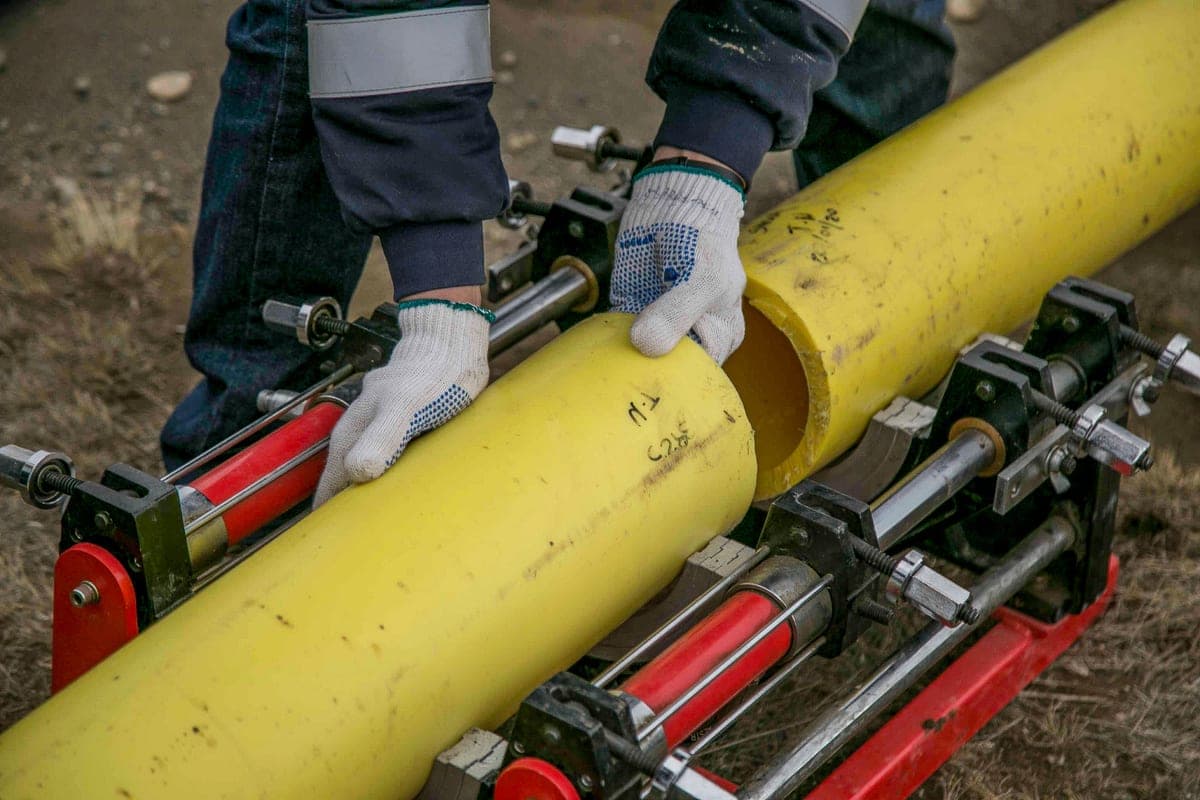
Replace if the tank is leaking, the hot water is rusty, the unit is past 12 years, or the quoted repair approaches the cost of a new unit. Repair a failed heating element, a thermocouple, a thermostat or a dip tube on a unit under about 10 years old. Those are cheap parts and the tank itself is fine.
The decision is simpler than it looks, because water heaters have one terminal failure and several trivial ones. The terminal failure is the tank itself. Everything else bolted to it is replaceable.
Replace, no argument
- The tank is leaking. Water or a damp patch under the unit, not from a fitting. A rusted-through tank cannot be repaired and will get worse. Plan the replacement now rather than letting it choose the timing.
- The hot water is rusty and the cold is clear. Corrosion inside the tank. Late stage.
- It is past 12 years with no anode history. Not a fault, a probability. You are at the end of the expected 10 to 15 year life and the next failure is likely to be the tank.
- The repair quote approaches the price of a new unit. A gas control valve on an eleven-year-old tank is the classic case.
Repair, almost certainly
| Fault | Part | Verdict |
|---|---|---|
| One short burst of hot water then cold (electric) | Lower heating element | Repair. Cheap part, common failure, tank unaffected |
| Pilot will not stay lit (gas) | Thermocouple | Repair. Inexpensive part; licensed work but a short job |
| Water never quite hot enough | Thermostat | Repair, after checking the setting first |
| Hot goes lukewarm fast, elements test fine | Dip tube | Repair. Cheap part |
| Rumbling or popping when heating | None — sediment | Flush it. Twenty minutes, no parts |
| Relief valve weeping after a heating cycle | Expansion tank, often missing or waterlogged | Repair the cause, not the symptom. Do not just replace the valve |
| Anode rod consumed | Anode rod | Replace the rod. This is maintenance, not a fault |
The age rule for the ambiguous cases
| Age | Minor fault | Major fault |
|---|---|---|
| Under 6 years | Repair | Repair, and check the warranty — you may be covered |
| 6 to 10 years | Repair | Repair if clearly cheaper than replacement; otherwise consider replacing |
| 10 to 12 years | Repair if genuinely cheap | Replace |
| Over 12 years | Replace, or repair only to buy planning time | Replace |
The case for replacing before it fails
An emergency replacement is worse in four specific ways, and all of them cost money:
- You take what is in stock. Not the model with the right first-hour rating, or the one with leak detection, or the heat pump — whatever is on the truck.
- You pay emergency rates, and you have no leverage to compare quotes.
- You cannot check rebate eligibility. State HEAR programs and utility rebates often have paperwork requirements that are impossible to satisfy retroactively. Rebates.
- You may already have water damage, which is the expensive part of the whole event.
A planned replacement at year 12 lets you size it properly, choose the technology, specify the install, and schedule it for a convenient Tuesday.
If you are replacing, consider upgrading
A replacement is the only moment when switching technology is cheap, because the labor is happening anyway:
- Electric resistance → heat pump. Roughly a quarter of the running cost and a better first-hour rating, if you have air volume and a condensate drain. The single best upgrade available. Are heat pump water heaters worth it.
- Any tank → a tank with leak detection, if it sits above a finished floor. A leak limited to about 20 ounces is a different outcome entirely.
- Undersized → correctly sized. If you have been living with cold showers, now is the moment. Sizing.
- Gas tank → gas tankless, but only if the gas line is already adequate. Otherwise this is a conversion, not an upgrade. Tankless vs tank.
If you are replacing, these are the starting points
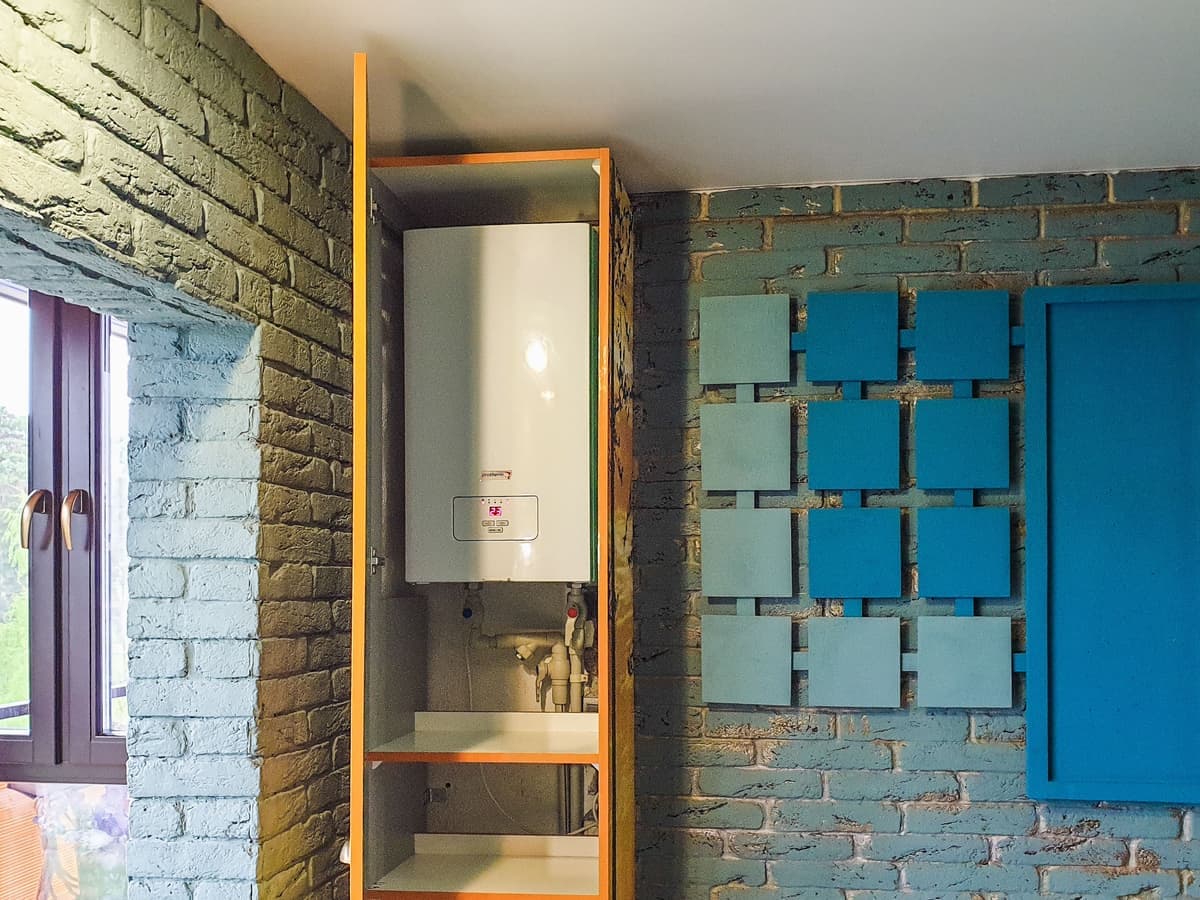
Pick 1 — Most gas tank replacements
A. O. Smith Signature 100, 50 gal gas
The straightforward 50-gallon gas replacement, and the reason to pay attention to the burner size: the 50,000 BTU version is rated at a 91-gallon first-hour rating against 77 gallons for the 40,000 BTU one.
| Capacity | 50 gallons |
|---|---|
| First-hour rating | 91 gallons (50,000 BTU model); 77 gallons (40,000 BTU model) |
| Burner | 50,000 BTU/h ultra-low NOx, or 40,000 BTU/h |
| Dimensions | 61 in H x 22 in dia (50,000 BTU); 60-3/4 in H x 22 in dia (40,000 BTU) |
| Warranty | 6-year tank and parts with 1-year labor (50,000 BTU); 9-year tank and parts with 2-year labor (40,000 BTU) |
What is good
- A 91-gallon first-hour rating from a 50-gallon tank covers back-to-back showers that empty an electric tank of the same size
- Widely stocked at Lowe's, so same-day replacement is realistic when the old one fails
- Ultra-low NOx burner meets the stricter air-district rules in California and Texas
- 22-inch diameter fits most existing alcoves without re-plumbing
What is not
- The longer 9-year warranty is on the smaller burner, so warranty and recovery pull in opposite directions
- Atmospheric venting needs a working chimney or B-vent
- Standing pilot and flue losses mean it idles energy away all day
Skip it if: Skip it if your water heater sits in a sealed closet or a space with combustion air problems. An atmospheric gas tank needs real combustion air and a real flue — the power-vent or direct-vent models exist for exactly that case.
No live price feed on this site, so we show none. #ad
Specifications above from Lowe's listing, Signature 100 50-gal 50,000 BTU; Lowe's listing, Signature 100 50-gal 40,000 BTU 9-year. We have not tested this unit ourselves.
Pick 2 — Most heat pump installs
Rheem ProTerra 50 gal hybrid
The heat pump water heater to start with: a 3.88 UEF, a 67-gallon first-hour rating, and a 37°F lower operating limit that is the widest ambient range in its class — which is the specification that decides whether it works in a cold garage.
| Capacity | 50 gallons |
|---|---|
| Efficiency | 3.88 UEF; up to 4.07 UEF advertised on 30 A models |
| First-hour rating | 67 gallons |
| Recovery | 27 gallons per hour |
| Heat pump capacity | 4,200 BTU/h |
| Backup element | 5,000 W |
| Voltage | 208 - 240 V |
| Ambient operating range | 37 - 145°F |
| Cold-climate rating | Meets Northern Climate Specification Tier 4 |
| Leak protection | Integrated detection with factory-fitted auto shutoff; leaks limited to no more than 20 oz |
| Warranty | 10-year limited |
What is good
- A 37°F lower limit means the compressor keeps running in an unheated garage through most of a northern winter
- 3.88 UEF is roughly four times a resistance tank, so the running cost difference is not marginal
- 67-gallon first-hour rating is better than most 50-gallon resistance tanks
- EcoNet control lets you force high-demand mode before guests arrive instead of discovering the limit
What is not
- It is a refrigeration appliance in your house: there is a compressor, a fan and a condensate drain
- Needs roughly 700 cubic feet of air, or louvered doors, in a closet
- It cools and dehumidifies the space it stands in, which is a gift in a Houston garage and a problem in a Minnesota basement
Skip it if: Skip it if the only place it can go is a finished, heated room you occupy. It will steal heat from that room in winter — your furnace then pays for the hot water, and the efficiency you bought disappears.
No live price feed on this site, so we show none. #ad
Specifications above from Rheem ProTerra PROPH50 T2 RH375-30 product page; ABR Wholesalers listing, PROPH50 T2 RH375-30. We have not tested this unit ourselves.
Pick 3 — Electric tanks in finished spaces
Rheem Gladiator 50 gal electric
The electric tank to put above a finished floor: integrated leak detection with an automatic shutoff valve that limits a leak to around 20 ounces, plus a 12-year tank and parts warranty.
| Capacity | 50 gallons |
|---|---|
| Elements | 5,500 W double element, 240 V |
| First-hour rating | 63 gallons |
| Efficiency | 0.92 UEF |
| Leak protection | 360° LeakSense detection with factory-fitted automatic shutoff; leaks limited to no more than 20 oz |
| Warranty | 12-year tank and parts, 3-year labor |
What is good
- The auto-shutoff valve is the single most valuable feature on any tank installed over drywall
- 12-year tank and parts with 3-year labor is among the longest electric warranties sold at retail
- 5,500 W double element gives faster recovery than the usual 4,500 W pair
- Leak alerts arrive before the ceiling does
What is not
- A 63-gallon first-hour rating from 50 gallons is ordinary — electric recovery is slow, full stop
- Running cost is electric-rate running cost; a heat pump model costs far less to run
- The shutoff valve is one more serviceable part in the cold inlet
Skip it if: Skip it if the heater lives on a concrete slab next to a floor drain and you have the headroom for a heat pump model. You are paying for leak protection you can get from a 20-dollar pan, and giving up the running-cost saving a heat pump would deliver.
No live price feed on this site, so we show none. #ad
Specifications above from Home Depot listing, Rheem Gladiator XE50T12CS55U1. We have not tested this unit ourselves.
What goes in with it
A water heater is a system, not a box. These are the parts that go in with it, and the ones people discover they need halfway through the job.
- Expansion tank
Required by code on a closed system, which is most homes with a pressure-reducing valve.
- Drain pan
Cheap insurance anywhere the tank sits above something you care about.
- Anode rod
The part that decides when the tank leaks. Replacing it is the highest-value hour of maintenance there is.