Why Your Water Heater Runs Out of Hot Water
Five causes, in the order to check them. Only one of them means buying a new water heater.
Heat & Tap earns a commission on qualifying purchases made through the Amazon links on this page, at no extra cost to you. Commission does not decide what we recommend or how we rank it. Full disclosure.
Five causes, in the order to check them: a failed lower heating element (electric only, and the commonest cause of a sudden change), a broken dip tube, a stuck thermostat, heavy sediment, and genuinely insufficient capacity. The first four are repairs. Only the fifth means a new water heater.
The most useful question here is did this change suddenly, or has it always been like this?
- Suddenly worse → something has failed. Causes 1 to 4 below, and probably cause 1.
- Always been marginal → it is a sizing problem. Cause 5, and the sizing guide is the page you want.
Cause 1: a failed lower element (electric only)
An electric tank has two elements. The upper one heats the top third; the lower one does the bulk of the work. If the lower element fails, you get a short burst of hot water from the top of the tank and then cold — classically described as "about one shower and then nothing".
This is the single commonest cause of a sudden loss of hot water capacity on an electric tank, and it is a cheap part. An electrician or plumber can test the elements for continuity in minutes.
Cause 2: a broken dip tube
Cold water entering the tank is supposed to be delivered to the bottom by a dip tube, so it does not mix with the hot water at the top where the outlet is. If the dip tube cracks or breaks off, incoming cold water enters near the top and mixes straight into what you are drawing.
The symptom is hot water that goes lukewarm quickly and then cold, and a tank that seems far smaller than it is. It is a cheap part and a straightforward repair on most tanks.
Cause 3: a stuck or miscalibrated thermostat
If the thermostat is reading high, it stops heating before the tank is properly hot. The symptom is water that is never quite as hot as it should be, and a tank that therefore runs out sooner because you are using more of it to reach a comfortable mixed temperature.
Check the setting first — someone may have turned it down, and 120°F is the usual recommendation. If the setting is right and the water is not, the thermostat is the suspect. Water heater not heating.
Cause 4: heavy sediment
Sediment on the tank bottom occupies volume that should hold water, and on a gas unit it insulates the burner from the water. Both effects reduce how much hot water you actually get.
Rumbling or popping while the tank heats is the giveaway: that is water boiling under a sediment layer. The fix is a flush, which also tells you whether the problem was sediment all along. How to flush a water heater.
Cause 5: it is genuinely too small
If nothing has changed and it has always been marginal, the tank is undersized for the household. This is extremely common on electric tanks, because electric first-hour ratings are much lower than people assume.
| Unit | First-hour rating | Serves comfortably |
|---|---|---|
| 50 gal electric resistance | 63 gal | 3 to 4 people |
| 50 gal heat pump | 67 gal | 4 people |
| 50 gal gas, 40,000 BTU | 77 gal | 4 people |
| 50 gal gas, 50,000 BTU | 91 gal | 4 to 5 people |
| 80 gal electric resistance | 78 gal | 5 people, with staggered draws |
| 66 gal heat pump (Voltex MAX) | 83 gal | 5 to 6 people |
A five-person household on a 50-gallon electric tank is asking for 80 gallons from an appliance rated at 63. The tank is not faulty. Sizing.
The diagnostic order
Establish whether it changed suddenly
Sudden change means a failure; always-marginal means sizing. This single question halves the problem.
Check the thermostat setting
Free, takes a minute, and occasionally that is the whole answer. 120°F is the usual recommendation.
Listen to it heat
Rumbling or popping means sediment. Flush it — twenty minutes, and it may be the fix.
On electric, have the elements tested
A continuity test takes minutes. A failed lower element is the commonest sudden cause and a cheap part.
Consider the dip tube
If hot goes lukewarm fast and the elements test fine, a broken dip tube is the next suspect. Also a cheap part.
Only then conclude it is undersized
Compare your household's peak-hour demand against the unit's published first-hour rating, not its capacity. If the rating really is short, it is a sizing problem.
Procedure: Diagnose a water heater running out of hot water
Four things you can do without buying a water heater
- Fit low-flow shower heads. Going from 2.5 GPM to 1.75 GPM cuts about 30% off the biggest line item in your peak hour. The cheapest capacity increase available.
- Stagger the showers by 30 minutes. At 21 gallons an hour of electric recovery, that is about 10 extra gallons of hot water.
- Raise the tank temperature and fit a thermostatic mixing valve. Storing hotter and blending down at the outlet increases usable hot water from the same volume. Fit it properly, because it raises scald risk if you do not.
- Move laundry and the dishwasher out of the peak hour. Both are schedulable and both compete with your showers.
If it really is undersized
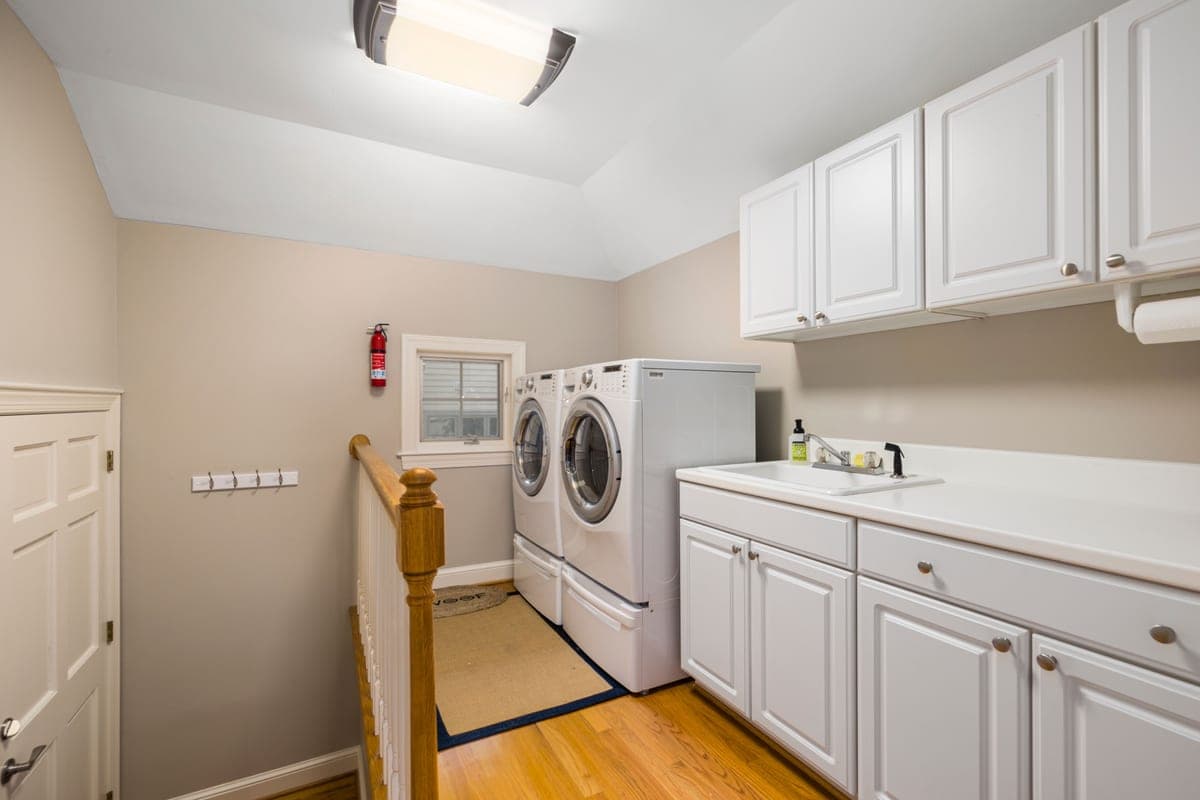
Pick 1 — Electric tanks in finished spaces
Rheem Gladiator 50 gal electric
The electric tank to put above a finished floor: integrated leak detection with an automatic shutoff valve that limits a leak to around 20 ounces, plus a 12-year tank and parts warranty.
| Capacity | 50 gallons |
|---|---|
| Elements | 5,500 W double element, 240 V |
| First-hour rating | 63 gallons |
| Efficiency | 0.92 UEF |
| Leak protection | 360° LeakSense detection with factory-fitted automatic shutoff; leaks limited to no more than 20 oz |
| Warranty | 12-year tank and parts, 3-year labor |
What is good
- The auto-shutoff valve is the single most valuable feature on any tank installed over drywall
- 12-year tank and parts with 3-year labor is among the longest electric warranties sold at retail
- 5,500 W double element gives faster recovery than the usual 4,500 W pair
- Leak alerts arrive before the ceiling does
What is not
- A 63-gallon first-hour rating from 50 gallons is ordinary — electric recovery is slow, full stop
- Running cost is electric-rate running cost; a heat pump model costs far less to run
- The shutoff valve is one more serviceable part in the cold inlet
Skip it if: Skip it if the heater lives on a concrete slab next to a floor drain and you have the headroom for a heat pump model. You are paying for leak protection you can get from a 20-dollar pan, and giving up the running-cost saving a heat pump would deliver.
No live price feed on this site, so we show none. #ad
Specifications above from Home Depot listing, Rheem Gladiator XE50T12CS55U1. We have not tested this unit ourselves.
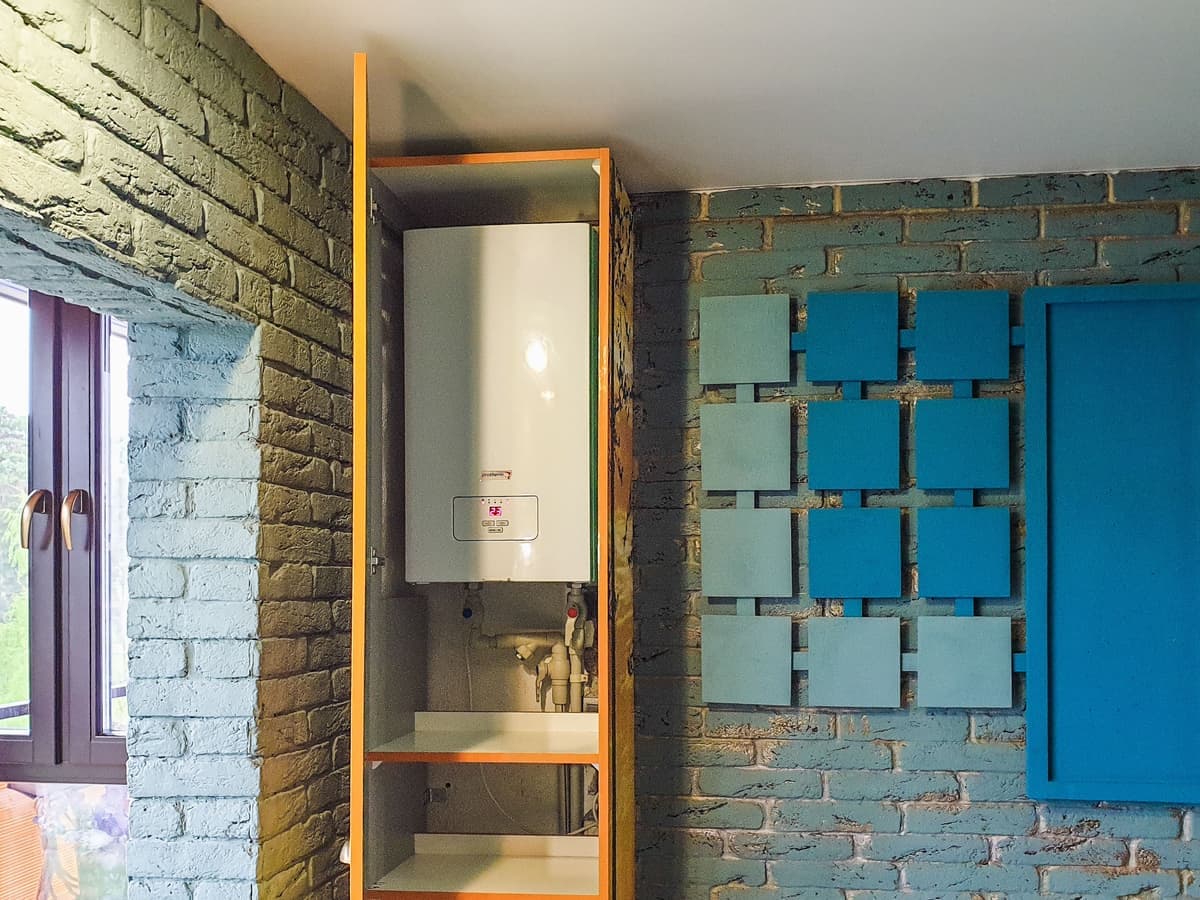
Pick 2 — Most gas tank replacements
A. O. Smith Signature 100, 50 gal gas
The straightforward 50-gallon gas replacement, and the reason to pay attention to the burner size: the 50,000 BTU version is rated at a 91-gallon first-hour rating against 77 gallons for the 40,000 BTU one.
| Capacity | 50 gallons |
|---|---|
| First-hour rating | 91 gallons (50,000 BTU model); 77 gallons (40,000 BTU model) |
| Burner | 50,000 BTU/h ultra-low NOx, or 40,000 BTU/h |
| Dimensions | 61 in H x 22 in dia (50,000 BTU); 60-3/4 in H x 22 in dia (40,000 BTU) |
| Warranty | 6-year tank and parts with 1-year labor (50,000 BTU); 9-year tank and parts with 2-year labor (40,000 BTU) |
What is good
- A 91-gallon first-hour rating from a 50-gallon tank covers back-to-back showers that empty an electric tank of the same size
- Widely stocked at Lowe's, so same-day replacement is realistic when the old one fails
- Ultra-low NOx burner meets the stricter air-district rules in California and Texas
- 22-inch diameter fits most existing alcoves without re-plumbing
What is not
- The longer 9-year warranty is on the smaller burner, so warranty and recovery pull in opposite directions
- Atmospheric venting needs a working chimney or B-vent
- Standing pilot and flue losses mean it idles energy away all day
Skip it if: Skip it if your water heater sits in a sealed closet or a space with combustion air problems. An atmospheric gas tank needs real combustion air and a real flue — the power-vent or direct-vent models exist for exactly that case.
No live price feed on this site, so we show none. #ad
Specifications above from Lowe's listing, Signature 100 50-gal 50,000 BTU; Lowe's listing, Signature 100 50-gal 40,000 BTU 9-year. We have not tested this unit ourselves.
What goes in with it
A water heater is a system, not a box. These are the parts that go in with it, and the ones people discover they need halfway through the job.
- Expansion tank
Required by code on a closed system, which is most homes with a pressure-reducing valve.
- Drain pan
Cheap insurance anywhere the tank sits above something you care about.
- Anode rod
The part that decides when the tank leaks. Replacing it is the highest-value hour of maintenance there is.