Best Propane Water Heaters
Propane is a smaller burner than natural gas at the same badge number, which changes the sizing arithmetic. Here is what the units worth buying actually publish.
Heat & Tap earns a commission on qualifying purchases made through the Amazon links on this page, at no extra cost to you. Commission does not decide what we recommend or how we rank it. Full disclosure.

A propane water heater is a gas water heater with a smaller burner. Rheem's 40-gallon liquid propane XP40T06HE36U0 runs 36,000 BTU/h and publishes an 84-gallon first-hour rating — which is actually seven gallons more than Rheem's own 50-gallon propane tank on the same input. If you want the cheapest honest option, the XP40T06EC32U1 drops to 32,000 BTU/h and 69 gallons. For a cabin with no gas line at all, a portable 2.64 GPM Camplux running off a 20 lb cylinder is the answer.
Roughly one American home in ten heats its water with propane, and almost all of them are off the natural gas main — rural properties, cabins, mountain towns, houses at the end of a long road. If that is you, the catalog you are shopping is narrower than it looks: the same manufacturers, the same tanks, but a different burner behind the same model family and a different set of published numbers.
The practical consequence is that you cannot read a natural gas spec sheet and assume the LP version matches. It does not, and the gap is bigger than most buyers expect.
Quick picks
Tap any row to read the full assessment below, or go straight to Amazon from the right-hand column. We earn a commission on qualifying purchases at no extra cost to you.
| # | Product | Best for | Price |
|---|---|---|---|
| 1 | 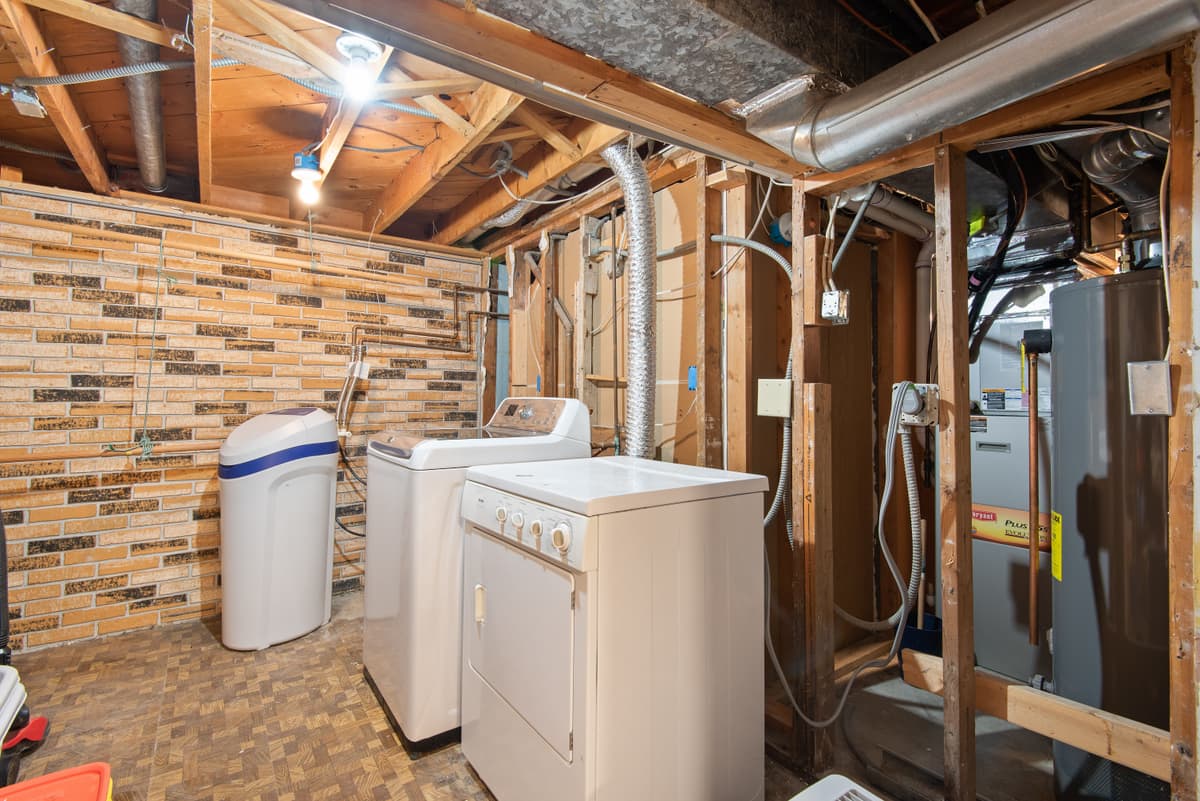 Rheem Performance XP40T06HE36U0The most hot water per propane BTU on this list: 84 gallons in the first hour from 36,000 BTU/h in a 40-gallon tank, which is seven gallons more than Rheem's own 50-gallon unit running the same burner. | Most propane replacements | Check price on Amazon No live price feed on this site, so we show none. #ad |
| 2 |  Rheem Performance XP50T06EC36U1The 50-gallon propane tank to buy when the household is four people and the burner has to stay at 36,000 BTU/h: 85 gallons in the first hour and 36.4 GPH of recovery, from a 20-1/2 in shell. | Four people on propane | Check price on Amazon No live price feed on this site, so we show none. #ad |
| 3 |  Rheem Performance XP40T06EC32U1The budget propane tank: a 32,000 BTU/h burner, a 69-gallon first-hour rating and the narrowest shell here at 18-1/2 in, which is what gets it into alcoves the others will not enter. | The cheapest honest propane 40 | Check price on Amazon No live price feed on this site, so we show none. #ad |
| 4 | Camplux Pro 10 (2.64 GPM propane)A 2.64 GPM propane unit that runs off a BBQ cylinder — the right answer for a cabin shower or an outdoor wash station, and the wrong answer for a house. | Outdoor and off-grid propane | Check price on Amazon No live price feed on this site, so we show none. #ad |
The picks in full
Pick 1 — Most propane replacements
Rheem Performance XP40T06HE36U0
The most hot water per propane BTU on this list: 84 gallons in the first hour from 36,000 BTU/h in a 40-gallon tank, which is seven gallons more than Rheem's own 50-gallon unit running the same burner.
| Fuel | Liquid propane |
|---|---|
| Nominal capacity | 40 gal (38 gal rated) |
| Gas input | 36,000 BTU/h |
| Recovery | 36.3 GPH at a 90°F rise |
| First-hour rating | 84 gal |
| UEF | 0.66 |
| Height | 63-1/4 in |
| Diameter | 19-1/2 in |
| Vent size | 3 or 4 in |
| Ship weight | 135 lb |
| Warranty | 6-year tank and parts, 1-year in-home labor |
What is good
- 84-gallon first-hour rating is the highest on this page per BTU of propane burned
- 0.66 UEF is the best figure in Rheem's atmospheric propane range
- 19-1/2 in diameter fits an alcove built for an older 40
- Self-powered diagnostic gas valve: no electrical supply needed at all
What is not
- 63-1/4 in tall, so a low basement ceiling or an under-stair closet can rule it out
- Atmospheric draft means it needs a working chimney or B-vent and real combustion air in the room
- 36,000 BTU/h on propane is a smaller burner than the natural-gas equivalents people compare it against
- Model numbers in this family differ by one character and the published specs differ with them
Skip it if: Skip it if your propane heater lives in a sealed closet or a very tight house. An atmospheric unit can backdraft there, and the honest answer is a direct vent or power direct vent model instead.
No live price feed on this site, so we show none. #ad
Specifications above from Rheem PERFORMANCE Atmospheric Gas Specifications, form THD-PGRH N Rev. 12 (12/23); Home Depot listing, Rheem Performance 40 Gal. Tall 36,000 BTU Liquid Propane. We have not tested this unit ourselves.
Pick 2 — Four people on propane
Rheem Performance XP50T06EC36U1
The 50-gallon propane tank to buy when the household is four people and the burner has to stay at 36,000 BTU/h: 85 gallons in the first hour and 36.4 GPH of recovery, from a 20-1/2 in shell.
| Fuel | Liquid propane |
|---|---|
| Nominal capacity | 50 gal (48 gal rated) |
| Gas input | 36,000 BTU/h |
| Recovery | 36.4 GPH at a 90°F rise |
| First-hour rating | 85 gal |
| UEF | 0.63 |
| Height | 61-1/4 in |
| Diameter | 20-1/2 in |
| Vent size | 3 or 4 in |
| Ship weight | 125 lb |
| Warranty | 6-year tank and parts, 1-year in-home labor |
What is good
- 85-gallon first-hour rating covers a four-person peak hour
- Ten more gallons of storage than the 40 for one extra inch of diameter
- Shorter than the 40-gallon high-efficiency unit at 61-1/4 in
- Self-powered diagnostic valve, so no outlet is needed beside the heater
What is not
- 0.63 UEF is three points behind the 40-gallon high-efficiency model
- The extra storage does nothing for recovery: 36.4 GPH is the same as the 40
- Atmospheric venting, so the chimney and combustion-air questions still apply
- Rheem publishes 125 lb ship weight for this unit and 165 lb for the high-efficiency 50 - check the sheet for the exact model, not the family
Skip it if: Skip it if you are replacing a 40 and your real problem is running out mid-shower rather than peak-hour volume. Recovery is identical, so the extra ten gallons buys one more shower, not a faster tank.
No live price feed on this site, so we show none. #ad
Specifications above from Rheem PERFORMANCE Atmospheric Gas Specifications, form THD-PGRH N Rev. 12 (12/23); Rheem product page, Performance Series Atmospheric XP50T06EC36U1. We have not tested this unit ourselves.
Pick 3 — The cheapest honest propane 40
Rheem Performance XP40T06EC32U1
The budget propane tank: a 32,000 BTU/h burner, a 69-gallon first-hour rating and the narrowest shell here at 18-1/2 in, which is what gets it into alcoves the others will not enter.
| Fuel | Liquid propane |
|---|---|
| Nominal capacity | 40 gal (38 gal rated) |
| Gas input | 32,000 BTU/h |
| Recovery | 32.3 GPH at a 90°F rise |
| First-hour rating | 69 gal |
| UEF | 0.61 |
| Height | 61-1/2 in |
| Diameter | 18-1/2 in |
| Household figure (Rheem) | 18 single-shower minutes; 2 back-to-back showers |
| Ship weight | 125 lb |
| Warranty | 6-year tank and parts, 1-year in-home labor |
What is good
- 18-1/2 in diameter is the narrowest propane tank in Rheem's atmospheric range
- Retail availability: Home Depot internet #326589884
- Rheem publishes a household figure for this exact model - 18 single-shower minutes, two back-to-back showers
- Self-powered diagnostic gas valve
What is not
- 69-gallon first-hour rating is 15 gallons behind the high-efficiency 40 at the same capacity
- 0.61 UEF is the lowest of the three propane tanks here
- 32,000 BTU/h recovers 32.3 GPH, so a long bath drains the margin
- Atmospheric draft: chimney and combustion air both have to be right
Skip it if: Skip it if three or more people share the house. At 69 gallons in the first hour it is a one-to-two-person tank, and the 36,000 BTU/h version is a small step up for 15 extra gallons.
No live price feed on this site, so we show none. #ad
Specifications above from Rheem PERFORMANCE Atmospheric Gas Specifications, form THD-PGRH N Rev. 12 (12/23); Rheem product page, Performance Series Atmospheric XP40T06EC32U1. We have not tested this unit ourselves.
Pick 4 — Outdoor and off-grid propane
Camplux Pro 10 (2.64 GPM propane)
A 2.64 GPM propane unit that runs off a BBQ cylinder — the right answer for a cabin shower or an outdoor wash station, and the wrong answer for a house.
| Fuel | Propane (20 lb cylinder) |
|---|---|
| Output | 2.64 GPM |
| Gas input | 65,000 - 68,000 BTU/h depending on model variant |
| Temperature rise | Rated flow quoted at a 70°F rise |
| Temperature range | 50 - 140°F, adjustable |
| Minimum activation flow | 0.5 GPM |
| Installation | Outdoor / vented enclosure only |
What is good
- 0.5 GPM activation is low enough for an RV pump or a gravity-fed line
- Runs on a standard 20 lb propane cylinder with no gas line or permit
- 2.64 GPM is a genuine shower, not a trickle
- Temperature is set on a dial rather than by mixing at the fixture
What is not
- Outdoor use only — these are not indoor-rated appliances
- Battery or 12 V ignition means it stops working when the batteries die
- No freeze protection: it has to be drained for winter
Skip it if: Skip it for anything inside a house. These units are certified for outdoor use and venting an outdoor-rated propane heater indoors is a carbon monoxide risk, not a code technicality.
No live price feed on this site, so we show none. #ad
Specifications above from Tractor Supply listing, Camplux 2.64 GPM 68,000 BTU; Lowe's listing, Camplux Plus 10, 2.64 GPM 65,000 BTU. We have not tested this unit ourselves.
What we looked at, and in what order
A propane tank is bought by someone who already has a propane supply and a tank in the yard, so price per BTU is not the lever it is on natural gas. These are the criteria we ranked on, in this order:
- Published first-hour rating against gas input. Hot water per BTU of propane burned. Propane costs more per unit of energy than natural gas in most of the country, so efficiency of delivery matters more here, not less.
- Recovery rate at a stated rise. The figure that decides whether the second shower is warm. Every unit here publishes it at a 90°F rise, so the numbers are directly comparable.
- UEF. Three points of UEF is a real difference over a decade of propane bills.
- Physical envelope. Height and diameter, because propane houses are disproportionately older houses with awkward alcoves, crawlspaces and stair closets.
- Whether it needs electricity. All three tanks here use a self-powered diagnostic gas valve, so they keep making hot water in an outage. On a rural property that is not a footnote.
- Whether a homeowner can buy it. All four are retail or general-retail products, not distribution-only.
We have not tested these units and we do not claim to. Every figure on this page is traced to a manufacturer document, and the documents are listed under each pick and again at the foot of the page. How we pick.
The propane derate is the thing nobody warns you about
Open Rheem's own atmospheric gas specification sheet and compare the natural gas and liquid propane rows of the same series. The LP model of each pair carries a smaller input.
| Series and capacity | Natural gas | Liquid propane | Gap |
|---|---|---|---|
| High efficiency, 50 gal | XG50T06HE40UO, 40,000 BTU/h, 77 gal FHR | XP50T06HE36UO, 36,000 BTU/h, 77 gal FHR | 4,000 BTU/h; same FHR |
| Standard, 50 gal | XG50T06EC38U1, 38,000 BTU/h, 85 gal FHR | XP50T06EC36U1, 36,000 BTU/h, 85 gal FHR | 2,000 BTU/h; same FHR |
| Standard, 40 gal | XG40T06EC36U1, 36,000 BTU/h, 68 gal FHR | XP40T06EC32U1, 32,000 BTU/h, 69 gal FHR | 4,000 BTU/h; LP one gallon higher |
| High demand, 55 gal | XG55T06EC50UO, 50,000 BTU/h, 97 gal FHR | XP55T06EC45UO, 45,000 BTU/h, 97 gal FHR | 5,000 BTU/h; same FHR |
Read that table twice, because it is genuinely strange. The propane version of each pair burns 2,000 to 5,000 BTU/h less, yet Rheem publishes the same first-hour rating for both — and in the 40-gallon standard pair the LP unit is published one gallon *higher* than the natural gas one.
We are not going to invent an explanation for that. What we can say is what it means for a buyer: do not assume a propane tank will underperform the natural gas unit beside it on the shelf. On Rheem's published figures it does not. Where the derate does bite is on recovery, and that figure is lower on LP in every pair.
The 40 that beats the 50
The oddest finding on this page is the one that decides our top pick. Within Rheem's high-efficiency propane line, the 40-gallon unit publishes a higher first-hour rating than the 50-gallon unit running the identical 36,000 BTU/h burner.
| Model | Capacity | Recovery | First-hour rating | UEF |
|---|---|---|---|---|
| XP40T06HE36U0 | 40 gal (38 rated) | 36.3 GPH | 84 gal | 0.66 |
| XP50T06HE36UO | 50 gal (48 rated) | 36.4 GPH | 77 gal | 0.64 |
| XP40S06HE36UO (short) | 40 gal (39 rated) | 36.4 GPH | 69 gal | 0.59 |
Ten gallons less storage, the same burner, seven gallons more in the first hour and two points more UEF. The short 40 in the same family, meanwhile, gives up fifteen gallons of first-hour delivery and seven points of UEF for the privilege of being 10 inches shorter.
If you take one thing from this page, take that: on propane, the badge capacity tells you almost nothing. Read the first-hour rating for the exact model number. First-hour rating explained covers how the figure is measured and why it beats gallons as a sizing input.
Sizing a propane tank by household
Peak-hour demand is what you are sizing for, not daily use. A shower is 2 to 2.5 gallons a minute, a bath 30 to 40 gallons, a dishwasher cycle 6 to 10.
| Household | First-hour rating needed | The pick |
|---|---|---|
| 1 - 2 people, one bathroom | About 60 - 70 gal | XP40T06EC32U1 (69 gal) |
| 2 - 3 people | About 70 - 85 gal | XP40T06HE36U0 (84 gal) |
| 4 people | About 85 - 90 gal | XP50T06EC36U1 (85 gal) |
| 5+ people | 90+ gal | Step up to the 55-gallon LP unit or add a second tank |
| Cabin, no gas line, seasonal | A shower's worth of flow | Camplux Pro 10 (2.64 GPM) |
For the full arithmetic by household size, water heater sizing works through it, and water heater size for a family of 4 is the bracket most propane replacements land in.
What goes in with it
A water heater is a system, not a box. These are the parts that go in with it, and the ones people discover they need halfway through the job.
- Expansion tank
Required by code on a closed system, which is most homes with a pressure-reducing valve.
- Drain pan
Cheap insurance anywhere the tank sits above something you care about.
- Anode rod
The part that decides when the tank leaks. Replacing it is the highest-value hour of maintenance there is.
Propane tankless: when it is the right answer, and when it is not
Every tankless manufacturer on this site sells an LP version of its gas units, and the headline case for tankless is stronger on propane than on natural gas: no standby loss means no propane burned to keep 40 gallons hot while you are away for a month. On a seasonal property that is the whole argument.
The case against is also stronger. A whole-house propane tankless unit wants a large, well-regulated gas supply — considerably more than a 36,000 BTU/h tank — and on a leased 250 or 500 gallon yard tank with a long run of undersized copper, the regulator and the line become the project. Get the gas supply verified before the unit is ordered, not after.
- Seasonal cabin, long vacancies, one bathroom: propane tankless usually wins on fuel burned per year. Best gas tankless water heaters.
- Off-grid with no gas line and no 120 V: the portable cylinder units are the only honest answer. Best propane water heaters for an off-grid cabin.
- Year-round family house already on propane: the tank almost always wins on install cost and on supply constraints. The picks above.
- RV or trailer: a different product category entirely. Best RV water heaters.
If you are weighing the two seriously rather than rhetorically, tankless vs tank sets out the real trade and does not pretend the answer is always tankless.
Venting, combustion air and the rural-house problem
All three tanks here are atmospheric — natural draft up a flue, combustion air from the room. That is the cheapest and simplest arrangement and it is what most propane houses already have. It also has two failure modes that show up more often on rural properties than suburban ones:
- An old, oversized or unlined chimney. A masonry flue sized for a wood stove or an oil boiler can be too cold and too large to draft a 36,000 BTU/h water heater reliably. The symptom is condensation and rust on the draft hood.
- A tight retrofit. New windows, spray foam and weatherstripping on a 1940s farmhouse can starve the burner. If the heater shares a closet with a dryer or a bath fan, the problem gets worse when they run.
Either of those is a reason to look at a sealed-combustion unit instead of an atmospheric one. Water heater venting explained covers how to tell which problem you have, and best power vent water heaters is the roundup for houses with no usable flue at all.
Running cost, honestly
We do not publish fuel-cost estimates on this site, because propane is priced locally, seasonally and by contract — a number we wrote today would be wrong for most readers and wrong for all of them in six months. What we can give you is the arithmetic to run yourself.
- A gallon of propane carries about 91,500 BTU of energy.
- Divide your delivered price per gallon by 91,500 to get dollars per BTU, then multiply by 100,000 for a dollars-per-therm-equivalent figure you can compare with a natural gas bill.
- Multiply by the UEF gap to compare two units: 0.66 against 0.61 is roughly 8 percent less propane for the same hot water.
- Then check your state's rebates before you buy anything. Water heater rebates.
That 8 percent is the strongest argument on this page for buying the high-efficiency unit rather than the cheapest one. It is also an argument for setting the thermostat correctly, which is free: water heater temperature setting.
How we chose
Published first-hour rating and recovery at a stated rise first, then UEF, then the install envelope, then warranty. We did not test these units. Where two manufacturer documents disagree — and on this page two of them do — we print both figures rather than picking the flattering one.
If you are not certain propane is the right fuel at all, gas vs electric water heaters covers the comparison, and on a rural property with cheap electricity a heat pump water heater can beat propane on running cost by a wide margin.