Best Water Heaters for Hard Water
Hard water does not break a water heater quickly. It shortens its life quietly, and the fix is mostly maintenance.
Heat & Tap earns a commission on qualifying purchases made through the Amazon links on this page, at no extra cost to you. Commission does not decide what we recommend or how we rank it. Full disclosure.
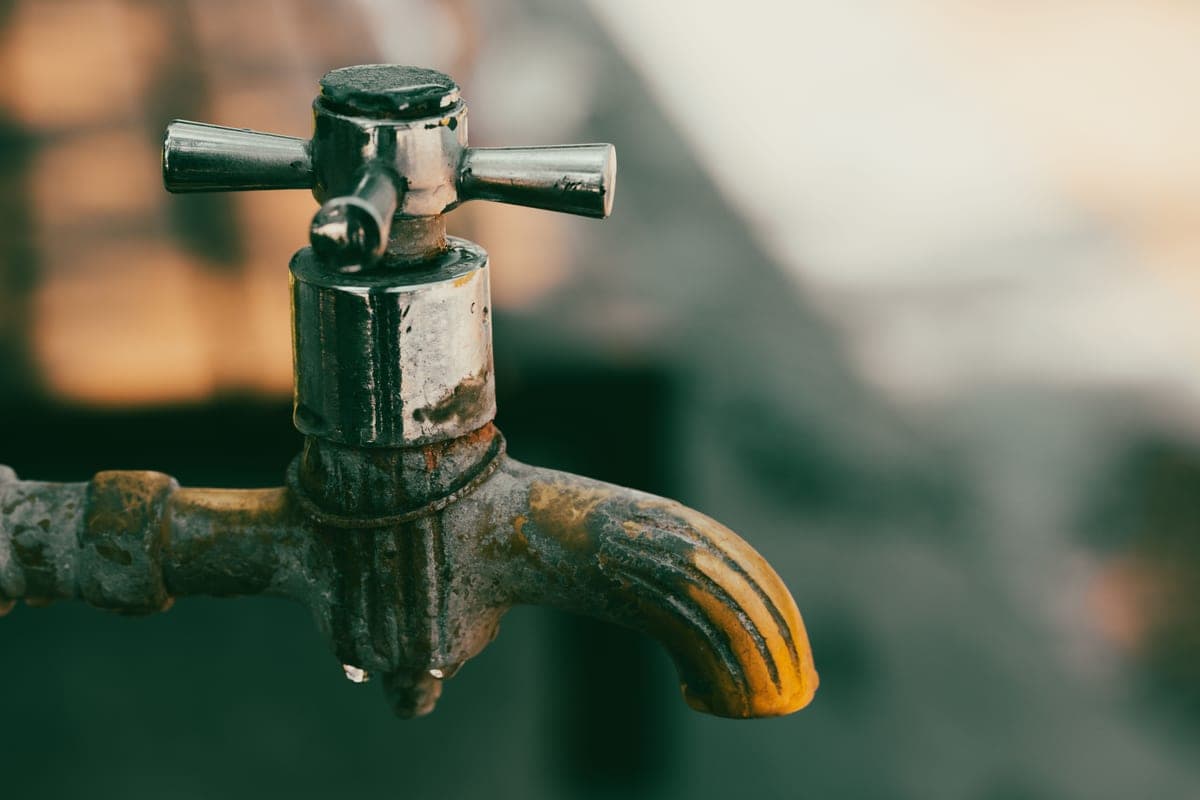
In hard water the maintenance matters more than the unit. Three things make the difference: a powered anode that does not deplete (sacrificial rods can go in 3 to 18 months), a tank with sediment management like the Bradford White Hydrojet dip tube, and a flushing interval matched to your hardness rather than a calendar.
Hard water carries dissolved calcium and magnesium. Heating it precipitates those minerals out, and they go two places: onto the hottest surface available, and onto the bottom of the tank. Both outcomes shorten the appliance's life, by different mechanisms.
The three mechanisms
- Sediment on the tank bottom. On a gas unit it insulates the burner from the water, so the steel above the burner runs hotter than designed. It also occupies volume that should hold hot water, which costs you first-hour delivery.
- Scale on electric elements. A scaled element runs hot and fails early. This is a common and avoidable failure in hard water.
- Accelerated anode consumption. Hard water is aggressive toward a sacrificial rod, and reported replacement intervals run from as little as 3 months to 18. Once the rod is gone, the tank itself is what corrodes.
On a tankless unit there is a fourth: scale in the heat exchanger, which is the dominant failure mode for that technology. Best tankless for hard water.
Know your hardness first
| Classification | Grains per gallon | Tank flush | Anode check | Tankless descale |
|---|---|---|---|---|
| Soft | 0 to 3 | Every 18 to 24 months | Every 3 years | Every 18 to 24 months |
| Moderately hard | 3 to 7 | Annually | Every 2 years | Annually |
| Hard | 7 to 10 | Every 9 to 12 months | Annually | Every 9 to 12 months |
| Very hard | 10 to 15 | Every 6 months | Annually | Every 6 months |
| Extremely hard | 15+ | Every 4 to 6 months | Every 6 months | Every 4 to 6 months |
Your water utility publishes hardness in its annual water quality report, and a test strip costs almost nothing. Guessing is the one option that does not work.
Quick picks
Tap any row to read the full assessment below, or go straight to Amazon from the right-hand column. We earn a commission on qualifying purchases at no extra cost to you.
| # | Product | Best for | Price |
|---|---|---|---|
| 1 |  Corro-Protec powered anode rodA powered titanium anode that does not deplete, carries a 20-year limited warranty, and is the usual fix for the rotten-egg smell a magnesium rod causes. | Hard water and smelly water | Check price on Amazon No live price feed on this site, so we show none. #ad |
| 2 |  Bradford White RG2PDV50S6NThe direct-vent tank to specify when combustion air is the problem: 83-gallon first-hour rating from 40,000 BTU/h, and it draws its air from outside instead of from the room. | Sealed closets and tight mechanical rooms | Check price on Amazon No live price feed on this site, so we show none. #ad |
| 3 |  Rheem ProTerra 50 gal hybridThe heat pump water heater to start with: a 3.88 UEF, a 67-gallon first-hour rating, and a 37°F lower operating limit that is the widest ambient range in its class — which is the specification that decides whether it works in a cold garage. | Most heat pump installs | Check price on Amazon No live price feed on this site, so we show none. #ad |
| 4 | Flow-Aide descaler solutionThe solution on its own: an acid descaler that dissolves scale, lime and rust deposits, recommended once a year for residential use. | Refilling a kit you already own | Check price on Amazon No live price feed on this site, so we show none. #ad |
What to buy for hard water
Pick 1 — Hard water and smelly water
Corro-Protec powered anode rod
A powered titanium anode that does not deplete, carries a 20-year limited warranty, and is the usual fix for the rotten-egg smell a magnesium rod causes.
| Type | Powered titanium MMO anode with a low-voltage controller |
|---|---|
| Mechanism | Impressed-current cathodic protection |
| Depletion | Does not deplete, unlike magnesium or aluminum |
| Warranty | 20-year limited, with a 90-day money-back guarantee |
| Certification | Certified lead free by WQA under NSF/ANSI/CAN 372 |
What is good
- It does not sacrifice itself, so it does not need replacing every few years
- Usually eliminates the sulfur smell that a magnesium rod produces in some water
- 20-year warranty against a sacrificial rod's 3 to 18 months in hard water
- Lead-free certified for potable use
What is not
- Needs a power outlet near the heater and a controller mounted somewhere
- Costs several times a sacrificial rod
- No protection at all during a power cut
Skip it if: Skip it if your tank is already more than about eight years old. A powered anode cannot undo corrosion that has already happened, and the money is better spent toward the replacement that is coming anyway.
No live price feed on this site, so we show none. #ad
Specifications above from Corro-Protec product facts; Corro-Protec, magnesium versus aluminum anodes. We have not tested this unit ourselves.
Pick 2 — Sealed closets and tight mechanical rooms
Bradford White RG2PDV50S6N
The direct-vent tank to specify when combustion air is the problem: 83-gallon first-hour rating from 40,000 BTU/h, and it draws its air from outside instead of from the room.
| Capacity | 50 gallons nominal, 48 gallons rated storage |
|---|---|
| First-hour rating | 83 gallons |
| Input | 40,000 BTU/h |
| Efficiency | 0.71 UEF, 78% recovery efficiency |
| Venting | Direct vent — combustion air from outdoors |
| Tank lining | Vitraglas enamel |
| Safety system | Defender FVIR with ScreenLok flame arrestor |
| Warranty | 6-year limited |
What is good
- 83 gallons in the first hour from a 40,000 BTU burner is the best ratio on this page
- Direct venting solves the sealed-closet and tight-house combustion air problem outright
- Hydrojet sediment reduction genuinely helps first-hour delivery on hard water
- Defender FVIR is standard, not an upcharge
What is not
- Sold through plumbing wholesalers rather than big-box retail, so weekend DIY sourcing is harder
- 6-year warranty where some competitors sell 9- and 12-year tanks
- 0.71 UEF is ordinary — this is a reliability and venting pick, not an efficiency one
Skip it if: Skip it if your old heater vents into a shared chimney with a furnace and you were not planning to touch the venting. Direct vent means cutting a new sidewall penetration, and that changes the job from a swap into an install.
No live price feed on this site, so we show none. #ad
Specifications above from PEX Universe listing, RG2PDV50S6N; Supply House listing, Bradford White RG2PV50T6N power vent. We have not tested this unit ourselves.
Pick 3 — Most heat pump installs
Rheem ProTerra 50 gal hybrid
The heat pump water heater to start with: a 3.88 UEF, a 67-gallon first-hour rating, and a 37°F lower operating limit that is the widest ambient range in its class — which is the specification that decides whether it works in a cold garage.
| Capacity | 50 gallons |
|---|---|
| Efficiency | 3.88 UEF; up to 4.07 UEF advertised on 30 A models |
| First-hour rating | 67 gallons |
| Recovery | 27 gallons per hour |
| Heat pump capacity | 4,200 BTU/h |
| Backup element | 5,000 W |
| Voltage | 208 - 240 V |
| Ambient operating range | 37 - 145°F |
| Cold-climate rating | Meets Northern Climate Specification Tier 4 |
| Leak protection | Integrated detection with factory-fitted auto shutoff; leaks limited to no more than 20 oz |
| Warranty | 10-year limited |
What is good
- A 37°F lower limit means the compressor keeps running in an unheated garage through most of a northern winter
- 3.88 UEF is roughly four times a resistance tank, so the running cost difference is not marginal
- 67-gallon first-hour rating is better than most 50-gallon resistance tanks
- EcoNet control lets you force high-demand mode before guests arrive instead of discovering the limit
What is not
- It is a refrigeration appliance in your house: there is a compressor, a fan and a condensate drain
- Needs roughly 700 cubic feet of air, or louvered doors, in a closet
- It cools and dehumidifies the space it stands in, which is a gift in a Houston garage and a problem in a Minnesota basement
Skip it if: Skip it if the only place it can go is a finished, heated room you occupy. It will steal heat from that room in winter — your furnace then pays for the hot water, and the efficiency you bought disappears.
No live price feed on this site, so we show none. #ad
Specifications above from Rheem ProTerra PROPH50 T2 RH375-30 product page; ABR Wholesalers listing, PROPH50 T2 RH375-30. We have not tested this unit ourselves.
Pick 4 — Refilling a kit you already own
Flow-Aide descaler solution
The solution on its own: an acid descaler that dissolves scale, lime and rust deposits, recommended once a year for residential use.
| Type | Acid descaler, aqueous hydrogen chloride |
|---|---|
| Use | Dissolves water scale, lime, rust and other water-formed deposits |
| Recommended frequency | Residential: once a year, or as needed |
| Temperature range | 32 - 140°F |
What is good
- Far cheaper per flush than buying another complete kit
- Restores flow and heat transfer rather than just slowing the scaling
- Works on tank heating elements as well as tankless heat exchangers
- Widely stocked through plumbing suppliers
What is not
- Acidic — gloves, eye protection and ventilation are not optional
- Must not be left circulating indefinitely in a heat exchanger
- Needs a thorough fresh-water rinse afterwards
Skip it if: Skip the acid route and use a non-acidic cleaner if the unit lives in an unventilated interior closet. Acid fumes in a confined space are a real hazard, and the softer cleaners work fine on annual-maintenance scale.
No live price feed on this site, so we show none. #ad
Specifications above from Pace Supply listing, Flow-Aide system descaler; First Supply listing, J.C. Whitlam Flow-Aide. We have not tested this unit ourselves.
Why the powered anode leads
Because in hard water a sacrificial rod is a subscription. Reported replacement intervals run from 3 to 18 months, which means either an annual job you will actually forget or a tank quietly losing its protection.
A powered titanium anode protects by impressed current rather than by sacrificing metal, so it does not deplete. Corro-Protec publishes a 20-year limited warranty and WQA certification as lead free under NSF/ANSI/CAN 372. For a hard-water household with a reasonably new tank, this is the highest-value purchase on this page.
Why sediment management matters on a gas tank
The Bradford White Defender's Hydrojet sediment-reducing dip tube is the feature worth paying attention to here. It keeps the tank bottom cleaner, which both preserves first-hour delivery and stops the burner driving heat through an insulating layer.
That unit gets 83 gallons in the first hour from only 40,000 BTU/h, and the sediment management is part of why it holds that performance over time rather than just on day one.
On heat pump units in hard water
A heat pump water heater is a storage tank, so it has the same sediment and anode exposure as any other tank. Two hard-water-specific notes:
- The anode question is identical. Check it on the same interval as any other tank, and consider a powered anode.
- The anode rating is worth comparing. The A. O. Smith Voltex AL's anode is rated to protect the tank for 10 years against 6 on the ProLine XE — in hard water that difference matters more than the UEF gap between them.
- The Rheem ProTerra's integrated leak detection is particularly valuable here, because hard water shortens tank life and an earlier failure is more likely.
Softener or not
A whole-house softener is the real fix in very hard water, and it protects every appliance rather than just the water heater. Three honest caveats:
- It costs more than several years of flushing and anode rods.
- It adds salt to the waste stream, which some jurisdictions restrict.
- Softened water is more aggressive toward a sacrificial anode, so your rods go faster, not slower. This surprises people. A powered anode sidesteps it.
Rough economics: below about 12 grains per gallon, maintenance is better value. Above 15, a softener starts paying for itself across the whole house.
What goes in with it
A water heater is a system, not a box. These are the parts that go in with it, and the ones people discover they need halfway through the job.
- Expansion tank
Required by code on a closed system, which is most homes with a pressure-reducing valve.
- Drain pan
Cheap insurance anywhere the tank sits above something you care about.
- Anode rod
The part that decides when the tank leaks. Replacing it is the highest-value hour of maintenance there is.