Water Heater vs Boiler
They look alike in a basement and do entirely different jobs. One of them you can replace this weekend; the other is a heating system.
Heat & Tap earns a commission on qualifying purchases made through the Amazon links on this page, at no extra cost to you. Commission does not decide what we recommend or how we rank it. Full disclosure.
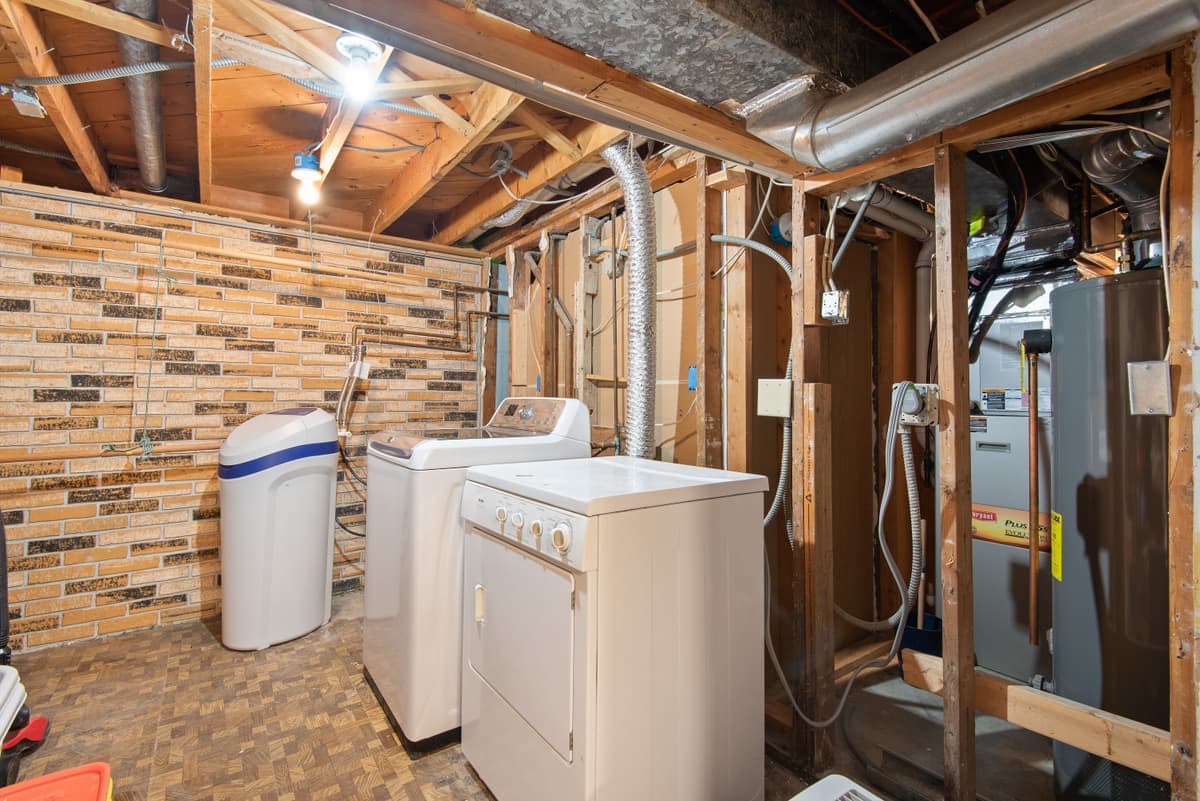
A water heater makes potable hot water that leaves the house through your taps. A boiler heats water that circulates through radiators or a floor loop and returns to be reheated. The water in a boiler loop is not drinking water and generally never leaves the loop. If the appliance feeds your shower, it is a water heater, and the A. O. Smith Signature 100 or a Rheem ProTerra replaces it. If it feeds radiators, it is a boiler and it is a heating contractor's job.
This is a vocabulary problem more than an engineering one, and it matters because people shopping for a boiler sometimes need a water heater, and people whose boiler has failed sometimes buy a water heater by mistake. Both are tall metal cylinders in a basement with gas and water going into them.
The difference in one table
| Water heater | Boiler | |
|---|---|---|
| What it heats | Potable water you drink and wash in | Water in a closed heating loop |
| Where the water goes | Out of the taps and down the drain | Around the loop and back, over and over |
| What it serves | Showers, sinks, dishwasher, laundry | Radiators, baseboards, radiant floor loops |
| Storage | Tank models store 30-80 gallons; tankless models store none | Usually little or none; the loop holds the volume |
| Typical fuels | Natural gas, propane, electricity, heat pump | Natural gas, propane, oil, electricity |
| Can it do the other job? | A few models feed a heating loop, but it is not the default | Yes, with an indirect tank or a combi unit |
| Who replaces it | A plumber, often in a day; DIY in some jurisdictions | A heating contractor, as a system job |
| Typical service life | 10-15 years for a tank, up to 20 for tankless | Longer, but highly install-dependent |
The row people miss is the sixth. A boiler can make your domestic hot water as well as heat the house, either through an indirect-fired storage tank it keeps hot or through a combi unit with a built-in heat exchanger. That is why some houses have no separate water heater at all.
How to tell which one you have
- Follow the pipes. If hot pipes run off to radiators or a manifold of small loops, it is a boiler. If two pipes run to the house plumbing and nothing comes back, it is a water heater.
- Look for a pressure gauge and an expansion vessel on the appliance itself. Boilers run a pressurised closed loop and show you the pressure; a storage water heater does not.
- Check the rating plate. A water heater states a capacity in gallons and a first-hour rating. A boiler states an output in BTU/h or kW with no storage figure.
- Check whether it runs in July. A boiler that only serves heating is idle all summer. A water heater runs every day of the year.
Quick picks
Tap any row to read the full assessment below, or go straight to Amazon from the right-hand column. We earn a commission on qualifying purchases at no extra cost to you.
| # | Product | Best for | Price |
|---|---|---|---|
| 1 | 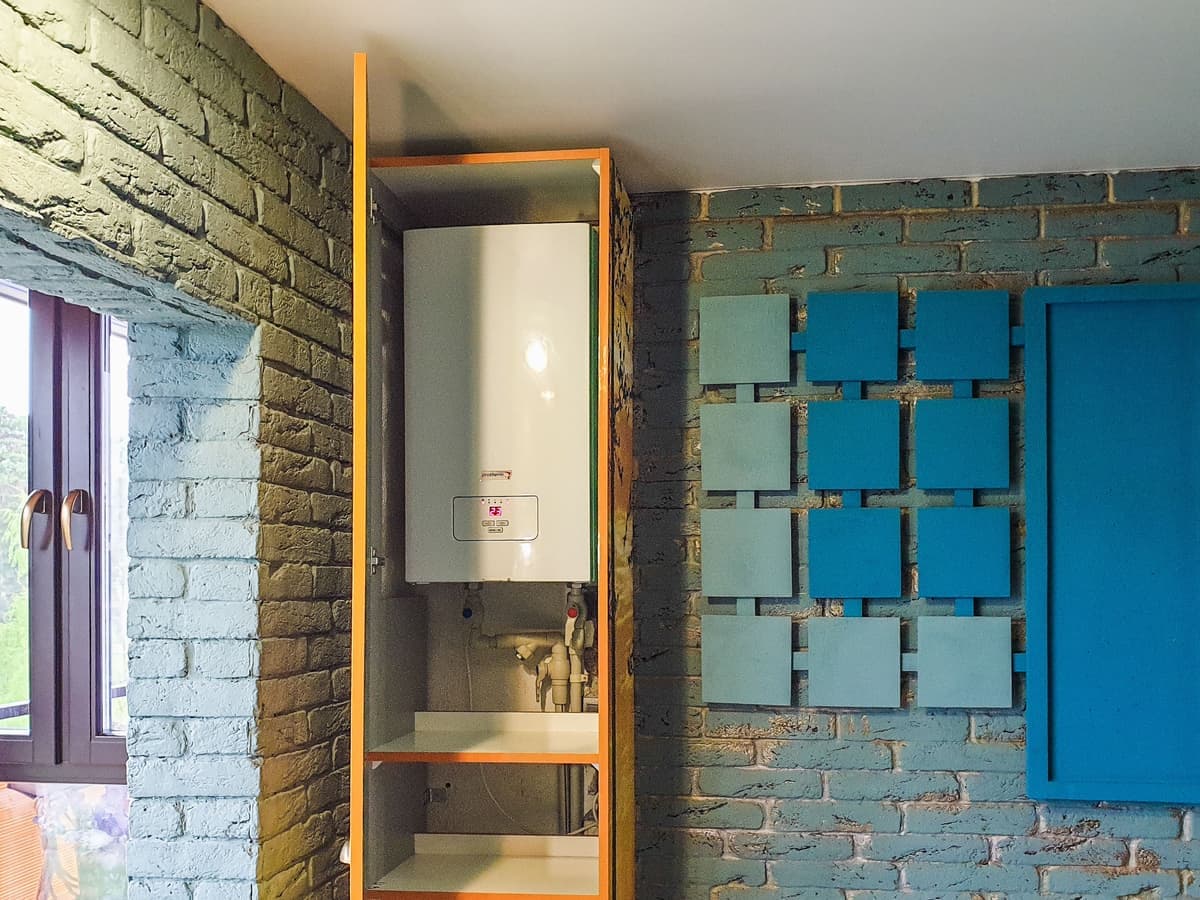 A. O. Smith Signature 100, 50 gal gasThe straightforward 50-gallon gas replacement, and the reason to pay attention to the burner size: the 50,000 BTU version is rated at a 91-gallon first-hour rating against 77 gallons for the 40,000 BTU one. | Most gas tank replacements | Check price on Amazon No live price feed on this site, so we show none. #ad |
| 2 |  Rheem ProTerra 50 gal hybridThe heat pump water heater to start with: a 3.88 UEF, a 67-gallon first-hour rating, and a 37°F lower operating limit that is the widest ambient range in its class — which is the specification that decides whether it works in a cold garage. | Most heat pump installs | Check price on Amazon No live price feed on this site, so we show none. #ad |
| 3 | 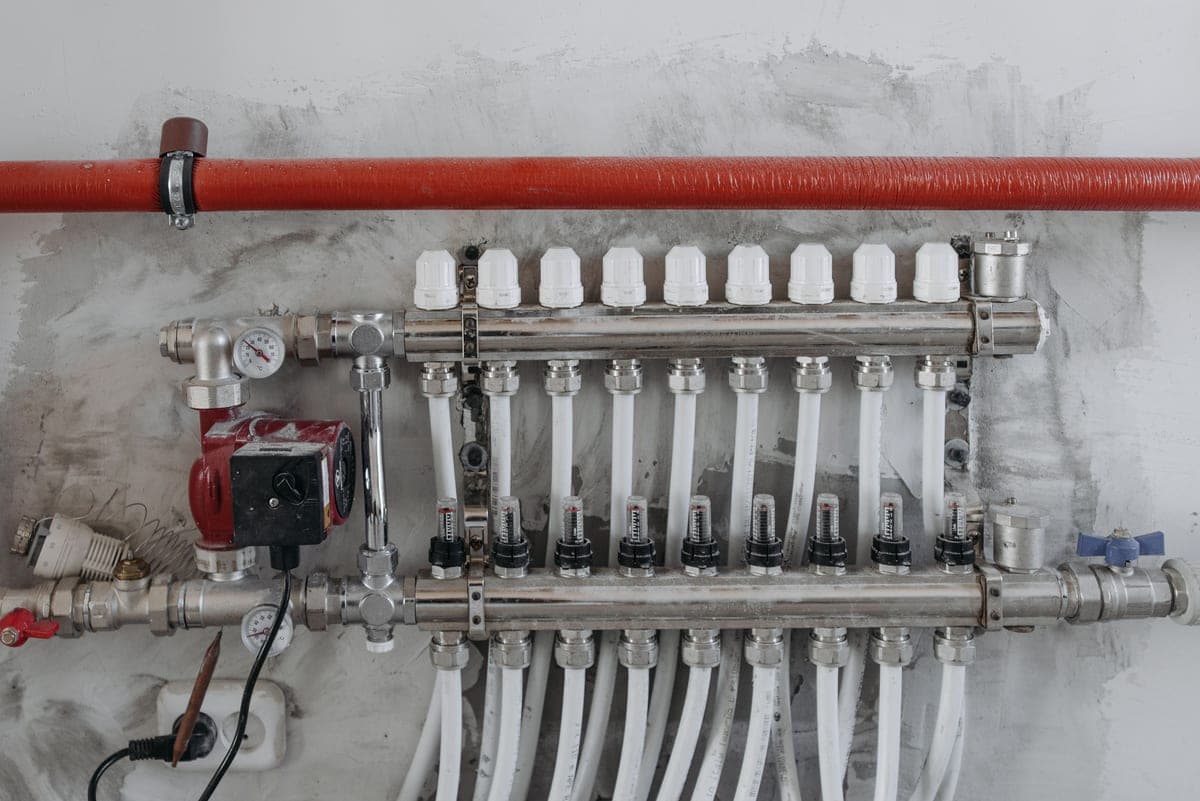 Rheem Prestige RTGH-95DVLNThe condensing gas tankless most houses should start with: 5.5 GPM at a 70°F rise covers two showers in a cold-inlet climate, and the 12-year residential heat exchanger warranty is the longest on this list. | Most whole-house gas jobs | Check price on Amazon No live price feed on this site, so we show none. #ad |
If it turns out you need a water heater
Pick 1 — Most gas tank replacements
A. O. Smith Signature 100, 50 gal gas
The straightforward 50-gallon gas replacement, and the reason to pay attention to the burner size: the 50,000 BTU version is rated at a 91-gallon first-hour rating against 77 gallons for the 40,000 BTU one.
| Capacity | 50 gallons |
|---|---|
| First-hour rating | 91 gallons (50,000 BTU model); 77 gallons (40,000 BTU model) |
| Burner | 50,000 BTU/h ultra-low NOx, or 40,000 BTU/h |
| Dimensions | 61 in H x 22 in dia (50,000 BTU); 60-3/4 in H x 22 in dia (40,000 BTU) |
| Warranty | 6-year tank and parts with 1-year labor (50,000 BTU); 9-year tank and parts with 2-year labor (40,000 BTU) |
What is good
- A 91-gallon first-hour rating from a 50-gallon tank covers back-to-back showers that empty an electric tank of the same size
- Widely stocked at Lowe's, so same-day replacement is realistic when the old one fails
- Ultra-low NOx burner meets the stricter air-district rules in California and Texas
- 22-inch diameter fits most existing alcoves without re-plumbing
What is not
- The longer 9-year warranty is on the smaller burner, so warranty and recovery pull in opposite directions
- Atmospheric venting needs a working chimney or B-vent
- Standing pilot and flue losses mean it idles energy away all day
Skip it if: Skip it if your water heater sits in a sealed closet or a space with combustion air problems. An atmospheric gas tank needs real combustion air and a real flue — the power-vent or direct-vent models exist for exactly that case.
No live price feed on this site, so we show none. #ad
Specifications above from Lowe's listing, Signature 100 50-gal 50,000 BTU; Lowe's listing, Signature 100 50-gal 40,000 BTU 9-year. We have not tested this unit ourselves.
Pick 2 — Most heat pump installs
Rheem ProTerra 50 gal hybrid
The heat pump water heater to start with: a 3.88 UEF, a 67-gallon first-hour rating, and a 37°F lower operating limit that is the widest ambient range in its class — which is the specification that decides whether it works in a cold garage.
| Capacity | 50 gallons |
|---|---|
| Efficiency | 3.88 UEF; up to 4.07 UEF advertised on 30 A models |
| First-hour rating | 67 gallons |
| Recovery | 27 gallons per hour |
| Heat pump capacity | 4,200 BTU/h |
| Backup element | 5,000 W |
| Voltage | 208 - 240 V |
| Ambient operating range | 37 - 145°F |
| Cold-climate rating | Meets Northern Climate Specification Tier 4 |
| Leak protection | Integrated detection with factory-fitted auto shutoff; leaks limited to no more than 20 oz |
| Warranty | 10-year limited |
What is good
- A 37°F lower limit means the compressor keeps running in an unheated garage through most of a northern winter
- 3.88 UEF is roughly four times a resistance tank, so the running cost difference is not marginal
- 67-gallon first-hour rating is better than most 50-gallon resistance tanks
- EcoNet control lets you force high-demand mode before guests arrive instead of discovering the limit
What is not
- It is a refrigeration appliance in your house: there is a compressor, a fan and a condensate drain
- Needs roughly 700 cubic feet of air, or louvered doors, in a closet
- It cools and dehumidifies the space it stands in, which is a gift in a Houston garage and a problem in a Minnesota basement
Skip it if: Skip it if the only place it can go is a finished, heated room you occupy. It will steal heat from that room in winter — your furnace then pays for the hot water, and the efficiency you bought disappears.
No live price feed on this site, so we show none. #ad
Specifications above from Rheem ProTerra PROPH50 T2 RH375-30 product page; ABR Wholesalers listing, PROPH50 T2 RH375-30. We have not tested this unit ourselves.
Pick 3 — Most whole-house gas jobs
Rheem Prestige RTGH-95DVLN
The condensing gas tankless most houses should start with: 5.5 GPM at a 70°F rise covers two showers in a cold-inlet climate, and the 12-year residential heat exchanger warranty is the longest on this list.
| Fuel | Natural gas (LP variant sold separately) |
|---|---|
| Gas input | Up to 199,900 BTU/h |
| Flow at a 70°F rise | 5.5 GPM |
| Maximum flow | 9.5 GPM at a 35°F rise |
| Efficiency | Up to 0.93 UEF, stainless condensing heat exchanger |
| Minimum activation flow | 0.4 GPM |
| Venting | Up to 150 ft of 3-inch PVC; 60 ft of 2-inch PVC |
| Dimensions | 18-1/2 in W x 9-3/4 in D x 27-1/2 in H |
| Warranty | 12-year heat exchanger (residential), 5-year parts, 1-year labor |
What is good
- The 70°F-rise figure is published, so you can size it honestly instead of guessing from the headline number
- Condensing design vents in PVC, which is far cheaper to run than stainless category III pipe
- 0.4 GPM activation means a trickle at a bathroom faucet still fires the burner
- Long PVC vent runs let you put it where the gas line already is
What is not
- Needs a gas line sized for nearly 200,000 BTU/h — many existing 1/2-inch runs are not
- Condensate has to go somewhere, which means a drain or a condensate pump
- Annual descaling is not optional on hard water
Skip it if: Skip it if your gas meter and line cannot carry 199,900 BTU/h. Upsizing the gas line is often the single largest cost in a tankless conversion, and no amount of unit quality fixes a starved burner.
No live price feed on this site, so we show none. #ad
Specifications above from Rheem RTGH series specification sheet (PDF); Pace Supply listing, RTGH-95DVLN, 199 kBtu/hr. We have not tested this unit ourselves.
The three ways to make domestic hot water
- A standalone storage water heater. The default, and the cheapest to replace. A 50-gallon gas tank like the Signature 100 delivers 91 gallons in the first hour and drops into the space the old one occupied.
- A heat pump water heater. The same job for roughly a third of the electricity: the Rheem ProTerra 50 publishes a 3.88 UEF and a 67-gallon first-hour rating, with a 37°F lower ambient limit. It needs headroom, air volume and a condensate drain.
- A tankless water heater. No storage at all. The Rheem Prestige RTGH-95DVLN delivers 5.5 GPM at a 70°F rise on up to 199,900 BTU/h, which is two showers in most of the country — if the gas line can feed it.
- An indirect tank off an existing boiler. Worth asking about if you already have a healthy boiler, because it uses heat you are already generating. It is a heating-contractor conversation, not a retail purchase.
Running cost, honestly
We do not publish invented cost comparisons between a boiler and a water heater, because the inputs — fuel price, climate, how much of the year the heating runs — swamp any figure we could state. What is on the rating plates is this: a heat pump water heater at 3.88 UEF uses far less energy per gallon than any combustion appliance, a condensing gas tankless unit reaches up to 0.93 UEF, and an atmospheric gas tank sits in the 0.58 to 0.62 energy factor range. What a water heater actually costs sets out the published installation ranges with attribution.
If you have established that you need a water heater rather than a boiler, start at best water heaters for the overall picks, or tankless vs tank if you are deciding between the two formats.
What goes in with it
A water heater is a system, not a box. These are the parts that go in with it, and the ones people discover they need halfway through the job.
- Expansion tank
Required by code on a closed system, which is most homes with a pressure-reducing valve.
- Drain pan
Cheap insurance anywhere the tank sits above something you care about.
- Anode rod
The part that decides when the tank leaks. Replacing it is the highest-value hour of maintenance there is.